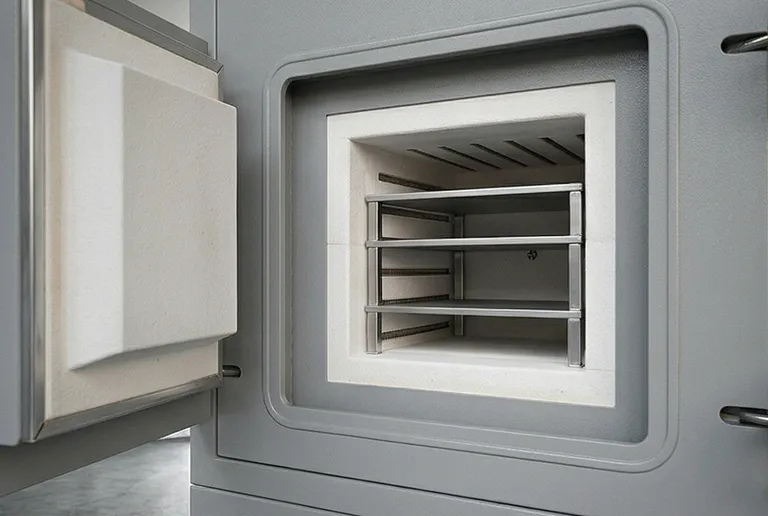
The Heartbreak of the Hairline Fracture
It is a scenario every investment casting professional knows too well. You have spent hours meticulously dipping a wax pattern into ceramic slurry, drying it, and repeating the process to build the perfect shell. Yet, when you pull that shell out of the dewaxing furnace, you find a network of hairline cracks—or worse, a catastrophic failure.
The wax is gone, but the shell is ruined. In a high-stakes production environment, this isn't just a technical glitch; it is a drain on resources, a delay in the supply chain, and a direct hit to your bottom line.
The Common Struggle: Why "Good Enough" Heat Isn't Enough
When faced with shell cracking, many laboratories and foundries attempt to fix the problem by adjusting the slurry composition or increasing the thickness of the shell. While these factors matter, they often mask the true culprit.
The struggle usually stems from the "brute force" approach to heating. Some operators believe that as long as the furnace reaches the melting point of the wax (typically around 500°C for this stage), the job is done. They use standard ovens that may have significant temperature fluctuations or "hot spots." The result? High scrap rates, wasted raw materials, and an unpredictable production schedule that makes it impossible to scale or guarantee quality to clients.
The Root Cause: A Hidden Battle of Physics
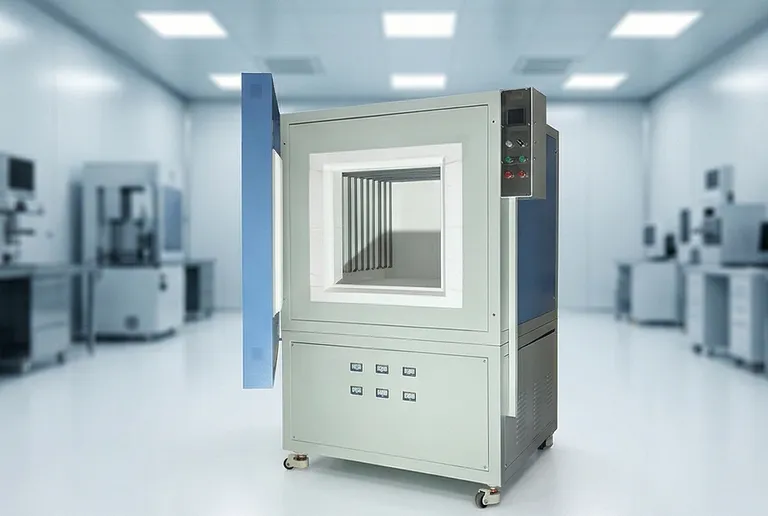
To understand why shells fail, we must look at the physics of the dewaxing stage. This is a delicate race between the expansion of the wax and the strength of the ceramic.
As the temperature rises, the wax pattern inside the shell begins to expand. If the heat is applied unevenly, the outer layer of the wax expands and exerts immense internal pressure before the ceramic has had time to stabilize or before the wax near the pouring gate has even begun to melt. Because ceramics are inherently brittle, they cannot accommodate this internal stress, leading to immediate cracking.
The secret isn't just "heat"—it is uniform thermal radiation. To prevent cracking, the entire ceramic shell must be enveloped in a constant temperature field of approximately 500°C. This ensures that the wax melts evenly and drains rapidly, relieving the internal pressure before it reaches the breaking point of the ceramic.
The Solution: Precision Engineering for Thermal Uniformity
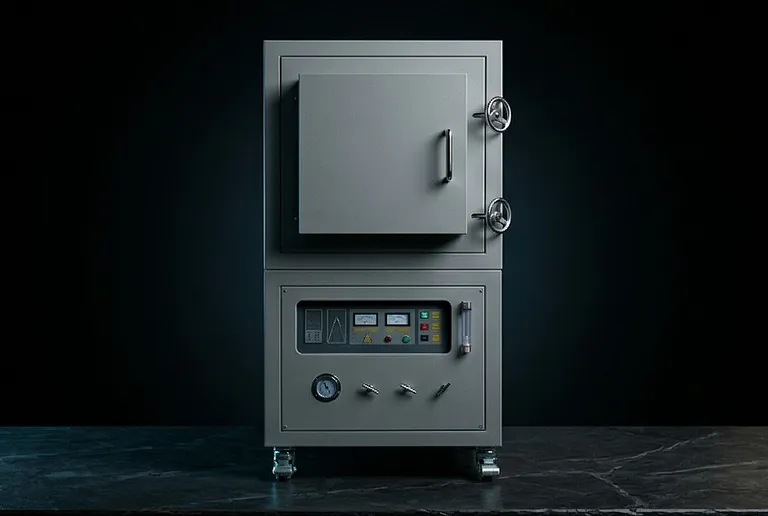
Solving this problem requires more than just a box that gets hot; it requires a tool engineered to provide a controlled, predictable environment. This is where the KINTEK Box Resistance Furnace becomes an essential partner in the laboratory.
Our furnaces are not designed for general heating, but for the specific demands of precision ceramics. By leveraging high-grade heating elements and advanced insulation, KINTEK furnaces create a uniform thermal radiation field. This "thermal soak" allows the wax to reach its liquid state simultaneously across the pattern, creating the precise casting cavities required for complex geometries without stressing the shell.
Key features of KINTEK technology directly address the root causes of failure:
- Programmed Temperature Control: Avoid the "thermal shock" of rapid, uncontrolled heating that kills ceramic shells.
- Superior Temperature Uniformity: Eliminates the hot spots that cause localized wax expansion and shell failure.
- Versatility Beyond Dewaxing: While dewaxing happens at 500°C, our furnaces are capable of reaching the much higher temperatures (1250°C–1350°C) required for subsequent sintering of materials like Alumina or MLCCs, providing a single-tool solution for the entire ceramic lifecycle.
Beyond the Fix: Unlocking High-Performance Ceramic Potential
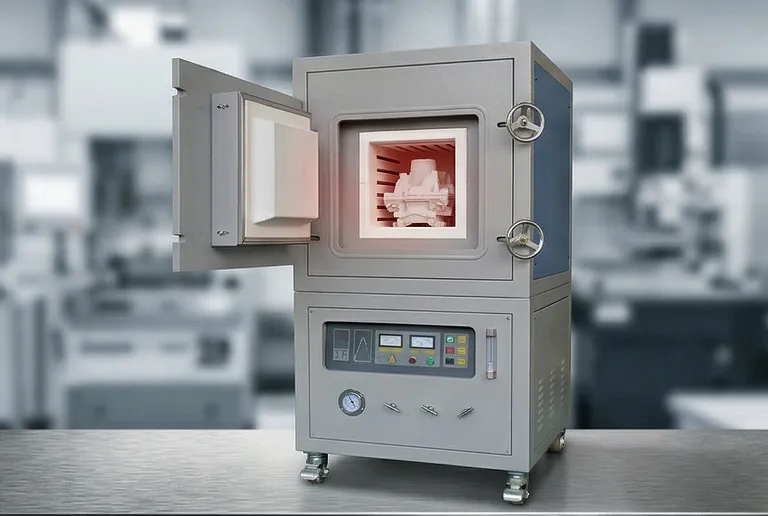
When you move from "fighting fires" to mastering thermal control, the possibilities for your laboratory expand. Solving the dewaxing bottleneck is only the first step.
With a reliable, high-temperature constant temperature field, you can move beyond basic casting. You can achieve 98% theoretical density in alumina sintering, explore the complex world of piezoelectric ceramics like PZT, or even pivot to high-precision glass hot bending for 3D electronics. By eliminating the unpredictability of the dewaxing stage, you free your team to focus on innovation and high-performance material development, significantly improving mechanical strength and product reliability.
At KINTEK, we understand that your laboratory equipment is the foundation of your innovation. Whether you are struggling with shell integrity or looking to scale your sintering process, our team is ready to help you find the right thermal solution. Contact Our Experts today to discuss your specific technical challenges and explore how our customizable furnace solutions can optimize your workflow.
Related Products
- Mesh Belt Controlled Atmosphere Furnace Inert Nitrogen Atmosphere Furnace
- 1200℃ Controlled Inert Nitrogen Atmosphere Furnace
- High Pressure Laboratory Vacuum Tube Furnace
- Vacuum Heat Treat Sintering Furnace with Pressure for Vacuum Sintering
- Multi Zone Laboratory Quartz Tube Furnace Tubular Furnace
Related Articles
- The Invisible Contaminant: Why Your Furnace Atmosphere is Sabotaging Your Results
- Why Your Silicon Carbide Ceramics Are Brittle: The Invisible Role of Argon Atmosphere
- Why Your Galfenol Sheets Fail to Recrystallize—And How Precise Atmosphere Control Unlocks High Performance
- The Hidden Flaw in Your Heat Treatment: It’s Not the Temperature, It’s the Air
- Why Your High-Temp Experiments Fail: It’s Not the Heat, It’s the Atmosphere













