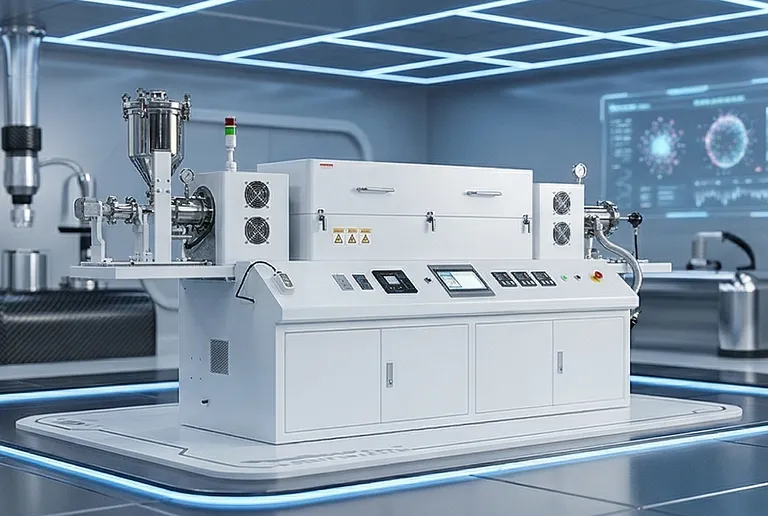
The Frustration of the "Soft Skin" and Unreliable Data
You have spent weeks meticulously refining the chemical composition of a new bearing steel alloy. Every inclusion has been accounted for, and your calculations suggest a high-performance result. But when the samples come back from the heat treatment stage, the data is a mess. The surface hardness is lower than the core—a phenomenon often called "soft skin"—and micro-cracks appear under the microscope.
Instead of analyzing the effects of your alloy's inclusions, you are now stuck troubleshooting a failed heat treatment process. For many researchers and quality control engineers, this inconsistency isn't just a minor delay; it’s a barrier to innovation that leads to wasted materials, blown budgets, and missed deadlines.
The Common Struggle: Why Traditional Hardening Fails
When faced with inconsistent hardness or surface defects, most labs attempt to "tweak" the variables they know. They might adjust the quenching temperature, change the cooling medium, or increase the soaking time.
However, these common fixes often lead to a "Whac-A-Mole" scenario:
- Increasing cooling speed (moving from oil to water) might achieve the desired martensitic hardness, but it often introduces massive internal stresses, leading to severe distortion or quenching cracks.
- Using standard atmospheric furnaces saves on initial costs, but it exposes the hot steel to oxygen. This leads to surface oxidation and, more critically, decarburization—where the steel loses carbon at the surface, effectively ruining its wear resistance.
These failures have real business consequences. In the bearing industry, where reliability is everything, a non-uniform microstructure means a shorter product lifespan and a higher risk of catastrophic field failure.
The Root Cause: The Dual Threat of Oxygen and Thermal Stress
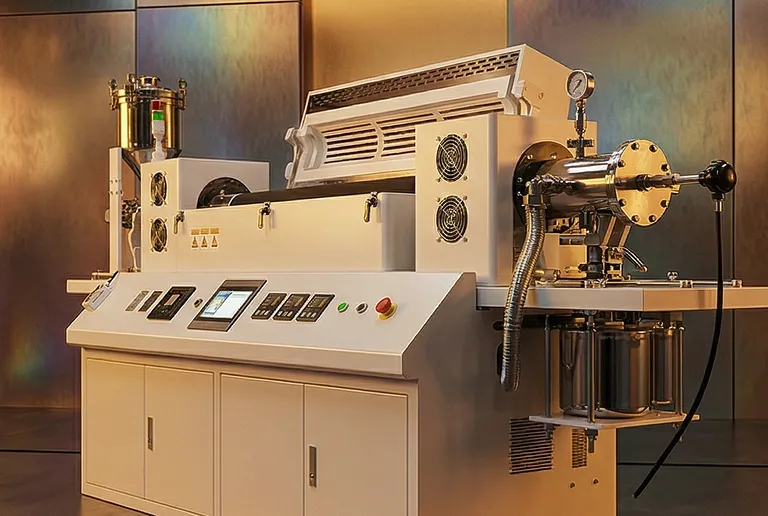
The reason those common fixes fail is that they don't address the fundamental physics of bearing steel transformation. To achieve a high-quality bearing, you must solve two problems simultaneously:
- Chemical Integrity (The Surface): At the high temperatures required for austenitizing (around 840°C), steel is highly reactive. If even a small amount of oxygen or water vapor is present in the furnace atmosphere, it will react with the carbon in the steel. This "decarburization" leaves you with a soft surface layer that cannot be hardened, regardless of how fast you quench it.
- Structural Transformation (The Core): To turn the soft austenite structure into hard martensite, the steel must be cooled rapidly. However, if the cooling is too violent, the temperature gradient between the surface and the core becomes too steep, causing the material to warp or crack.
Standard heat treatment forces a compromise between these two factors. To truly isolate the variables in your steel research, you need a process that removes the atmosphere entirely and provides a "Goldilocks" cooling rate—fast enough for hardness, but gentle enough for structural integrity.
The Solution: Precision Vacuum Oil Quenching
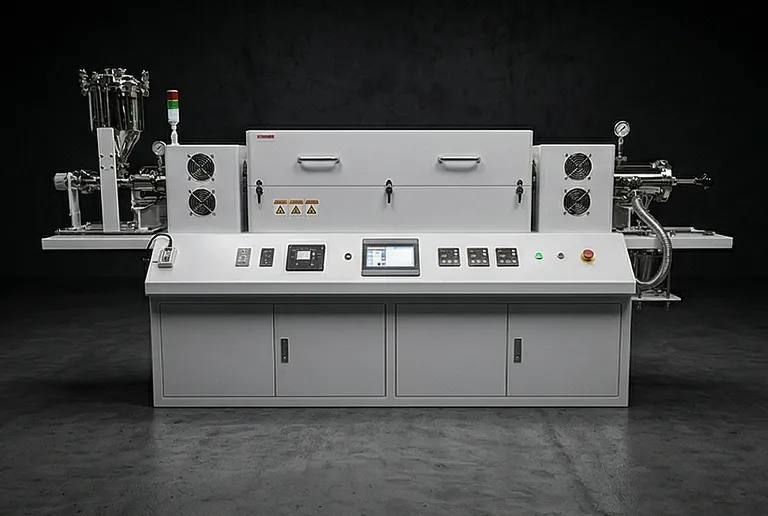
This is where the Vacuum Oil Quenching Furnace becomes an essential tool rather than just a piece of equipment. It is designed specifically to tackle the root causes mentioned above by decoupling the heating environment from the cooling medium.
- The Vacuum Advantage: By heating the steel in a controlled vacuum, you eliminate the threat of oxidation and decarburization. There is no air to react with the carbon. The "matrix microstructure" remains consistent from the core to the very outer edge, ensuring that the results you see are a reflection of your material science, not a furnace error.
- The Oil Quench Precision: Unlike gas quenching, which may be too slow for certain thick-section bearing steels, or water quenching, which is too aggressive, oil quenching provides a moderate, controlled cooling rate. In a vacuum oil quenching furnace, the parts are heated in the vacuum chamber and then submerged into an internal oil tank without ever being exposed to the outside air.
At KINTEK, our Vacuum Oil Quenching Furnaces are engineered to provide this exact level of control. By integrating high-vacuum technology with precise oil temperature management, we provide a stable environment that ensures the martensitic transformation is uniform every single time. It isn't just about "getting the part hot"; it's about protecting the metallurgical "soul" of your steel.
Beyond the Fix: Unlocking High-Performance Innovation
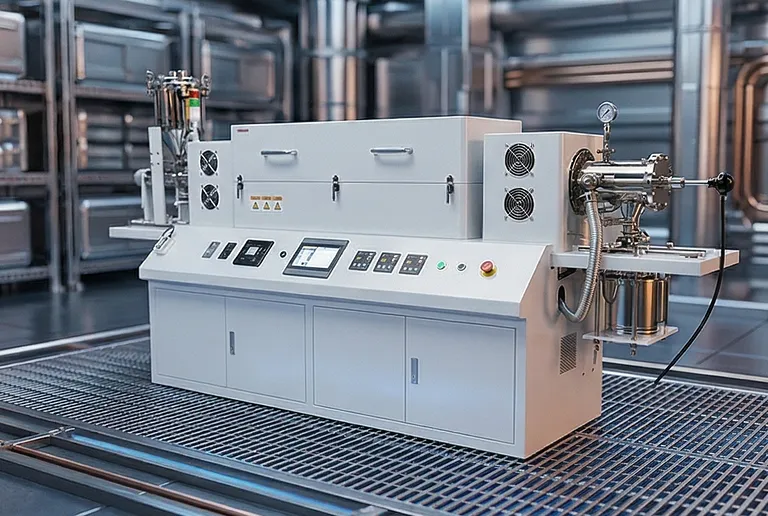
Once you eliminate the "noise" caused by inconsistent heat treatment, a new world of possibility opens up for your lab or production line.
When you can trust that your furnace will deliver a consistent, decarburization-free matrix, you can finally focus on the high-level variables that matter:
- Inclusion Analysis: Precisely study how different impurities affect fatigue life without surface defects clouding your data.
- Complex Geometries: Process intricate bearing components and mold steels with minimal distortion, reducing the need for expensive post-quench grinding.
- Accelerated R&D: Move from alloy design to validated results faster, knowing that your heat treatment process is a "constant" rather than a "variable."
Solving the challenge of bearing steel isn't just about avoiding failure; it’s about creating the foundation for the next generation of high-precision engineering.
If you are tired of troubleshooting surface defects and want to bring world-class precision to your heat treatment process, our team is ready to help. Whether you need a specialized vacuum environment for R&D or a high-capacity system for production, we can tailor a solution to your specific metallurgical requirements. Contact Our Experts today to discuss how we can stabilize your results and move your project forward.
Related Products
- Vacuum Heat Treat Sintering Furnace with Pressure for Vacuum Sintering
- Vacuum Heat Treat Sintering and Brazing Furnace
- Small Vacuum Heat Treat and Tungsten Wire Sintering Furnace
- Vacuum Induction Melting Furnace
- Vacuum Heat Treat Sintering Furnace Molybdenum Wire Vacuum Sintering Furnace
Related Articles
- Why Your Sintered Parts Fail: It’s Not Just About Heat, But Pressure and Purity
- Why Your Stainless Steel Parts Fail Pressure Tests—and How Vacuum Sintering Fixes the Density Gap
- Why Your Electrochromic Electrodes Fail During Sintering—And How Vacuum Control Restores Transparency
- Why Your 3D-Printed Maraging Steel Parts Aren't Performing—And How to Fix the Structural Weakness
- How Vacuum Pressure Sintering Furnaces Elevate Material Performance Across Industries












