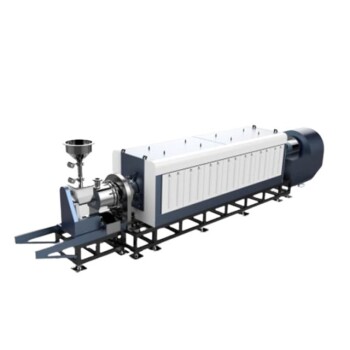
The recipe for complete phase conversion in nanosized barium hexaferrite (BaFe₁₂O₁₉) powder is a tightly controlled two-stage thermal process. First, the hydroxide precursor is pre-heated at 580 °C for 4 hours, then ground and subsequently calcined at 900 °C for 5 hours in a high-temperature laboratory furnace. This exact regimen transforms the amorphous wet‑chemistry product into the single‑phase hexagonal M‑type structure with lattice constants a = 0.584 nm and c = 2.341 nm, without generating unwanted secondary phases.
Synthesizing phase-pure nano‑BaFe₁₂O₁₉ is not just about hitting a target temperature—it is a choreography of thermal steps. The two‑stage protocol (580 °C pre‑heat + 900 °C calcination) decouples dehydration and organic removal from the actual ferrite crystallization, ensuring complete conversion while preserving the nanoscale morphology you worked so hard to create.
The Two‑Stage Thermal Roadmap for Phase‑Pure BaFe₁₂O₁₉
The surface‑level answer is the 580 °C/4 h pre‑heat followed by 900 °C/5 h calcination. Understanding why each stage exists is what turns a recipe into a reliable synthesis.
Stage 1 – Pre‑heating at 580 °C: Burn‑Off Without Crystallization
Wet‑chemistry methods like reverse microemulsion leave behind hydroxides, residual surfactants, and nitrates.
Heating the precursor to 580 °C over several hours gently removes these organics and volatiles.
If you jump straight to the high‑temperature step, the rapid outgassing creates porosity, agglomerates, and carbon residues that later inhibit phase purity.
This first plateau burns away the “chemical baggage” before the real crystal engineering begins.
Intermediate Grinding: The Often‑Overlooked Step
After the 580 °C soak, the powder is partially decomposed but still amorphous.
A brief intermediate grinding breaks apart soft agglomerates that would otherwise sinter unevenly later.
Uniform particle packing is essential for homogeneous heat distribution during calcination.
Skipping this grind risks hot spots and local over‑firing, which nucleate secondary phases like hematite (α‑Fe₂O₃) or barium monoferrite.
Stage 2 – Calcination at 900 °C: The Atomic Reorganization
900 °C is the thermodynamic sweet spot where the hexagonal BaFe₁₂O₁₉ lattice assembles.
Over 5 hours, ions diffuse across the five crystallographic sublattices (12k, 2a, 4f₁, 4f₂, 4e) to form the complex magnetoplumbite structure.
Longer hold times at this temperature drive the reaction to completion, eliminating trace intermediate phases.
The resulting powder shows the characteristic XRD peaks for M‑type hexaferrite and no detectable impurities.
Why Calcination Parameters Matter for Nano‑Sized Hexaferrite
A high‑temperature lab furnace isn’t just an oven—it’s the synthetic environment that determines phase identity, crystallite size, and ultimately magnetic performance.
Temperature Precision and Phase Purity
The 900 °C target is narrow.
At 850 °C, conversion may remain incomplete, leaving behind BaFe₂O₄ or α‑Fe₂O₃.
At 950 °C, you risk excessive grain growth that pushes the material out of the true nanoscale regime.
High‑temperature furnaces with multi‑segment controllers maintain ±1 °C uniformity, essential for reproducible batch‑to‑batch phase purity.
Even slight thermal gradients inside a muffle furnace can produce a mixed‑phase product that looks “almost pure” but fails magnetically.
Crystallite Size Control and the Nano Mandate
You chose a wet‑chemistry route precisely to keep particles below 100 nm.
The 580 °C pre‑heat stage partially stabilizes the amorphous network, delaying crystallization until 900 °C.
At 900 °C, the 5‑hour dwell provides enough time for atomic ordering without runaway Ostwald ripening.
The result is a powder where the average crystallite size stays within the 40–80 nm range—small enough for superparamagnetic limits but large enough for hard‑magnetic performance.
The Role of Furnace Atmosphere
Although the primary protocol uses a standard muffle (air) atmosphere, many advanced syntheses of substituted hexaferrites demand controlled gas flows to manage oxidation states.
For pure BaFe₁₂O₁₉, an oxidizing air environment stabilizes the Fe³⁺ state across all sublattices, ensuring the collinear Gorter‑type ferrimagnetic structure.
Understanding the Trade‑offs
Even the perfect thermal recipe has limitations. Recognizing them prevents misinterpretation of results and guides troubleshooting.
- Pre‑heating too high: Above ~600 °C, partial crystallization can occur prematurely, locking in a disordered intermediate that resists complete conversion at 900 °C.
- Calcination time beyond 5 h: While some references push to 6–8 hours for bulk ceramics, for nanopowders extra time often triggers excessive grain growth and loss of specific surface area.
- Ramp rates matter: Fast heating (10–20 °C/min) may be convenient, but slow ramps (2–5 °C/min) reduce thermal shock and minimize the risk of cracking agglomerates that later trap unreacted material.
- Substitutions alter the thermal window: If you later dope with Co–Ti or Sc, the optimal calcination temperature shifts. Substituted hexaferrites often require 1000–1200 °C to distribute dopant ions across the five sublattices, as highlighted in ferroelectric BST processing that demands 1150 °C. Applying the pure‑phase parameters blindly to doped systems yields incomplete substitution and poor magnetic anisotropy.
How to Apply This to Your Synthesis
Your exact thermal protocol must align with your end goal. Use the following guidelines to customize the baseline 580 °C/900 °C recipe.
- If your primary focus is absolute phase purity (for research or benchmarking): Stick rigorously to the two‑stage protocol with intermediate grinding. Monitor the 580 °C plateau with TGA/DSC first to confirm decomposition profiles for your specific precursor batch.
- If your primary focus is preserving nanosize for high‑density recording media: Limit the 900 °C dwell to 4–5 hours and consider a slightly slower ramp to minimize grain growth. Validate with XRD line broadening and TEM before scaling up.
- If your primary focus is magnetic performance (coercivity, saturation magnetization): Ensure the 900 °C stage reaches full conversion; incomplete reaction leaves magnetically dead phases that dilute remanence. A short post‑calcination anneal at 925 °C for 1 hour can sometimes heal defects without catastrophic coarsening.
- If your primary focus is scaled‑up production for permanent magnet components: Invest in a furnace with excellent temperature uniformity and reproducibility. Even a 5 °C hot spot across a large boat will create a gradient from under‑fired to over‑fired powder, ruining batch consistency.
Mastering these parameters transforms a delicate lab curiosity into a reliable, manufacturable nanoscale magnetic material. The 580 °C/4 h + 900 °C/5 h sequence is your blueprint; precise execution is what turns it into a high‑performance ferrite.
Summary Table:
| Process Stage | Temperature & Dwell Time | Primary Objective | Output & Key Metrics |
|---|---|---|---|
| Stage 1: Pre-Heating | 580 °C for 4 hours | Burn off organics, surfactants, and nitrates | Amorphous, carbon-free precursor |
| Intermediate Grind | Room Temperature | Disperse soft agglomerates for uniform packing | Homogeneous density, prevents hot spots |
| Stage 2: Calcination | 900 °C for 5 hours | Atomic reorganization into hexagonal M-type lattice | Single-phase BaFe₁₂O₁₉ (40–80 nm crystallites) |
Achieving strict thermal uniformity is critical for phase-pure synthesis. KINTEK specializes in advanced laboratory equipment and consumables, offering a comprehensive range of high-temperature furnaces—including muffle, tube, rotary, vacuum, CVD, and atmosphere furnaces—all fully customizable for your precise research and production needs. Elevate your materials research with unmatched temperature control—contact KINTEK today to consult with our experts!
Related Products
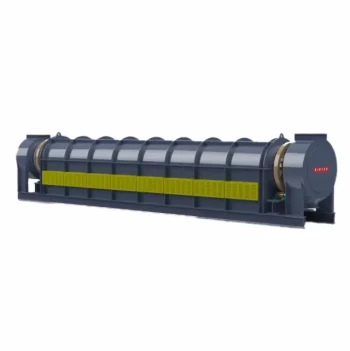
- Electric Rotary Kiln Pyrolysis Furnace Plant Machine Small Rotary Kiln Calciner
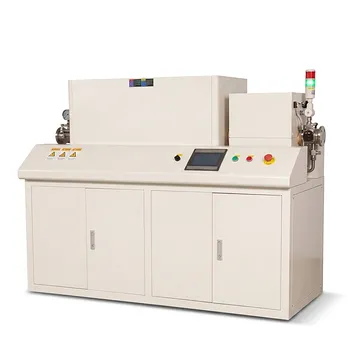
- Magnesium Extraction and Purification Condensing Tube Furnace
- Spark Plasma Sintering SPS Furnace
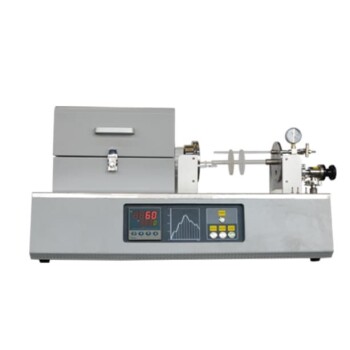
- Vertical Laboratory Quartz Tube Furnace Tubular Furnace
- High Temperature Muffle Oven Furnace for Laboratory Debinding and Pre Sintering
People Also Ask
- What are the advantages of electric rotary kilns compared to fuel-fired ones? Boost Precision and Efficiency in Your Process
- What advantages do electric rotary kilns offer over fuel-based kilns? Boost Efficiency and Purity in Your Process
- What materials can be processed in an electric rotary kiln? Versatile Solutions for Advanced Materials
- What are the key components of a rotary kiln electric furnace? Unlock Efficient Thermal Processing
- What are the main applications of a rotary kiln electric furnace? Achieve Uniform Heat Treatment for Powders