The primary advantage of Plasma-Enhanced Chemical Vapor Deposition (PECVD) is its ability to deposit high-quality thin films at significantly lower temperatures than traditional Chemical Vapor Deposition (CVD) methods. By using an energy-rich plasma to break down precursor gases instead of relying solely on high heat, PECVD makes it possible to coat temperature-sensitive materials that would otherwise be damaged or destroyed.
While conventional deposition techniques are often limited by the thermal budget of the substrate, PECVD bypasses this constraint. It leverages plasma energy to drive chemical reactions, unlocking higher-quality films, faster production rates, and the ability to work with a much wider range of materials.
The Core Advantage: Overcoming Thermal Limitations
Standard CVD requires high temperatures, often exceeding 600°C, to provide enough thermal energy to break the chemical bonds of precursor gases and initiate film deposition. This fundamental requirement creates significant constraints.
How Plasma Replaces Heat
PECVD introduces an additional energy source: plasma. A plasma is an ionized gas containing a mix of ions, electrons, and highly reactive neutral species.
By applying an electromagnetic field (typically radio frequency), the system energizes the precursor gases, creating a plasma. This high-energy environment is potent enough to break chemical bonds without the need for extreme heat.
Lower Deposition Temperatures (200-400°C)
The most significant consequence of using plasma is a dramatic reduction in the required substrate temperature, typically bringing it down to the 200-400°C range.
This low-temperature process is critical for depositing films on substrates that cannot withstand high heat, such as polymers, plastics, or complex semiconductor devices that already have metallic layers fabricated on them.
The Impact on Film Quality and Production
The use of plasma does more than just lower the temperature; it fundamentally alters the deposition environment, leading to several other key benefits.
Faster Deposition Rates
The plasma generates a high concentration of very reactive chemical species. This accelerates the kinetics of the deposition reaction, resulting in significantly faster film growth compared to many low-temperature conventional CVD processes.
Improved Film Density and Durability
The energetic plasma environment promotes the formation of dense, compact films with strong adhesion to the substrate. This process results in coatings with fewer pinholes and greater overall durability.
These properties make PECVD films ideal for use as protective passivation layers or high-density masks in the fabrication of microelectronic devices.
Versatility in Materials and Substrates
PECVD is a well-established and reliable technique for depositing a wide variety of critical materials, including silicon nitride (SiN), silicon dioxide (SiO2), and amorphous or microcrystalline silicon.
This versatility allows it to be used on diverse substrates like optical glass, silicon wafers, quartz, and even stainless steel for applications ranging from solar cells and display technologies to wear-resistant coatings.
Understanding the Trade-offs
While powerful, PECVD is not without its complexities. The same plasma that provides its advantages also introduces potential challenges that must be carefully managed.
Potential for Ion Bombardment Damage
The high-energy ions within the plasma can strike the substrate surface, potentially causing damage to the underlying device or the growing film itself. Process control is critical to balance reactive chemistry against physical damage.
Hydrogen Incorporation
Many precursor gases used in PECVD (such as silane, SiH₄) contain hydrogen. It is common for hydrogen atoms to be incorporated into the deposited film, which can alter its electrical and optical properties. This must be accounted for in the device design.
System Complexity
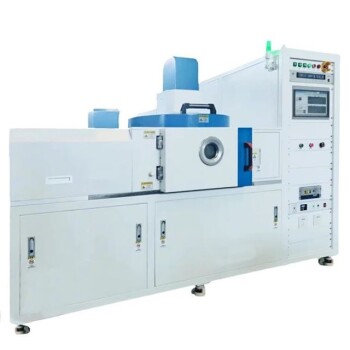
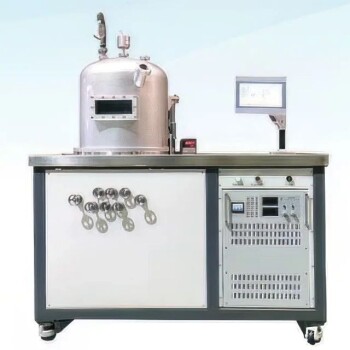
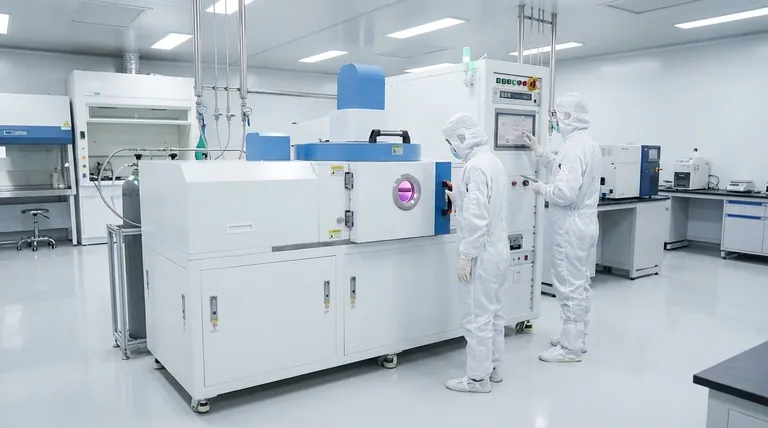
A PECVD system, with its vacuum chamber, gas handling, RF power generator, and matching network, is inherently more complex and costly than a simple atmospheric thermal CVD furnace.
Making the Right Choice for Your Application
Selecting a deposition method depends entirely on the specific goals of your project. PECVD excels where other methods fall short.
- If your primary focus is coating heat-sensitive materials: PECVD is the definitive choice, as its low-temperature process prevents substrate damage.
- If your primary focus is manufacturing throughput: PECVD's characteristically high deposition rates make it ideal for efficient, large-scale production.
- If your primary focus is creating a high-quality dielectric or passivation layer: The dense, low-defect films produced by PECVD offer superior performance for insulation and device protection.
Ultimately, PECVD's use of plasma energy transforms the landscape of thin-film deposition, enabling processes and products that would be impossible with purely thermal methods.
Summary Table:
| Advantage | Description |
|---|---|
| Lower Temperature | Deposits films at 200-400°C, ideal for heat-sensitive materials like polymers and semiconductors. |
| Faster Deposition | High plasma reactivity accelerates film growth, boosting production efficiency. |
| Improved Film Quality | Produces dense, durable films with fewer defects for better device performance. |
| Material Versatility | Handles materials like silicon nitride and silicon dioxide on various substrates. |
Ready to enhance your thin-film processes with advanced PECVD solutions? At KINTEK, we leverage exceptional R&D and in-house manufacturing to provide diverse laboratories with cutting-edge high-temperature furnace systems. Our product line includes Muffle, Tube, Rotary Furnaces, Vacuum & Atmosphere Furnaces, and CVD/PECVD Systems, all backed by strong deep customization capabilities to precisely meet your unique experimental needs. Whether you're working with semiconductors, solar cells, or other materials, our solutions deliver superior film quality, efficiency, and reliability. Contact us today to discuss how we can optimize your deposition workflows and drive innovation in your lab!
Visual Guide

Related Products
- RF PECVD System Radio Frequency Plasma Enhanced Chemical Vapor Deposition
- Slide PECVD Tube Furnace with Liquid Gasifier PECVD Machine
- Inclined Rotary Plasma Enhanced Chemical Deposition PECVD Tube Furnace Machine
- Inclined Rotary Plasma Enhanced Chemical Deposition PECVD Tube Furnace Machine
- 915MHz MPCVD Diamond Machine Microwave Plasma Chemical Vapor Deposition System Reactor
People Also Ask
- What is RF in PECVD? A Critical Control for Plasma Deposition
- What is the role of RF power in PECVD and how does the RF-PECVD process work? Master Thin Film Deposition Control
- What are the applications of plasma enhanced chemical vapor deposition? Key Uses in Electronics, Optics & Materials
- What are the key advantages of PECVD technology? Achieve Low-Temperature, High-Quality Thin Film Deposition
- How are deposition rates and film properties controlled in PECVD? Master Key Parameters for Optimal Thin Films