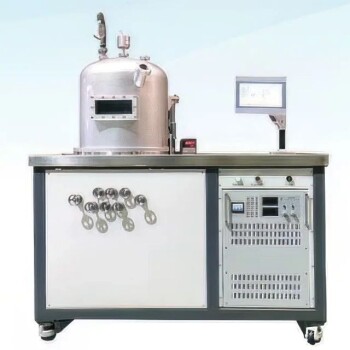
The implementation of an argon gas shielding environment is strictly necessary to create an inert barrier between the molten Al2214 alloy and the surrounding atmosphere. This protective layer is the primary mechanism for preventing the molten metal from reacting with air, which safeguards the material against oxidation and hydrogen absorption.
Core Takeaway Molten aluminum is highly reactive; without an inert barrier, it rapidly degrades. Argon shielding is not merely a precaution but a critical quality control measure that minimizes porosity and ensures the structural integrity of the final composite material.
The Mechanics of Material Protection
Preventing Oxidation
When aluminum alloys like Al2214 are melted, they have a high affinity for oxygen. Without a protective shield, the high-temperature molten pool reacts immediately with oxygen in the air.
This reaction forms unwanted oxide scales on the surface and within the melt. By displacing the air with argon, you eliminate the reactants required for these oxides to form, maintaining the chemical purity of the alloy.
Controlling Hydrogen Absorption
Atmospheric moisture is a significant threat to aluminum casting. Water vapor in the air reacts with molten aluminum to release hydrogen gas, which is then absorbed into the liquid metal.
As the metal creates a solid composite, this trapped hydrogen precipitates out, creating gas bubbles known as porosity. An argon environment creates a dry, inert zone that blocks moisture, drastically reducing the risk of porosity in the solidified composite.
Optimizing Microstructure
The quality of the final composite relies on a dense, uniform internal structure. The presence of oxides or gas pores disrupts the material's matrix, creating weak points that lead to mechanical failure.
By maintaining an inert atmosphere, you ensure a high-quality microstructure. This creates a foundation for consistent mechanical properties across the entire production batch.
Surface Tension Balance
Beyond chemical reactions, the atmosphere affects the physical behavior of the melt. Introducing an inert gas helps maintain the natural surface tension balance of the molten pool.
This stability prevents surface irregularities caused by oxidation films. The result is a smoother, defect-free processed surface that requires less post-processing.
Common Pitfalls and Considerations
The Risk of Inconsistent Flow
Simply having argon gas lines is not enough; the flow must be consistent and effectively distributed. If the shielding is intermittent or turbulence disrupts the gas blanket, oxygen can breach the protective layer.
False Security
Operators often assume that "turning on the gas" guarantees protection. However, leaks in the delivery system or improper nozzle positioning can render the shielding ineffective. Partial shielding can sometimes be as detrimental as no shielding if it leads to undetected, localized defects.
Making the Right Choice for Your Goal
To maximize the quality of your Al2214 composites, align your shielding strategy with your specific production targets:
- If your primary focus is mechanical strength: Prioritize a sealed, high-purity argon environment to eliminate hydrogen porosity, which is the main cause of structural weakness.
- If your primary focus is surface finish: Ensure the argon flow is laminar and covers the entire melt pool to prevent oxide scaling and maintain surface tension.
Ultimately, the precision of your argon shielding correlates directly to the density and reliability of your final composite product.
Summary Table:
| Factor | Impact of Argon Shielding | Resulting Benefit |
|---|---|---|
| Oxidation | Displaces oxygen to prevent oxide scale formation | Higher chemical purity and cleaner melt |
| Hydrogen | Blocks atmospheric moisture absorption | Minimizes gas porosity and internal defects |
| Microstructure | Maintains a dense, uniform material matrix | Consistent mechanical properties & strength |
| Surface Finish | Stabilizes surface tension of the molten pool | Smoother surface with less post-processing |
Elevate Your Material Research with KINTEK Precision
Achieving the perfect inert environment for Al2214 composite production requires equipment engineered for reliability. At KINTEK, we specialize in high-performance thermal solutions including Muffle, Tube, Rotary, Vacuum, and CVD systems, all of which can be customized to your specific gas-shielding and atmospheric requirements.
Our expert R&D and manufacturing teams are dedicated to providing lab high-temp furnaces that ensure the structural integrity and density of your advanced materials. Don't let oxidation or porosity compromise your results—contact KINTEK today to discuss your unique project needs and discover the value of precision engineering.
Visual Guide
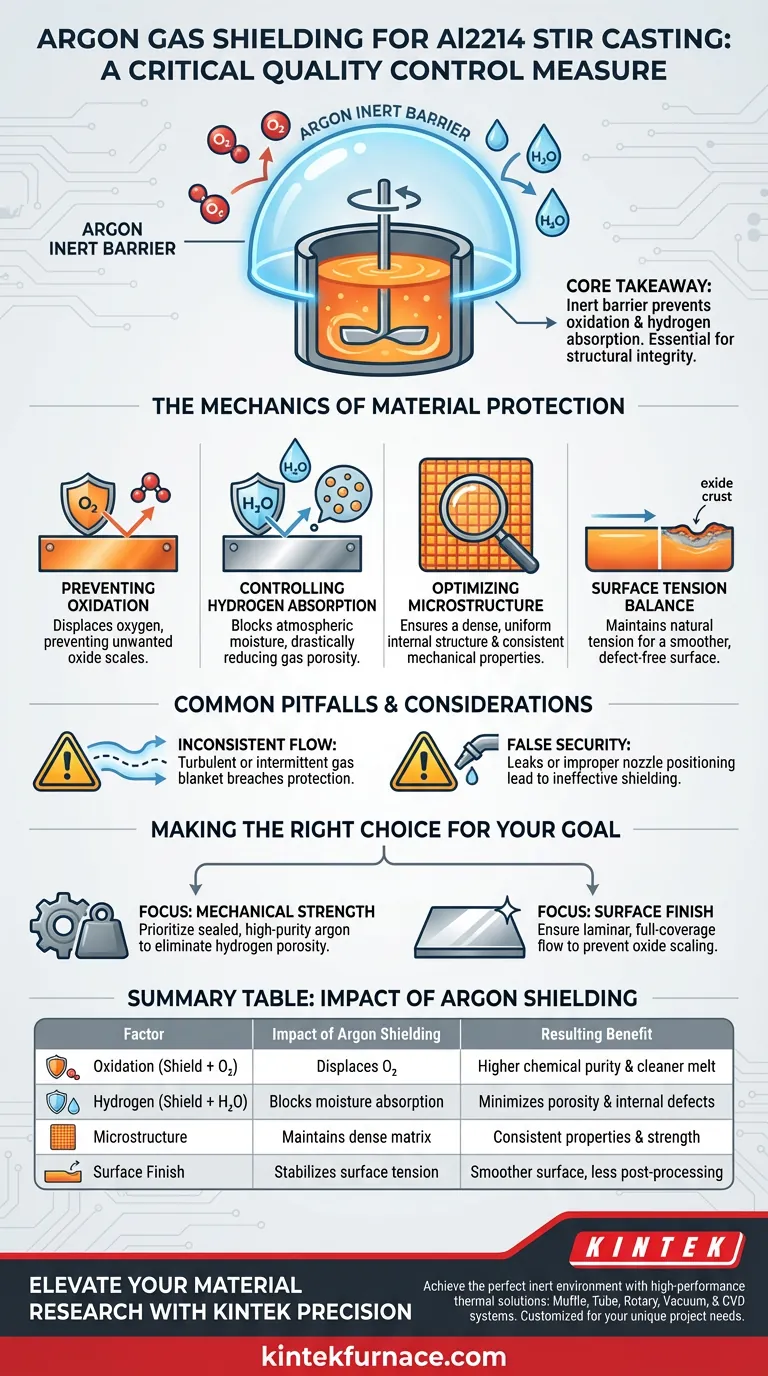
References
- Revanna Kambaiah, Anteneh Wogasso Wodajo. Mechanical‐wear behavior and microstructure analysis of Al2214 alloy with <scp>B<sub>4</sub>C</scp> and graphite particles hybrid composites. DOI: 10.1002/eng2.12876
This article is also based on technical information from Kintek Furnace Knowledge Base .
Related Products
People Also Ask
- What is Hot-filament Chemical Vapor Deposition (HFCVD)? Achieve High-Quality Thin Films with Precision Control
- What are the equipment for chemical vapor deposition? A Guide to the 5 Essential Components
- What is the significance of the vacuum pressure control system in the CVD coating process for powders?
- What is the function of high-purity Argon (Ar) gas during CVD? Optimize Your Thin Film Uniformity and Purity
- What are the advantages of using Chemical Vapor Deposition (CVD) for coating turbine blades? Enhance Life & Performance