The use of silicon carbide rod electric heating furnaces is critical for maintaining the precise thermal window required for sulfoaluminate cement clinker synthesis. These furnaces provide a stable high-temperature environment ranging from 1150°C to 1250°C, which is essential for the solid-state reactions between raw materials like limestone, phosphogypsum, and copper slag. By offering rapid heating rates and superior temperature uniformity, these furnaces ensure the stable formation of key mineral phases while preventing their thermal decomposition.
Core Takeaway: A silicon carbide (SiC) rod electric furnace provides a highly controlled, high-efficiency thermal environment that facilitates the precise mineral formation kinetics required for sulfoaluminate clinker, ensuring phase stability and energy efficiency.
Thermal Environment and Precision Control
Precision in the 1150°C to 1250°C Range
Sulfoaluminate clinker synthesis requires a specific temperature window, typically between 1150°C and 1250°C, to achieve optimal mineralogy. Silicon carbide heating elements are ideally suited for this range, providing the stable high-temperature environment necessary for low-temperature roasting.
Superior Temperature Uniformity and Thermal Compensation
The arrangement and properties of SiC rods allow for high-efficiency thermal compensation across the furnace chamber. This uniformity ensures that the entire raw material mixture reacts at the same rate, preventing "cold spots" that result in unreacted lime or "hot spots" that lead to over-burning.
Impact on Mineral Phase Stability
Facilitating Solid-State Reactions
The furnace environment allows raw materials to undergo complex solid-state reactions to form core mineral phases. This includes the formation of calcium sulfoaluminate (C4A3Š), calcium sulfosilicate, and calcium ferroaluminate, which are responsible for the cement's unique properties.
Preventing Mineral Decomposition
Precise control prevents the temperature from exceeding the stability limits of the target minerals. This is crucial for minerals like calcium sulfoferrite (C4F3Š), which can decompose if the thermal environment is not strictly regulated during the roasting process.
Process Efficiency and Kinetics
Rapid Heating and Mineral Kinetics
Silicon carbide rods provide rapid heating capabilities, which are vital for studying the mineral formation kinetics of the clinker. Fast ramp-up times allow researchers to observe how quickly mineral phases grow and coexist without the interference of long pre-heating cycles.
Supporting Low-Carbon Production
Compared to traditional industrial kilns, these electric furnaces offer a more stable internal atmosphere and higher energy efficiency. This precision supports low-carbon production goals by reducing the overall energy consumption required for the roasting process.
Understanding the Trade-offs
Equipment Limitations and Maintenance
While SiC rods are efficient, they are subject to aging, where their electrical resistance increases over time, requiring voltage adjustments to maintain performance. If the furnace is not properly maintained, the temperature uniformity can degrade, leading to inconsistent clinker quality.
Scaling from Lab to Industry
The precise conditions of an electric furnace are often easier to manage at a laboratory scale than in large-scale rotary kilns. Translating these thermal profiles to industrial production requires careful consideration of heat transfer differences between electric heating and flame-based combustion.
How to Apply This to Your Project
Understanding the technical conditions of your furnace is the first step in optimizing clinker performance and mineralogical purity.
- If your primary focus is mineralogical purity: Prioritize a furnace with high-density SiC rods to ensure maximum temperature uniformity and prevent the decomposition of calcium sulfoaluminate.
- If your primary focus is energy efficiency: Utilize the rapid heating capability of the furnace to shorten roasting times and minimize total energy expenditure during the synthesis process.
- If your primary focus is studying reaction kinetics: Ensure your furnace is equipped with advanced programmable controllers to maintain a consistent heating rate and a stable internal atmosphere.
Mastering these technical conditions allows for the consistent production of high-performance, low-carbon sulfoaluminate cements.
Summary Table:
| Technical Feature | Condition Provided | Impact on Clinker Synthesis |
|---|---|---|
| Temperature Range | 1150°C to 1250°C | Enables optimal low-temperature roasting window. |
| Heating Element | Silicon Carbide (SiC) Rods | Facilitates rapid heating and high-efficiency compensation. |
| Thermal Stability | High Uniformity | Prevents mineral decomposition (e.g., C4F3Š) and cold spots. |
| Reaction Control | Solid-State Kinetics | Ensures precise formation of calcium sulfoaluminate (C4A3Š). |
| Efficiency | Stable Atmosphere | Supports low-carbon production and energy-efficient roasting. |
Elevate Your Cement Research with KINTEK’s Precision Thermal Solutions
Achieving the perfect mineral phase in sulfoaluminate cement requires absolute thermal control. KINTEK specializes in high-performance laboratory equipment, offering a comprehensive range of high-temperature furnaces—including muffle, tube, vacuum, CVD, and atmosphere furnaces—all designed to meet the rigorous demands of clinker synthesis.
Why choose KINTEK?
- Precision Engineering: Maintain the exact 1150°C–1250°C window required for phase stability.
- Customizable Solutions: Our furnaces are tailored to your unique research or production needs.
- Industry Expertise: We support low-carbon cement innovation with energy-efficient, rapid-heating SiC technology.
Ready to optimize your synthesis process? Contact KINTEK today for a customized quote!
References
- A. Karshyga, A. Tulegulov. INFLUENCE OF MANUFACTURED WASTE QUALITY ON THE STRENGTH OF EMPTY WALL STONE. DOI: 10.34660/inf.2021.64.27.015
This article is also based on technical information from Kintek Furnace Knowledge Base .
Related Products
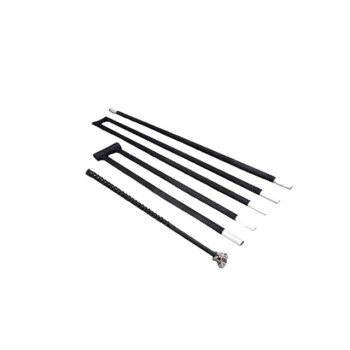
- Silicon Carbide SiC Thermal Heating Elements for Electric Furnace
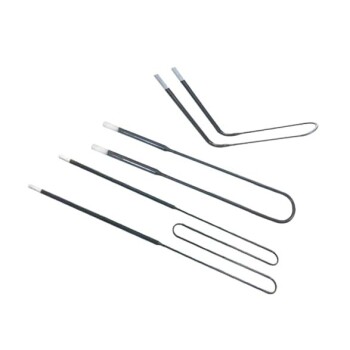
- Molybdenum Disilicide MoSi2 Thermal Heating Elements for Electric Furnace
- Electric Rotary Kiln Continuous Working Small Rotary Furnace Kiln for Pyrolysis Plant Heating
- Spark Plasma Sintering SPS Furnace
- Electric Rotary Kiln Pyrolysis Furnace Plant Machine Small Rotary Kiln Calciner
People Also Ask
- How do the different types of silicon carbide heating elements compare in terms of applications? Find the Best Fit for Your High-Temp Needs
- What are the temperature capabilities and mounting options for silicon carbide heating elements? Unlock High-Temp Flexibility and Durability
- How do silicon carbide heating elements enhance the heat treatment of alloys? Achieve Superior Temperature Control
- What is the recommended surface load for silicon carbide heating elements at different furnace temperatures? Maximize Lifespan & Performance
- What are the advantages of using silicon carbide heating elements in industrial furnaces? Boost Efficiency and Durability