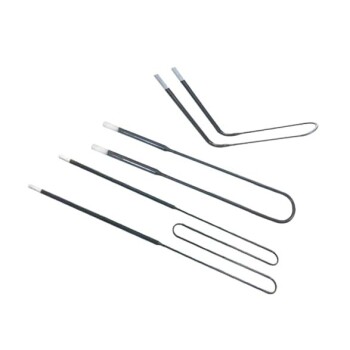
High-frequency induction heating coils provide a superior method for high-temperature thermal simulation by generating heat directly within the specimen via electromagnetic induction. This process enables extremely fast heating rates and high power densities, allowing specimens to reach temperatures like 1250°C rapidly while ensuring excellent heat distribution uniformity and precise microstructural control.
High-frequency induction heating enables researchers to achieve rapid thermal turnover and precise soaking conditions by eliminating equipment thermal inertia. This ensures that experimental results reflect the material's actual response to thermal-mechanical stress rather than artifacts of the heating process.
Achieving Superior Thermal Precision
Direct Heat Generation and Efficiency
Unlike traditional furnaces that rely on radiation or convection, induction heating generates heat directly within the material. By using high frequencies (10kHz to 700kHz), the system creates a shallow "skin depth" where electrical resistance is highest. This leads to a high and efficient conversion of energy into heat right at the specimen's surface.
Elimination of Thermal Inertia
In thermal simulation, the ability to change temperatures quickly is vital for accuracy. Induction coils do not need to heat a large furnace chamber or heavy heating elements, which minimizes thermal inertia. This allows for temperature control accuracy within ±3°C, which is critical for complex testing like thermomechanical fatigue (TMF).
Uniform Heat Distribution
Uniformity is essential for precise soaking treatments at high temperatures. High-frequency coils ensure the specimen reaches the desired microstructural state quickly and evenly. This consistency is necessary to produce reliable data in high-temperature experiments where even minor gradients can skew results.
Preserving Material Integrity
Minimizing Grain Coarsening
Slow heating rates often lead to undesirable grain growth, which can change the material properties before the actual experiment begins. The extremely fast heating rates of induction coils allow the specimen to bypass prolonged exposure to intermediate temperatures. This preserves the original microstructure and prevents unnecessary grain coarsening.
Localized Heating Control
The heating pattern in an induction system follows the applied magnetic field very closely. This allows for localized heating specifically in the gauge section of a specimen. By focusing energy only where it is needed, researchers can reduce the risk of thermal distortion or damage to the rest of the testing apparatus.
Facilitating High-Frequency Turnover
For experiments requiring rapid cycling between high and low temperatures, induction is the most capable technology. It supports the high-frequency thermal turnover necessary for simulating real-world engine or turbine conditions. This ensures that any observed failure is a result of the coupling between thermal stress and mechanical strain.
Understanding the Trade-offs
Customization and Design Costs
The primary drawback of induction heating is that it is rarely a "one size fits all" solution. Each application often requires its own dedicated inductor coil, which must be engineered to match the specific geometry of the specimen. These custom copper inductors can be expensive and require specialized technical knowledge to design.
Skin Depth and Material Limitations
While high frequencies are efficient, they concentrate heat in a very thin layer (typically less than 1mm). While thermal conduction eventually moves this heat to the core, very thick specimens may experience significant thermal gradients if the heating rate is too aggressive. This requires a careful balance between power input and the material's thermal conductivity.
High-Current Management
Operating high-frequency induction coils involves managing very high current densities within small copper components. This necessitates robust water-cooling systems to prevent the coils themselves from melting. The complexity of the power supply and the cooling infrastructure can increase the initial setup cost significantly compared to simpler electrical resistance elements.
Making the Right Choice for Your Goal
To determine if high-frequency induction is the right fit for your simulation, consider your primary experimental objectives:
- If your primary focus is rapid thermal cycling (TMF): Use high-frequency induction to eliminate thermal inertia and achieve the necessary speed and accuracy for fatigue failure analysis.
- If your primary focus is preserving specific microstructures: Leverage the fast heating rates of induction to reach soaking temperatures quickly, effectively preventing grain coarsening.
- If your primary focus is localized specimen testing: Utilize custom-shaped induction coils to focus heat exclusively on the gauge section while protecting sensitive measurement equipment.
- If your primary focus is cost-effective, steady-state heating: Consider traditional electrical heating elements, as they offer a longer service life and lower complexity for basic, long-term soaking applications.
By aligning the heating method with the specific metallurgical and mechanical demands of the experiment, you ensure that the resulting data is a true reflection of material performance under extreme conditions.
Summary Table:
| Advantage | Key Benefit | Impact on Experiments |
|---|---|---|
| Direct Heat Generation | Energy converts at specimen surface | Extremely fast heating rates |
| Zero Thermal Inertia | No furnace chamber to preheat | Temperature control within ±3°C |
| Uniform Distribution | Consistent electromagnetic field | Even microstructure development |
| Localized Heating | Focuses energy on gauge sections | Protects sensitive measurement tools |
| Rapid Turnover | Fast cycling capabilities | Realistic simulation of TMF conditions |
Optimize Your Thermal Simulation with KINTEK
At KINTEK, we specialize in precision laboratory equipment and consumables tailored to the rigorous demands of material science. Whether you need advanced induction heating systems for rapid thermal turnover or customizable high-temperature furnaces—including muffle, tube, rotary, vacuum, CVD, atmosphere, and dental models—our solutions are engineered to provide maximum accuracy and control.
Our expertise in induction melting and customizable thermal systems ensures your lab achieves superior results with equipment designed for your unique needs. Contact KINTEK today to discover how our high-temperature solutions can enhance your research and experimental efficiency.
References
- Max Menzel, Wolfgang Bleck. Application Specific Microstructure Development in Microalloyed Bainitic Hot Strip. DOI: 10.4028/www.scientific.net/msf.949.76
This article is also based on technical information from Kintek Furnace Knowledge Base .
Related Products
- Multi Heating Zones CVD Tube Furnace Machine for Chemical Vapor Deposition Equipment
- 600T Vacuum Induction Hot Press Vacuum Heat Treat and Sintering Furnace
- Silicon Carbide SiC Thermal Heating Elements for Electric Furnace
- Vacuum Induction Melting Furnace
- Molybdenum Disilicide MoSi2 Thermal Heating Elements for Electric Furnace
People Also Ask
- What is the function of a multi-zone tube furnace in CVD synthesis? Master 2D In2Se3 Nanosheet Precision
- What temperature-related capabilities make multi zone tube furnaces valuable for research? Unlock Precision Thermal Control
- Why are multi zone tube furnaces particularly useful for nanomaterial research? Unlock Precise Thermal Control for Advanced Synthesis
- What environmental protection applications utilize multi zone tube furnaces? Unlock Precision in Waste Treatment and Green Tech
- What role do multi zone tube furnaces play in new energy research? Unlock Precise Thermal Control for Innovation