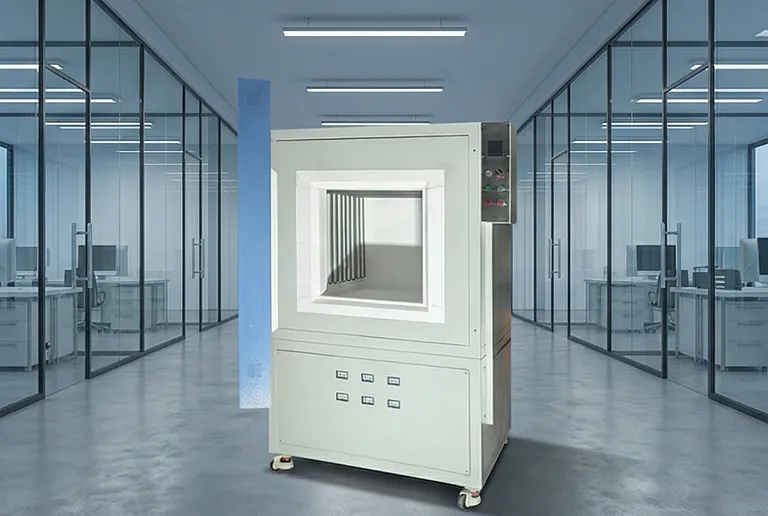
The High Stakes of the "Perfect" Lightweight Alloy
Imagine weeks of meticulous preparation: calculating the precise ratios of Magnesium, Lithium, Aluminum, and Calcium, preparing the raw materials, and setting up your furnace. You are chasing the "holy grail" of metallurgy—an Mg–7Li–3Al–xCa alloy that promises incredible strength-to-weight ratios for aerospace or automotive applications.
But as the temperature rises, something goes wrong. Instead of a clean, molten pool, you encounter a blinding flash of white light or a thick layer of grey "slag" that ruins the batch. The Lithium has burned off, the Calcium has oxidized, and your precision-engineered alloy is now little more than expensive scrap.
If your lab has struggled with inconsistent compositions or the terrifying prospect of spontaneous combustion during magnesium-lithium melting, you aren't alone. The problem isn't your talent; it’s a fundamental battle against high-temperature chemistry.
The Common Struggle: Why Standard Methods Fall Short
When dealing with traditional metals, a simple vacuum or a basic flow of Argon is often enough to prevent oxidation. Naturally, many researchers try to apply these same "standard" solutions to Mg-Li alloys. However, they quickly run into several frustrating roadblocks:
- The "Burn-Off" Effect: Crucial alloying elements like Lithium and Calcium are highly volatile. Under standard heating, they oxidize or evaporate before the melt is even complete, making it nearly impossible to achieve the "x" in your specific Mg–7Li–3Al–xCa formula.
- Safety Hazards: Unlike steel or copper, molten magnesium alloys don't just oxidize; they can undergo spontaneous combustion. A small leak in a standard atmosphere system can turn an experiment into a fire hazard.
- Inclusion Contamination: Even if you avoid a fire, the formation of oxide inclusions (slag) weakens the final ingot, leading to poor mechanical properties and failed quality tests.
These failures aren't just technical setbacks—they represent weeks of lost R&D time, wasted high-purity materials, and significant project delays.
The Root of the Problem: Porous Oxides vs. Dense Protection
To solve this, we have to look at the molecular level. Magnesium and Lithium are among the most chemically active metals on the periodic table. When they melt, they react violently with even trace amounts of atmospheric oxygen.
The fundamental issue is the Pilling-Bedworth ratio. When magnesium oxidizes in the air, the oxide layer (MgO) that forms on the surface is "porous." It’s like trying to protect a house from rain with a screen door—the oxygen simply passes through the pores of the oxide layer to keep attacking the metal underneath.
As the temperature increases, this reaction accelerates until it becomes "autocatalytic"—it generates its own heat, leading to the spontaneous combustion researchers dread. To stop this, you don't just need an inert environment; you need a reactive protection strategy that changes the surface chemistry of the melt itself.
The Solution: Engineering a Dense Fluoride Shield
The secret to mastering these alloys lies in the introduction of a specialized gas mixture, typically SF6 (Sulfur Hexafluoride) combined with a carrier gas like CO2, N2, or Argon.
This isn't just about "shooing away" oxygen. It is a targeted chemical intervention. When the SF6 gas contacts the molten surface, a localized reaction occurs, forming a thin, dense fluoride protective film (MgF2). Unlike the porous oxide layer, this fluoride film is remarkably compact and stable.
It acts as a microscopic "armor" that:
- Isolates the Melt: It provides a physical barrier that oxygen cannot penetrate.
- Locks in Elements: It prevents the evaporation of high-activity elements like Lithium and Calcium, ensuring your final alloy composition matches your theoretical model.
- Eliminates Slag: By preventing oxidation at the source, it keeps the melt clean and free of brittle inclusions.
Turning Theory into Precision: The KINTEK Approach

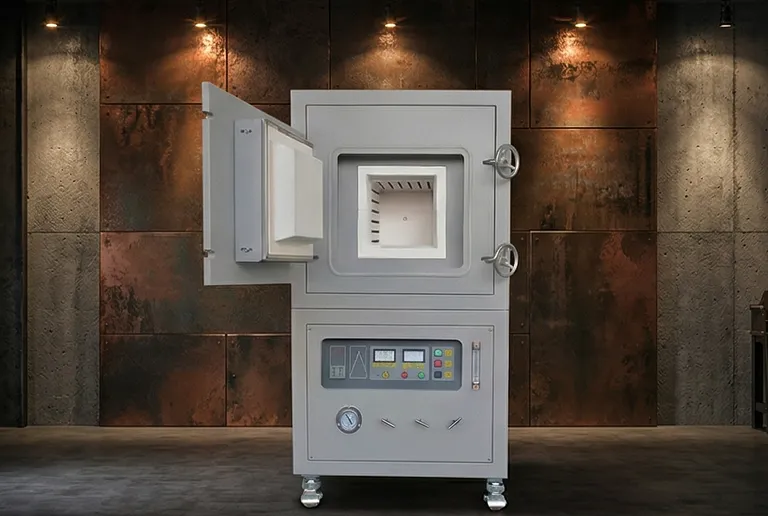
To successfully deploy this fluoride shield, you cannot rely on guesswork or manual gas valves. It requires a furnace built with an integrated, precision-mixed gas control system.
At KINTEK, we design our atmosphere and vacuum furnaces specifically to handle these volatile environments. Our systems allow for the exact dosing of SF6/CO2 or SF6/N2 mixtures, ensuring the protective film forms instantly and stays intact throughout the melting cycle.
Whether you are using a vacuum shaft furnace for high-purity ingots or a resistance furnace for experimental casting, our technology treats gas protection as a critical component of the thermal process, not an afterthought. By providing a stable, controlled environment, KINTEK furnaces transform a high-risk procedure into a repeatable, scientific protocol.
Beyond the Fix: Unlocking the Future of Material Science

When you remove the "fear of the fire" and the frustration of inconsistent results, the possibilities for your research expand. Solving the oxidation crisis in Mg-Li-Al-Ca melting means you can finally:
- Accelerate R&D Cycles: Move from alloy design to testing in days rather than weeks of failed attempts.
- Achieve Unprecedented Purity: Produce ingots with lower impurity levels, leading to breakthrough mechanical properties.
- Scale Safely: Transition from small-scale lab tests to larger experimental batches with total confidence in your safety and composition accuracy.
Mastering the chemistry of the melt is the first step toward the next generation of lightweight materials.
Are you ready to eliminate the guesswork from your reactive alloy melting? At KINTEK, we understand that every research project has unique thermal and atmospheric requirements. Our team of specialists is ready to help you configure a high-temperature solution tailored to your specific alloy challenges—ensuring your next melt is as precise as your calculations.
Contact Our Experts to discuss your customized furnace requirements today.
Related Products
- MPCVD Machine System Reactor Bell-jar Resonator for Lab and Diamond Growth
- Vacuum Induction Melting Furnace
- 915MHz MPCVD Diamond Machine Microwave Plasma Chemical Vapor Deposition System Reactor
- Cylindrical Resonator MPCVD Machine System for Lab Diamond Growth
- 1200℃ Controlled Inert Nitrogen Atmosphere Furnace
Related Articles
- Why Your High-Temperature Synthesis Results Are Unreliable—And How to Fix It
- Solving the Bonding Dilemma: Why High-Strength Alloys Need More Than Just Pressure
- How CVD Diamond Synthesis Methods Compare for Industrial Applications
- Why Your Biomass-Derived Graphene Lacks Uniformity—and the Thermal Secret to Fixing It
- Why Standard Resistance Furnaces Fail in Superconducting Crystal Growth—And the High-Vacuum Solution





