Sintering composite materials formulated with iron slag demands a furnace capable of reaching 1,600°C or higher, combined with meticulous thermal management. The slag’s melting point sits between 1,500°C and 1,600°C, far above typical terracotta clays. That means a laboratory muffle or controlled-atmosphere furnace must reliably hold these extreme temperatures, while precise heating profiles govern whether the slag fully integrates into the matrix or remains a separate, weakening phase.
Iron slag-based composites require laboratory furnaces that hit at least 1,600°C, with programmable multi-step ramps, chemically inert hot-zone materials, and controlled atmospheres to manage oxidation and phase transformation. The real challenge is not just reaching the temperature—it’s doing so in a way that avoids thermal shock, micro-cracking, and incomplete densification.
Why 1,600°C Is the Non-Negotiable Target
The melting point of iron slag directly dictates the furnace’s capability requirements. Without approaching that thermal range, full microstructural integration with the clay matrix is impossible.
Understanding the Slag’s Thermal Personality
Iron slag melts at approximately 1,500°C to 1,600°C, a range driven by its high silica and oxide content. Compared to conventional clays that vitrify well below 1,200°C, the slag acts as a stubborn, refractory component.
When processing a slag-clay composite, you need to push the material close to its solidus. This encourages liquid-phase sintering, where a small fraction of molten material fills pores and binds the matrix together.
The Furnace Floor: Why 1,600°C Is the Minimum
A furnace that just barely reaches 1,500°C risks under-sintering or requires impractically long soak times. A capability of 1,600°C provides a thermal buffer that ensures you can actually hit the critical transformation window, even with minor thermocouple drift or load-induced temperature drops.
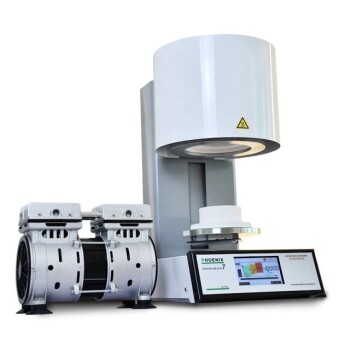
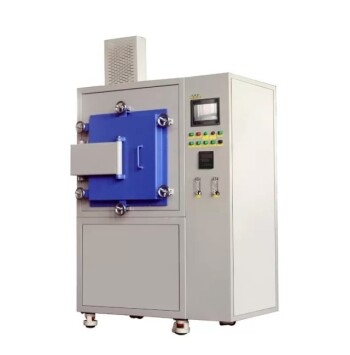
Laboratory muffle furnaces and controlled-atmosphere furnaces using silicon carbide or molybdenum disilicide heating elements can meet this threshold. The primary reference confirms that researchers must have systems capable of reaching and maintaining temperatures up to 1,600°C or higher for reliable evaluation.
Critical Thermal Considerations for a Flawless Sintering Cycle
Reaching 1,600°C is only half the battle. The thermal journey—how fast you heat, the atmosphere you maintain, and how uniformly you hold temperature—determines whether the part survives.
Heating Rate: Prevent Thermal Shock Before It Starts
Slag-clay composites are heterogeneous. The slag particles, the clay matrix, and any binders all have different thermal expansion coefficients. A rapid ramp rate creates internal stresses that nucleate cracks.
As noted in the supplementary references, alumina furnace components themselves impose a practical limit. Heating rates must be kept below 25°C/min to prevent thermal shock in alumina structural parts. But when your sample contains iron slag, an even slower ramp (often 5–10°C/min) is wise through critical dehydroxylation and phase-transition zones. This allows volatile release and strain relaxation.
Atmosphere Integrity: Keep Oxygen Under Control
Iron-based phases react readily with oxygen at high temperatures. Uncontrolled air atmospheres can lead to excessive oxide scale formation, bloating, or unwanted color changes. The supplementary data reinforces that precise gas environments—vacuum, inert argon, or reducing hydrogen blends—are essential for iron-based systems at elevated temperatures.
For slag composites, a controlled-atmosphere furnace gives you the flexibility to:
- Use nitrogen or argon to suppress oxidation.
- Introduce a slight reducing environment if the slag contains residual metallic iron.
- Apply a vacuum to outgas volatiles before the liquid phase forms.
Furnace Material Compatibility: What Touches Your Sample Matters
High-temperature furnaces typically use alumina (Al₂O₃) for the hot zone, but alumina is only inert up to a point. At 1,600°C in the presence of certain slags, alumina can slowly react, contaminating the sample.
For extreme applications requiring peak temperatures above 1,600°C or aggressive slag chemistries, you might need a graphite hot zone with a pressure vessel. Graphite provides higher thermal limits (up to 2,300°C) but demands an oxygen-free atmosphere and can carburize some materials. If using in-situ measurement probes, match the probe material to the slag chemistry to prevent local reactions that ruin both the probe and the data.
Phase Transformation: Timing and Temperature Ramps Are Everything
The primary reference emphasizes that you must evaluate whether the high-silica slag fully integrates into the clay matrix or remains as a separate phase. This requires a firing profile that:
- Dwells just below the solidus to allow solid-state diffusion.
- Ramps quickly through the melting onset to promote minimal, controlled liquid formation.
- Cools in a controlled manner to avoid quench cracking and to allow mullite crystallization from the clay’s kaolinite component.
A precise, multi-segment programmable furnace controller is not a luxury—it’s the only way to hit these microstructural targets.
Thermal Uniformity: Avoiding Warpage and Differential Shrinkage
A temperature gradient of even 20°C across a large or complex composite part can cause differential sintering. One side densifies faster, pulling the part out of shape. High-quality laboratory furnaces use multi-side heating and robust insulation to achieve ±5°C uniformity.
For development work, always use a sacrificial setter plate of a compatible refractory material. This physically supports the part and evens out local hot spots from element radiation.
Understanding the Trade-offs
Chasing the perfect 1,600°C sintering cycle comes with real trade-offs. Being aware of them protects your project timeline and budget.
- Alumina hot-zone fragility: Heating rates above 25°C/min will destroy the furnace internals before your sample even sinters. Slow ramps mean longer, more expensive cycles.
- Atmosphere gas cost and complexity: Running high-purity argon or vacuum adds capital and operational expense. Hydrogen mixtures demand extra safety interlocks.
- Graphite’s double edge: A graphite furnace reaches 1,600°C easily and uniformly, but even trace oxygen will erode the hot zone above 600°C. Also, carbon contamination can alter the slag’s iron phase, reducing magnetic properties or causing unwanted carburization.
- Energy consumption: Suptained 1,600°C operation draws significant power. This should be factored into long-term research or production cost models.
Making the Right Choice for Your Process Goal
Your specific objective with the iron slag composite will dictate the fine-tuning of these thermal parameters. Here’s how to prioritize:
- If your primary focus is complete slag-clay integration and phase analysis: Invest in a laboratory controlled-atmosphere furnace with a 1,600°C+ maximum and programmable multi-step profiles. Use slow ramps and a reducing or inert atmosphere to keep the slag chemistry clean throughout the cycle.
- If your primary focus is optimizing densification without full melting: A slightly lower temperature plateau (1,450–1,500°C) combined with extended soak times can be explored. This approach reduces thermal strain on the furnace but requires adding a low-temperature flux to the composite to ensure adequate liquid-phase sintering.
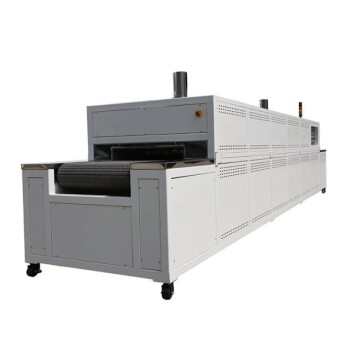
- If your primary focus is scaling to production: While 1,600°C batch furnaces are the research standard, investigate whether a walking-beam or pusher furnace capable of 1,300°C with a modified slag-flux formulation meets your density targets. This often trades off ultimate strength for throughput and energy efficiency.
- If your primary focus is maintaining strict dimensional tolerances: Prioritize furnaces with verified ±5°C uniformity and use a compatible setter plate. Pre-matching the thermal expansion of the setter to the composite will prevent warping during the cooling stage.
A successful sintering outcome for iron slag composites depends as much on the careful orchestration of the entire thermal cycle as it does on hitting the ultimate temperature. Start with a robust 1,600°C-capable furnace, then treat atmosphere and heating profile as equally important design parameters.
Summary Table:
| Thermal Parameter | Requirement / Specification | Process Impact & Benefit |
|---|---|---|
| Max Temperature | ≥ 1,600°C | Achieves slag melting point (1500–1600°C) for liquid-phase sintering |
| Ramp Rate | 5–10°C/min (< 25°C/min max) | Prevents thermal shock, micro-cracking, and alumina hot-zone damage |
| Atmosphere Control | Inert (Ar/N₂), Vacuum, or Reducing | Suppresses iron oxidation, outgasses volatiles, and stabilizes phases |
| Thermal Uniformity | ±5°C across heating zone | Eliminates differential shrinkage, sample warpage, and hot spots |
| Hot-Zone Material | High-Purity Alumina or Graphite | Ensures chemical compatibility and structural integrity at peak temps |
Master High-Temperature Composite Sintering with KINTEK
Processing complex iron slag composites demands uncompromised precision, high-temperature endurance, and strict atmospheric control. KINTEK offers a comprehensive range of advanced laboratory high-temperature furnaces—including muffle, tube, vacuum, CVD, and controlled-atmosphere systems—engineered to reach 1,600°C and beyond with ease.
Whether you require multi-segment thermal programming, customized hot-zone materials, or specific inert gas configurations, our customizable solutions ensure uniform heating and reliable densification for your research or production goals.
Ready to elevate your material development? Contact KINTEK today to consult with our high-temperature equipment specialists!
Related Products
- High Temperature Muffle Oven Furnace for Laboratory Debinding and Pre Sintering
- Small Vacuum Heat Treat and Tungsten Wire Sintering Furnace
- Vacuum Heat Treat Sintering Furnace with Pressure for Vacuum Sintering
- Spark Plasma Sintering SPS Furnace
- 2200 ℃ Tungsten Vacuum Heat Treat and Sintering Furnace
People Also Ask
- What thermal phenomena occur during polymer binder burnout in ceramic green bodies? Lab Furnace Guide
- What role does a high-temperature muffle furnace play in STFO synthesis? Achieve Pure Perovskite Results
- Why is controlled heat treatment in a muffle furnace necessary for calcined clay? Achieve Optimal Pozzolanic Activity
- How does a high-temperature muffle furnace facilitate the formation of LaNbxAl1−xO3+δ perovskite structures? Key Roles
- What role does a high-temperature muffle furnace play in the multi-stage synthesis of Li0.5MnFe1.5O4? Key to Pure Spinel