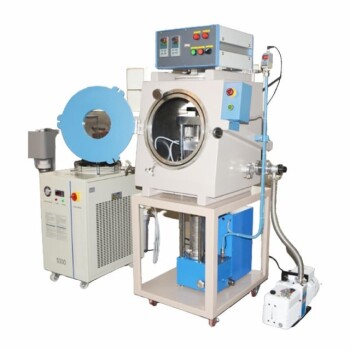
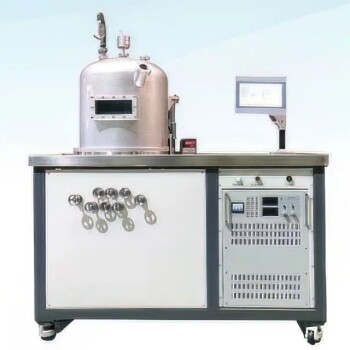
In vacuum hot pressing, graphite die and punch assemblies are the heart of the process.
They simultaneously contain the powder, apply ultra‑high uniaxial pressure, and deliver heat—directly or indirectly—to eliminate voids and drive densification. Within a vacuum chamber, high‑purity graphite preserves sample purity while withstanding extreme mechanical loads at temperatures exceeding 1000°C, shaping the final compact with micron‑level precision.
Graphite tooling in vacuum hot pressing plays a trinity of roles: a shape‑defining container, a pressure‑transmitting piston, and a thermal conductor or Joule heating element. Its ability to maintain strength and chemical inertness under vacuum at high temperatures is the foundation for producing dense, dimensionally accurate, and contamination‑free sintered parts.
The Multifunctional Role of Graphite Tooling
A Container That Defines Final Geometry
The die cavity and punch faces literally set the net shape of the compact.
Whatever contour is machined into the graphite becomes the negative of the finished sample, whether a simple cylinder or a complex near‑net‑shape component.
Because graphite can be precision‑ground, it locks in critical dimensional tolerances from the first pressing stroke to final cooling.
This eliminates costly post‑sintering machining for many materials.
A Mechanical Link That Transmits Pressure Uniformly
In hot pressing, a hydraulic ram pushes the punches, not the powder directly.
The graphite die assembly transfers that axial force into the powder bed, converting a single‑point load into a uniform pressure distribution (often 20–40 MPa or more).
Without a flawless pressure path, density gradients would form.
The columnar stiffness of graphite ensures that force reaches every granule, driving particle rearrangement and plastic flow simultaneously.
A Thermal Engine That Sinters Without Oxidation
Heat can be delivered in two ways, and graphite supports both brilliantly.
In resistive hot pressing, the die itself is a heating element.
High‑amperage current passes through the graphite, and its intrinsic resistance generates Joule heat directly within the tooling, which then conducts into the powder compact.
In induction or radiation‑heated presses, graphite acts as a superb thermal conductor and susceptor.
It absorbs and spreads heat uniformly, preventing hot spots that would create inhomogeneous microstructures.
In all variants, the surrounding vacuum (typically 10⁻² Pa) prevents oxidation of both the graphite and the sample, enabling clean, high‑temperature sintering without a protective atmosphere.
Pressure Transmission and Mechanical Integrity
Why Graphite Survives Extreme Hot Pressing Conditions
Graphite does not lose strength as it heats up—in fact, its mechanical properties often improve up to 2500°C in non‑oxidizing environments.
This makes it unique: a tool material that gets stiffer and stronger as the process temperature climbs.
At 600°C or 1100°C, where most metals would soften or deform, high‑purity graphite holds its shape.
This means punches don’t mushroom, die bores don’t collapse, and the pressure you dial in stays true until the very end of the cycle.
Uniform Pressure Delivery for High Densification
Uniaxial pressing inherently risks non‑uniform compaction.
Graphite punches act as rigid pistons, converting machine force into a near‑hydrostatic stress field within the constrained powder column.
When the die wall friction is low and the powder is free‑flowing, this approach can achieve relative densities above 99%.
Even with challenging materials, the combination of mechanical load and thermal softening produces void‑free interfaces and strong inter‑particle bonds.
Thermal Management and the Heating Mechanism
The Die as a Joule Heater (Current‑Assisted Sintering)
In vacuum hot pressing systems designed for SPS (Spark Plasma Sintering) or FAST (Field‑Assisted Sintering Technology), the graphite tooling becomes an electrical circuit itself.
Direct current—often thousands of amps at a few volts—flows through the punches, die, and in some configurations, through the powder compact.
The resistive heat generated inside the graphite die ramps up temperature at rates of hundreds of degrees per minute.
This thermal shock is tolerable only because graphite’s low thermal expansion and high thermal conductivity prevent catastrophic thermal stress.
Heat Spreading and Isothermal Control
Whether heating is Joule‑based or external, the graphite die acts as a thermal capacitor and distributor.
Heat applied at one point spreads rapidly through the bulk, evening out temperature differences that would otherwise warp the compact.
The result is a sample that experiences the same sintering temperature from its core to its surface.
This is critical for engineering composites like Cu‑Diamond, where a 10°C gradient can mean the difference between full densification and a cracked billet.
The Vacuum Environment: Protection and Performance Amplification
Why Vacuum Is Essential for Graphite
At high temperatures, graphite reacts with oxygen to form CO/CO₂, rapidly eroding the tooling.
Vacuum removes that threat, preserving the tooling for dozens—sometimes hundreds—of cycles.
More importantly, vacuum eliminates gaseous contamination of the part.
No oxide layers on powder particles means cleaner interfaces and higher‑strength bonds.
Vacuum’s Indirect Benefit for Graphite’s Thermal Role
In a vacuum, heat transfer occurs solely via conduction and radiation.
Graphite’s high emissivity and thermal conductivity make it an exceptionally efficient radiator and heat spreader in this environment, allowing pure thermal control without convection hot spots or cold zones.
Material Selection: Why High‑Purity Graphite Matters
Minimizing Chemical Interaction
At 1000°C, many metals will dissolve carbon or form carbides.
High‑purity graphite with fine grain size and low ash content minimizes catalytic attack, preserving the tooling’s surface integrity and preventing elemental contamination of sensitive alloys.
Maximizing Lifetime and Dimensional Stability
Impurities like sulfur or metals in lower‑grade graphite vaporize under vacuum, creating micro‑voids and weakening the structure.
High‑purity, isostatically pressed graphite provides a uniform density and nearly isotropic properties, meaning the tooling expands and contracts evenly, cycle after cycle, without distortion.
Understanding the Trade‑offs
Even the best graphite tooling has limitations that must be managed.
- Brittle Failure: Graphite is notch‑sensitive. Poor alignment, uneven loading, or a prior micro‑crack can cause a punch to fail catastrophically under full load.
- Wear and Dimensional Drift: With each cycle, fine powder abrasive wears the die bore. Over time, the sample diameter increases, requiring frequent dimensional checks and eventual tool replacement.
- Chemical Erosion with Reactive Systems: For powders like titanium or aluminum, carbide formation can bind the part to the die, making ejection difficult and spoiling surface finish. Protective coatings (BN, graphite foil) are often added but complicate heat and pressure transfer.
- Electrical Resistance Variability: In SPS, inconsistent graphite density or porosity can create local hot spots, distorting the sample if not counteracted by careful tooling pre‑conditioning.
- Cost per Cycle: Superior purity and machining precision push graphite tooling costs up. Yet the consumable nature of the material means you must balance performance against budget.
Making the Right Choice for Your Hot Pressing Process
Your priorities determine the ideal graphite specification and operating approach. Use the following guidelines to align tooling with your goals.
- If your primary focus is achieving maximum densification: Select a high‑strength, fine‑grain, isostatically pressed graphite and ensure the punch‑die clearance is minimal. Combine this with a dwell time that allows plastic flow to complete under vacuum.
- If your primary focus is exceptional dimensional accuracy: Invest in ultra‑high‑purity graphite with low thermal expansion and machine it to the tightest tolerances your budget allows. Use a graphite foil liner to protect against wear and maintain sample dimensions over many cycles.
- If your primary focus is processing reactive or carbide‑forming powders: Apply a boron nitride spray coating or use graphite foil barriers on all contact surfaces. This chemical separation protects the die and ensures clean part ejection without sacrificing thermal uniformity.
- If your primary focus is rapid, current‑assisted sintering: Choose a graphite grade with consistent electrical resistivity and thermal conductivity. Pre‑sinter the empty tooling to stabilize its electrical path and reduce resistive hot spots during the first production runs.
- If your primary focus is long tooling life and low consumable cost: Accept a slightly lower purity grade with refined microstructure and pair it with rigorous preventive maintenance—measured alignment checks, clean loading surfaces, and gradual temperature ramps to avoid thermal shock.
The graphite die and punch assembly is far more than a simple mold. It is a precision‑engineered thermal‑mechanical‑electrical system that, when correctly specified and operated under vacuum, transforms loose powder into a near‑perfect fully dense solid—cycle after predictable cycle.
Summary Table:
| Key Function | Mechanical / Thermal Mechanism | Primary Sintering Benefit |
|---|---|---|
| Geometry Definition | Precision-ground die cavity & punch faces | Defines net shape and minimizes costly post-machining |
| Pressure Transmission | Converts axial hydraulic force into uniform stress field | Eliminates density gradients to achieve >99% relative density |
| Thermal Management | Serves as Joule heating element or thermal susceptor | Provides rapid, isothermal heating without thermal shock |
| Vacuum Environment | Preserves graphite strength up to 2500°C under ~10⁻² Pa | Prevents tooling/sample oxidation and eliminates voids |
Optimize your powder compaction and high-temperature sintering processes with KINTEK! As a leader in laboratory equipment and consumables, KINTEK offers a comprehensive range of advanced high-temperature furnaces—including vacuum, atmosphere, muffle, tube, rotary, CVD, and induction melting systems—all fully customizable to meet your unique materials research and production needs. Enhance your lab's precision, thermal uniformity, and throughput by partnering with our technical experts. Contact us today to find the ideal furnace and tooling solution for your facility!
Related Products
- 2200 ℃ Graphite Vacuum Heat Treat Furnace
- Vacuum Hot Press Furnace Machine for Lamination and Heating
- HFCVD Machine System Equipment for Drawing Die Nano Diamond Coating
- Vacuum Hot Press Furnace Machine Heated Vacuum Press
- Vacuum Hot Press Furnace Machine Heated Vacuum Press Tube Furnace
People Also Ask
- Why are vacuum heat treating furnaces essential for aerospace? Ensure Superior Material Integrity for High-Stakes Applications
- What is the primary application of vacuum heat treating furnaces in aerospace? Enhance Component Performance with Precision
- How does vacuum heat treating work in terms of temperature and time control? Master Precise Material Transformations
- How does a vacuum heat treating furnace improve the condition of metal alloys? Achieve Superior Metal Performance
- What is the process of vacuum heat treating? Achieve Superior Metallurgical Properties