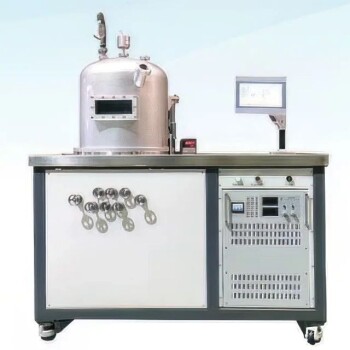
High-purity graphite molds are the primary enablers of field-assisted sintering (FAST) for nanodiamonds. They function simultaneously as a high-pressure container, a resistive heating element, and a catalyst for uniform surface graphitization. By integrating mechanical force with electrical current, these molds provide the thermal-mechanical coupling necessary to achieve high-density sintering in nanocarbon materials.
The graphite mold serves as the active interface between electrical energy and mechanical force. It is responsible for converting pulsed current into heat while precisely transmitting axial pressure to ensure the nanodiamonds achieve uniform densification and controlled surface transformation.
Mechanical Pressure Transmission and Containment
Maintaining Structural Geometry
The graphite mold acts as a high-strength container that pre-presses and constrains nanodiamond powder. This containment is essential for defining the final physical shape of the sample and maintaining a vertical array structure during the sintering process.
Efficient Axial Pressure Delivery
The mold is designed to withstand and transmit significant axial pressure, typically up to 60 MPa. This pressure ensures close contact between individual nanodiamond particles, which is a prerequisite for effective atomic diffusion.
High-Temperature Mechanical Stability
High-purity graphite is chosen because its mechanical strength remains stable or even increases at high temperatures. This allows the mold to accurately transfer external loads to the powder particles without deforming under the intense conditions of field-assisted sintering.
Electrical and Thermal Energy Conversion
The Joule Heating Effect
The mold is integrated directly into the pulsed current circuit, functioning as a resistive heating element. As high-frequency current passes through the graphite, it generates Joule heat, rapidly increasing the temperature of the sample within.
Thermal Field Uniformity
The superior thermal conductivity of high-purity graphite ensures that heat is distributed evenly throughout the sintering zone. This uniform thermal field is critical for preventing localized overheating and ensuring the entire sample reaches the required sintering temperature simultaneously.
Direct Energy Transfer
By acting as a conductive medium, the mold allows thousands of amperes of current to pass through or around the sample. This direct heating method is significantly faster and more energy-efficient than traditional furnace heating, promoting rapid densification.
Material Transformation and Interface Engineering
Facilitating Surface Graphitization
A core function of the graphite mold in nanodiamond sintering is achieving uniform surface graphitization. The controlled thermal environment provided by the mold allows for the thin-film transformation of diamond surfaces into graphite, which acts as a binder between particles.
Promoting Atomic Diffusion
The mold’s ability to maintain high temperatures and pressures promotes atomic diffusion across particle boundaries. This leads to the formation of ordered, semi-coherent interfaces that are essential for minimizing lattice thermal conductivity in the final material.
Chemical Stability and Anti-Adhesion
High-purity graphite is chemically stable and resistant to many reactions at high temperatures. This stability ensures that the nanodiamonds or composite powders do not adhere to the mold or undergo harmful chemical reactions during the vacuum hot-pressing phase.
Understanding the Trade-offs
Mechanical Limitations
While graphite is strong, it has an upper limit for pressure (often around 60-100 MPa depending on grade). Exceeding these limits can lead to mold fracture, which risks damaging the sintering equipment and losing the sample.
Thermal Gradients
In very large molds, a thermal gradient can develop between the outer surface and the center of the sample. If not carefully managed, this can result in non-uniform material properties or incomplete sintering in the core of the nanodiamond compact.
Wear and Longevity
Repeated exposure to high-pressure cycles and high-frequency pulsing causes gradual degradation of the mold. Over time, the internal dimensions may change or the surface may become pitted, requiring the mold to be replaced to maintain precision.
How to Apply This to Your Project
Making the Right Choice for Your Goal
- If your primary focus is Maximum Densification: Prioritize molds with high mechanical strength to ensure the consistent application of 60 MPa or higher axial pressure.
- If your primary focus is Controlled Phase Transformation: Focus on the mold's electrical resistivity and thermal conductivity to ensure precise Joule heating for uniform surface graphitization.
- If your primary focus is Material Purity: Utilize high-purity, chemically stable graphite to prevent any carbon-based contamination or unintended chemical reactions during the sintering cycle.
By mastering the thermal-mechanical coupling provided by the graphite mold, researchers can precisely engineer the microstructural properties of nanodiamond composites.
Summary Table:
| Key Role | Mechanism | Impact on Sintering |
|---|---|---|
| Mechanical Container | Axial pressure delivery (up to 60 MPa) | Ensures uniform densification and particle contact. |
| Heating Element | Resistive Joule heating via pulsed current | Enables rapid, energy-efficient, and uniform heating. |
| Structural Interface | Facilitates surface graphitization | Acts as a binder for particles and promotes diffusion. |
| Chemical Shield | High-purity, stable carbon interface | Prevents sample contamination and mold-powder adhesion. |
Elevate Your Material Research with KINTEK
Precision is the backbone of successful field-assisted sintering. KINTEK specializes in high-performance laboratory equipment and consumables designed to meet the rigorous demands of material science. We offer a comprehensive range of high-temperature furnaces, including:
- Muffle & Tube Furnaces for precise thermal control.
- Vacuum & CVD Systems for advanced material synthesis.
- Rotary, Atmosphere, & Induction Melting Furnaces for versatile processing.
- Specialized Dental & Customizable Lab Furnaces tailored to your unique needs.
Whether you are working with nanodiamonds or advanced ceramics, our equipment provides the stability and performance required for breakthrough results. Contact us today to discuss your project requirements and discover how our customizable solutions can optimize your lab's efficiency!
References
- Faming Zhang, Jing Sun. Pulsed direct current field-induced thermal stability and phase transformation of nanodiamonds to carbon onions. DOI: 10.1039/c9ra01022j
This article is also based on technical information from Kintek Furnace Knowledge Base .
Related Products
- HFCVD Machine System Equipment for Drawing Die Nano Diamond Coating
- Spark Plasma Sintering SPS Furnace
- High Temperature Muffle Oven Furnace for Laboratory Debinding and Pre Sintering
- 2200 ℃ Graphite Vacuum Heat Treat Furnace
- Vacuum Induction Melting Furnace
People Also Ask
- What is Hot-filament Chemical Vapor Deposition (HFCVD)? Achieve High-Quality Thin Films with Precision Control
- What are the equipment for chemical vapor deposition? A Guide to the 5 Essential Components
- What is the significance of the vacuum pressure control system in the CVD coating process for powders?
- What is the function of high-purity Argon (Ar) gas during CVD? Optimize Your Thin Film Uniformity and Purity
- What are the advantages of using Chemical Vapor Deposition (CVD) for coating turbine blades? Enhance Life & Performance