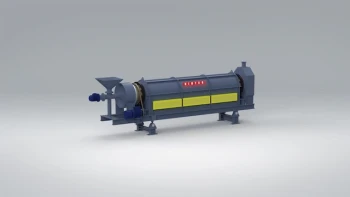
A high-temperature muffle furnace is the primary instrument used to isolate inorganic impurities through complete oxidative combustion. By subjecting an activated carbon sample to extreme temperatures—typically 800°C—the furnace burns off all organic carbon components, converting them into gases. The remaining non-combustible residue, known as ash, is then weighed to determine the material’s purity and activation efficiency.
The muffle furnace enables a precise gravimetric analysis by providing a stable, high-heat environment that separates volatile organic matter from stable inorganic minerals. This measurement is vital because ash content directly correlates to the internal porosity and adsorption capacity of the activated carbon.
The Mechanism of Thermal Isolation
Complete Oxidative Combustion
The muffle furnace creates a high-oxygen, high-heat environment that facilitates the total oxidation of the carbon matrix. During this process, elements like carbon, hydrogen, and nitrogen are converted into volatile gases and expelled from the porcelain crucible.
Conversion to Stable Oxides
As the organic structure is destroyed, the remaining inorganic minerals—such as silica or metallic salts—are transformed into stable oxides. These oxides constitute the "ash" and represent the portion of the material that does not contribute to the adsorption process.
Quantitative Mass Assessment
By accurately weighing the sample before and after the incineration process, technicians can calculate the percentage of ash. This gravimetric data allows for a definitive assessment of the raw material's purity and the effectiveness of the carbonization process.
Why Temperature Precision Matters
Reaching Chemical Stability
While different testing standards may call for temperatures ranging from 500°C to 1000°C, maintaining a stable 800°C environment is often the benchmark for ensuring all carbonaceous substances are removed. Uniform heat distribution is critical to prevent "cold spots" that could lead to incomplete combustion and skewed data.
Impact on Pore Structure Evaluation
Ash content is an inverse indicator of porosity. A muffle furnace helps confirm that a lower ash residue translates to a more developed pore structure, which provides a greater number of effective adsorption sites for the end-user.
Consistency in Modified Carbons
For modified or chemically treated activated carbons, the muffle furnace helps evaluate how the modification process affects the inorganic load. This ensures that any additives or treatments have not inadvertently clogged the carbon's internal structure with excessive mineral residue.
Understanding Technical Limitations and Pitfalls
Risk of Mineral Volatilization
If the muffle furnace temperature is set too high or if the soak time is excessive, certain inorganic minerals may begin to volatilize or sublimate. This results in an artificially low ash measurement, providing a false impression of higher purity.
Incomplete Carbon Removal
Conversely, if the furnace fails to maintain a high-oxygen environment or a consistent temperature, residual organic carbon may remain in the crucible. This adds "false mass" to the ash content, leading to an inaccurate evaluation of the carbon's quality.
Crucible Contamination
The choice of a porcelain or ceramic crucible is vital, as these materials must withstand the 800°C heat without reacting with the sample. Any chemical interaction between the sample and the vessel can compromise the integrity of the gravimetric results.
Applying Ash Analysis to Your Project
How to Apply This to Your Quality Control
To effectively utilize a muffle furnace for activated carbon analysis, you must align your temperature settings and durations with your specific material goals.
- If your primary focus is Adsorption Efficiency: Target a lower ash percentage, as high mineral content usually indicates fewer available pores for capturing contaminants.
- If your primary focus is Raw Material Purity: Use the muffle furnace to screen incoming biomass, such as rice husks or coconut shells, to ensure they do not exceed mineral thresholds that could hinder carbonization.
- If your primary focus is Process Consistency: Standardize your furnace temperature (e.g., 800°C) and incineration time (e.g., 6 hours) to ensure that ash content remains a reliable KPI across different production batches.
The muffle furnace remains the definitive tool for stripping away the organic veil of activated carbon to reveal the underlying mineral purity of the material.
Summary Table:
| Process Component | Functional Role | Impact on Analysis |
|---|---|---|
| Oxidative Combustion | Burns organic carbon at ~800°C | Isolates non-combustible inorganic ash |
| Temperature Precision | Maintains stable, uniform heat | Prevents cold spots and incomplete combustion |
| Gravimetric Assessment | Pre- and post-incineration weighing | Calculates exact purity and activation efficiency |
| Mineral Conversion | Transforms residue into stable oxides | Enables reliable measurement of mineral load |
| Porosity Evaluation | Relates ash content to pore volume | Confirms the material’s adsorption capacity |
Elevate Your Material Analysis with KINTEK Precision
Accurate ash content analysis depends on the reliability and precision of your thermal equipment. KINTEK specializes in premium laboratory solutions, offering a comprehensive range of high-temperature furnaces—including muffle, tube, rotary, vacuum, CVD, and atmosphere furnaces—all fully customizable to meet your specific research or production standards.
Whether you are a researcher optimizing adsorption capacity or a quality control manager ensuring batch consistency, KINTEK provides the uniform heating and durability your lab demands. Our expert team is dedicated to helping you find the perfect furnace for your unique material needs.
Ready to achieve superior heat treatment results? Contact our specialists today to discuss your custom furnace solution!
References
- Sarunpron Khruengsai, Siwatt Pongpiachan. Chemical characterization of activated carbon derived from Napier grass, rubber wood, bamboo, and hemp. DOI: 10.61435/ijred.2024.60502
This article is also based on technical information from Kintek Furnace Knowledge Base .
Related Products
- Electric Rotary Kiln Small Rotary Furnace for Activated Carbon Regeneration
- 1400℃ Muffle Oven Furnace for Laboratory
- Laboratory Muffle Oven Furnace with Bottom Lifting
- 1200℃ Muffle Oven Furnace for Laboratory
- 1800℃ High Temperature Muffle Oven Furnace for Laboratory
People Also Ask
- What are the main applications of a rotary kiln electric furnace? Achieve Uniform Heat Treatment for Powders
- What are the key components of a rotary kiln electric furnace? Unlock Efficient Thermal Processing
- What is the significance of the refractory lining in a rotary kiln electric furnace? Unlock Efficiency and Longevity
- What advantages do electric rotary kilns offer over fuel-based kilns? Boost Efficiency and Purity in Your Process
- What materials can be processed in an electric rotary kiln? Versatile Solutions for Advanced Materials