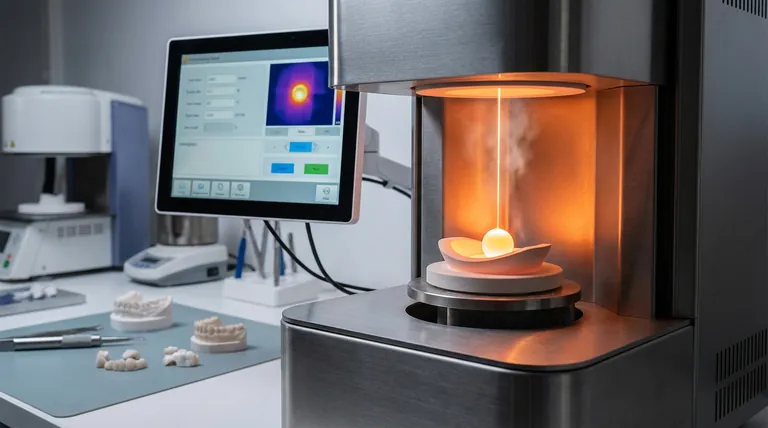
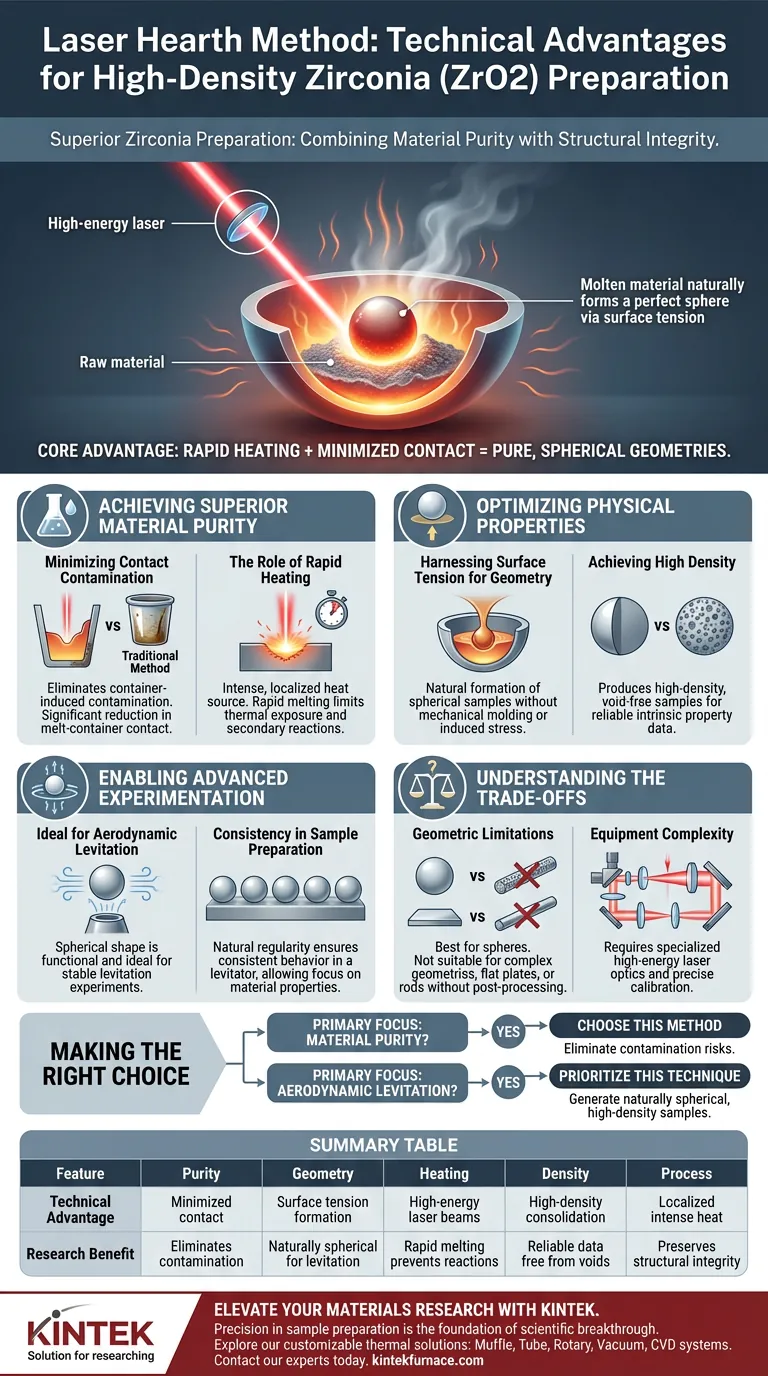
The Laser Hearth Method stands out as a superior technique for Zirconia preparation primarily due to its ability to maintain material purity while ensuring structural integrity. By utilizing high-energy laser beams to melt raw materials within a concave container, this process leverages surface tension to naturally form spherical samples. The result is a high-density product that avoids the contamination pitfalls common in traditional heating methods.
The core advantage of the Laser Hearth Method lies in its combination of rapid heating and minimized physical contact, which effectively eliminates container-induced contamination while producing the high-density, spherical geometries required for advanced aerodynamic levitation.
Achieving Superior Material Purity
Minimizing Contact Contamination
One of the most persistent challenges in preparing Zirconia at high temperatures is contamination from the crucible or container. Traditional methods often involve prolonged contact between the melt and the container walls. The Laser Hearth Method significantly reduces this interaction, ensuring the chemical composition of the Zirconia remains uncompromised.
The Role of Rapid Heating
High-energy lasers provide an intense, localized heat source that melts the material very quickly. This rapid heating profile limits the time window in which the material can react with its surroundings. By reducing the duration of thermal exposure required to achieve melting, the integrity of the raw material is preserved.
Optimizing Physical Properties
Harnessing Surface Tension for Geometry
The method utilizes a concave container which works in tandem with the physics of the molten material. As the Zirconia melts, surface tension naturally pulls the liquid into a spherical shape. This eliminates the need for mechanical molding, which can introduce stress or impurities.
Achieving High Density
Samples produced via this method exhibit high density, a critical factor for material characterization. High-density samples provide more reliable data regarding the intrinsic properties of Zirconia, free from the interference of porosity or voids often found in sintered samples.
Enabling Advanced Experimentation
Ideal for Aerodynamic Levitation
The spherical shape produced by the Laser Hearth Method is not merely aesthetic; it is functional. These regularly shaped spheres are specifically identified as being ideal for aerodynamic levitation experiments.
Consistency in Sample Preparation
Levitation experiments require precise aerodynamics to maintain stability. The natural regularity of the spheres produced by this method ensures consistent behavior in a levitator. This allows researchers to focus on the material properties rather than correcting for sample irregularities.
Understanding the Trade-offs
Geometric Limitations
While this method is excellent for creating spheres, it relies on surface tension to define the shape. If your project requires complex geometries, flat plates, or rods, this method will require significant post-process machining or may not be suitable.
Equipment Complexity
Unlike standard resistance furnaces, this method relies on high-energy laser optics. This implies a need for specialized equipment and precise calibration of the laser beam to ensure uniform melting within the concave container.
Making the Right Choice for Your Goal
To determine if the Laser Hearth Method is the correct approach for your Zirconia samples, consider your specific end-use requirements:
- If your primary focus is material purity: Choose this method to eliminate the contamination risks associated with prolonged container wall contact at high temperatures.
- If your primary focus is aerodynamic levitation: Prioritize this technique to generate the naturally spherical, high-density samples essential for stable levitation dynamics.
This method effectively bridges the gap between high-temperature processing and the need for pristine, geometrically regular samples.
Summary Table:
| Feature | Technical Advantage | Research Benefit |
|---|---|---|
| Purity | Minimized container contact | Eliminates chemical contamination |
| Geometry | Surface tension formation | Naturally spherical for aerodynamic levitation |
| Heating | High-energy laser beams | Rapid melting prevents secondary reactions |
| Density | High-density consolidation | Reliable data free from porosity or voids |
| Process | Localized intense heat | Preserves structural and chemical integrity |
Elevate Your Materials Research with KINTEK
Precision in sample preparation is the foundation of scientific breakthrough. Backed by expert R&D and manufacturing, KINTEK offers a comprehensive range of thermal solutions, including Muffle, Tube, Rotary, Vacuum, and CVD systems. Whether you are preparing high-purity Zirconia or exploring advanced aerodynamic levitation, our lab high-temp furnaces are fully customizable to meet your unique experimental needs.
Ready to optimize your high-temperature processing? Contact our experts today to find the perfect specialized heating solution for your laboratory.
Visual Guide
References
- Yaopeng Gong, Weimin Ma. Non-Contact Thermophysical Property Measurements of High-Temperature Corium Through Aerodynamic Levitation. DOI: 10.3390/en18010136
This article is also based on technical information from Kintek Furnace Knowledge Base .
Related Products
- High Temperature Muffle Oven Furnace for Laboratory Debinding and Pre Sintering
- Spark Plasma Sintering SPS Furnace
- Mesh Belt Controlled Atmosphere Furnace Inert Nitrogen Atmosphere Furnace
- Multi Heating Zones CVD Tube Furnace Machine for Chemical Vapor Deposition Equipment
- Electric Rotary Kiln Continuous Working Small Rotary Furnace Kiln for Pyrolysis Plant Heating
People Also Ask
- What thermal phenomena occur during polymer binder burnout in ceramic green bodies? Lab Furnace Guide
- Why is controlled heat treatment in a muffle furnace necessary for calcined clay? Achieve Optimal Pozzolanic Activity
- What role does a high-temperature muffle furnace play in STFO synthesis? Achieve Pure Perovskite Results
- How does a high-temperature muffle furnace facilitate the formation of LaNbxAl1−xO3+δ perovskite structures? Key Roles
- What role does a high-temperature muffle furnace play in the multi-stage synthesis of Li0.5MnFe1.5O4? Key to Pure Spinel