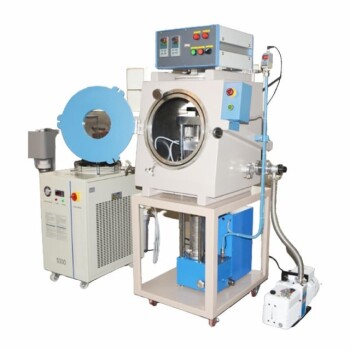
Achieving full densification via containerless Hot Isostatic Pressing (HIP) demands precise control over the pre-sintering stage. Pore isolation is mandatory before pressurization because any open, interconnected pore network allows high-pressure gas to infiltrate the compact, become trapped upon pore closure, and create an internal counter-pressure that halts further densification. The pre-sintering temperature must be set carefully—high enough to seal all surface-connected pores, but not so high that excessive grain growth causes pore-boundary separation, which shifts remaining closed pores into grain interiors where HIP cannot collapse them.
The critical path to near‑theoretical density is to pre‑sinter to a state of zero apparent open porosity while keeping closed pores pinned on grain boundaries. A pre‑sintering temperature that is too low leaves open channels; one that is too high drives pores inside grains. Both extremes prevent HIP from reaching full density.
The Critical Role of Pore Isolation in Containerless HIP
Why Open Porosity Sabotages the HIP Process
In containerless HIP, high-pressure gas acts directly on the external surface of the pre‑sintered body.
If the compact still contains interconnected pores, the gas penetrates through those open channels and fills the entire internal network.
At the moment these pores close during the HIP cycle, the trapped high‑pressure gas cannot escape.
The internal gas pressure now acts in opposition to the external HIP pressure, forming a stable equilibrium that prevents pore collapse.
Only when the compact reaches zero apparent open porosity before pressurization can the external pressure uniquely reduce the remaining isolated closed pores without internal gas back‑pressure.
The Gas Entrapment Mechanism in Detail
Containerless HIP relies on the pressure differential across a closed pore wall to drive densification via creep, diffusion, or plastic yield.
If open porosity exists, the pressure on both sides of the pore wall equalizes when gas enters, eliminating that driving differential.
Once the pore neck seals and isolates the gas, the now‑trapped gas behaves like an internal spring.
Even under extreme external pressure, further shrinkage becomes impossible because the internal pressure rises as the pore volume decreases—creating a densification limit well below 100%.
By contrast, a part that has achieved pore isolation in a separate high‑temperature furnace step carries only closed pores under vacuum or low‑pressure process gas.
When external HIP pressure is applied, the full pressure difference acts on the pore surface, systematically collapsing it.
Pre‑Sintering Temperature: The Double‑Edged Sword
Achieving Zero Apparent Open Porosity
The primary goal of pre‑sintering is to eliminate all open surface‑connected porosity.
This usually requires reaching an intermediate sintering stage where grain boundary diffusion and surface diffusion have necked and sealed the pore channels.
The exact temperature needed depends on the material, green density, and heating profile, but the decisive metric is not a specific temperature value—it is the achievement of zero apparent porosity as measured by immersion density or gas pycnometry.
Pushing the temperature just enough to close the last open pores sets the stage for a successful HIP cycle.
The Danger of Pore‑Boundary Separation
If the pre‑sintering temperature is set too high, grain growth accelerates beyond pore shrinkage.
Grain boundaries migrate past pores that could otherwise remain attached, leaving these pores stranded inside grains.
Once a closed pore becomes intragranular, it is essentially inaccessible to the short‑circuit diffusion paths that HIP relies on.
External gas pressure cannot easily collapse such a pore because volume diffusion is far too slow under typical HIP conditions, resulting in residual porosity even after full HIP cycles.
This phenomenon is known as pore‑boundary separation and is the primary reason that over‑sintering before HIP can be just as damaging as under‑sintering.
The microstructure may look dense under a microscope, but the trapped intragranular pores prevent reaching the theoretical density target.
Understanding the Trade‑offs
The Density–Microstructure Balancing Act
Pre‑sintering is always a compromise.
A temperature just high enough to isolate pores preserves a fine grain size and keeps closed pores on grain boundaries, but the window is often narrow.
Pushing temperature higher guarantees pore closure but risks rapid grain growth and pore‑boundary separation.
Conversely, a conservative lower temperature may leave sporadic open porosity that destroys HIP effectiveness.
This balance is particularly delicate in solid‑state‑sintered ceramics, where pore coordination number and dihedral angle strongly influence densification trajectories.
An even green density distribution—often achieved through cold isostatic pressing (CIP) —widens the safe temperature window by minimizing large, hard‑to‑close pores.
Common Pitfall: Over‑Sintering Before HIP
A frequent mistake is assuming that a higher pre‑sintering temperature “helps” HIP by giving a denser starting compact.
While the compact may have a higher density before HIP, the intragranular pores created by over‑sintering become permanent defects.
This leads to a situation where the HIP process appears to have worked—the part feels dense—but the residual porosity limits mechanical properties like strength and fatigue life.
Recognizing that the final density after HIP depends as much on pore location as on pore volume is essential for avoiding this pitfall.
Making the Right Choice for Your Process
Optimizing your pre‑sintering step for containerless HIP means tailoring the temperature to your specific material, part geometry, and final performance target.
- If your primary focus is achieving >99.8% theoretical density: Use a pre‑sintering temperature high enough to bring the compact to zero apparent open porosity, but verify via grain size analysis that pores are still predominantly on grain boundaries. A brief, lower‑temperature hold or a tailored heating ramp can help seal pores without excessive grain growth.
- If your primary focus is microstructure control (e.g., fine‑grained ceramics): Aim for a slightly lower pre‑sintering temperature combined with a pressure‑assist during the final stage of sintering—such as sinter‑HIP—to close the last interconnected pores while keeping grains fine. This approach can isolate pores without entering the dangerous grain‑growth regime.
- If your primary focus is a robust industrial process with wide safety margins: Invest in uniform green compacts (via CIP) and employ a precisely monitored pre‑sintering profile that targets the temperature of pore closure onset, then immediately initiate HIP. This minimizes the time that pores spend isolated but still on boundaries, reducing the risk of separation.
When you tightly control the pre‑sintering temperature to isolate pores while keeping grain boundaries pinned to those pores, you unlock containerless HIP’s ability to deliver fully dense, high‑performance components without the complexity of encapsulation.
Summary Table:
| Pre-Sintering State | Pore Condition | Effect on Containerless HIP | Final Density Result |
|---|---|---|---|
| Too Low (Under-Sintered) | Open, interconnected pores | Gas infiltrates compact, causing internal counter-pressure | Low (gas traps inside pores) |
| Optimal Temperature | Zero open porosity; pores on boundaries | External pressure collapses isolated closed pores | Near 100% Theoretical Density |
| Too High (Over-Sintered) | Intragranular closed pores (grain growth) | Pores trapped inside grains, inaccessible to diffusion | Suboptimal (residual porosity & lower strength) |
Achieve Peak Densification with KINTEK Thermal Solutions
Precise temperature control during pre-sintering is critical to sealing pores and avoiding pore-boundary separation. KINTEK specializes in advanced laboratory equipment and high-temperature furnaces—including vacuum, atmosphere, tube, muffle, CVD, rotary, and induction melting systems—all customizable to meet your exact sintering and heat-treatment specifications.
Ready to eliminate porosity and maximize your material performance? Contact KINTEK today to consult with our high-temperature equipment experts and find the ideal custom furnace solution for your lab!
Related Products
- Vacuum Hot Press Furnace Machine for Lamination and Heating
- Vacuum Hot Press Furnace Machine Heated Vacuum Press Tube Furnace
- Vacuum Hot Press Furnace Machine Heated Vacuum Press
- 600T Vacuum Induction Hot Press Vacuum Heat Treat and Sintering Furnace
- High Pressure Laboratory Vacuum Tube Furnace
People Also Ask
- What are the primary components of a vacuum hot press furnace? Master the Core Systems for Precise Material Processing
- What are the benefits of the vacuum environment system in a vacuum hot press furnace? Unlock High-Density Sintering
- What safety features are incorporated in vacuum hot press furnaces? Ensure Operator and Equipment Protection
- What industries benefit from the use of vacuum hot press furnaces? Unlock High-Performance Materials for Your Industry
- What considerations guide the selection of heating elements and pressurization methods for a vacuum hot press furnace?