Integrating mechanical and diffusion pumps into lead carbonate decomposition creates a high-vacuum environment (30–100 Pa) that facilitates the rapid removal of carbon dioxide gas. This specific combination of pumps lowers the partial pressure of $CO_2$, triggering the decomposition reaction at significantly lower temperatures than atmospheric conditions. The result is a more energy-efficient process that prevents gas-related interference with heat transfer.
Core Takeaway: A dual-stage vacuum system acts as a thermodynamic driver, lowering the energy barrier for lead carbonate decomposition by maintaining a low-pressure environment that accelerates gas removal and improves thermal efficiency.
Thermodynamic Acceleration of Decomposition
Lowering the Initial Reaction Temperature
The decomposition of lead carbonate is highly sensitive to the surrounding pressure and the concentration of its byproduct, $CO_2$. By maintaining a vacuum between 30 and 100 Pa, the system shifts the chemical equilibrium according to thermodynamic principles. This shift allows the reaction to begin at a lower initial temperature, drastically reducing the total energy required for the process.
Reducing $CO_2$ Partial Pressure
The primary function of the diffusion pump is to rapidly evacuate gases that the mechanical pump cannot handle alone. By effectively lowering the $CO_2$ partial pressure at the reaction interface, the system prevents the byproduct from "smothering" the reaction. This continuous removal ensures that the forward decomposition reaction remains dominant and uninterrupted.
Optimizing Heat and Mass Transfer
Eliminating Gas-Phase Interference
In a standard atmosphere, the presence of evolved gases can create a buffer that interferes with the transfer of heat to the solid lead carbonate. The vacuum system eliminates this gas-related interference, ensuring that thermal energy is directed more efficiently into the material. This leads to a faster and more uniform heating profile throughout the furnace chamber.
Enhancing Reaction Kinetics
The synergy between the mechanical and diffusion pumps ensures that the high volumes of gas generated during heating do not cause pressure spikes. Maintaining a stable, low-pressure environment allows for a consistent reaction rate. This stability is critical for the reliable transformation of raw substances into high-quality lead oxide products.
Precision Monitoring and Process Control
The Role of Real-Time Pressure Feedback
A high-precision vacuum gauge is integrated into the system to provide constant monitoring of the absolute pressure. Because the equilibrium of lead carbonate is so sensitive, even minor fluctuations in pressure can stall the reaction or alter the final product. Reliable feedback allows operators to adjust heating rates to match the pumping speed.
Managing Intermediate Substances
The decomposition process often involves intermediate chemical stages before reaching the final lead oxide state. Precision control over the vacuum levels ensures these intermediates are managed correctly and do not undergo unwanted side reactions. This level of control is necessary for validating thermodynamic models used in industrial scaling.
Understanding Potential Technical Trade-offs
Equipment Complexity and Maintenance
While a dual-pump system is highly effective, it introduces significantly more mechanical complexity than a simple mechanical pump. Diffusion pumps require specific operating temperatures and integrated cooling systems, increasing the risk of downtime if not maintained properly.
Sensitivity to System Leaks
Operating at pressures as low as 30 Pa makes the process extremely sensitive to atmospheric leaks. A minor compromise in the furnace seal can disrupt the partial pressure balance, negating the energy-saving benefits and potentially contaminating the final lead oxide product.
Implementing Vacuum Systems for Lead Processing
How to Apply This to Your Project
- If your primary focus is Energy Efficiency: Utilize the full vacuum range (30-100 Pa) to minimize the temperature setpoints and reduce furnace power consumption.
- If your primary focus is Product Purity: Ensure the diffusion pump is optimally matched to the $CO_2$ evolution rate to prevent the formation of unwanted intermediate oxides.
- If your primary focus is Process Validation: Invest in high-accuracy vacuum gauges to capture precise data for correlating pressure changes with decomposition milestones.
By strategically lowering the pressure environment, you transform a high-heat chemical reaction into a precise, low-temperature, and highly efficient industrial process.
Summary Table:
| Feature | Technical Detail | Strategic Benefit |
|---|---|---|
| Vacuum Range | 30–100 Pa | Lowers the energy barrier for decomposition |
| Pump Synergy | Mechanical + Diffusion | Rapidly removes excessive $CO_2$ byproducts |
| Thermodynamics | Shifted Equilibrium | Triggers reaction at significantly lower temperatures |
| Heat Transfer | Gas-Phase Elimination | Ensures efficient, uniform heating of raw materials |
| Process Control | High-precision Gauges | Prevents unwanted intermediate side reactions |
Optimize Your Thermal Processing with KINTEK
Achieve precision and energy efficiency in your laboratory or industrial applications with KINTEK’s high-performance thermal solutions. We specialize in a comprehensive range of advanced furnace technology designed to handle complex decomposition processes, including:
- Vacuum & Tube Furnaces: Perfect for the precise pressure control required in lead carbonate processing.
- Specialized Systems: Muffle, rotary, CVD, and atmosphere furnaces tailored to your unique specifications.
- Custom Design: Solutions engineered to meet specific thermodynamic and material constraints.
Ready to enhance your reaction kinetics and product purity? Contact the experts at KINTEK today to discover how our customizable high-temperature furnaces can transform your research and production outcomes.
References
- Bo Yong, Wei Zhang. Vacuum decomposition thermodynamics and experiments of recycled lead carbonate from waste lead acid battery. DOI: 10.2298/tsci181112165y
This article is also based on technical information from Kintek Furnace Knowledge Base .
Related Products
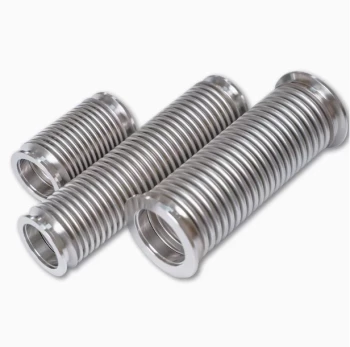
- High Performance Vacuum Bellows for Efficient Connection and Stable Vacuum in Systems
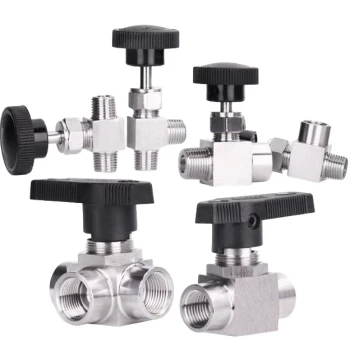
- 304 316 Stainless Steel High Vacuum Ball Stop Valve for Vacuum Systems
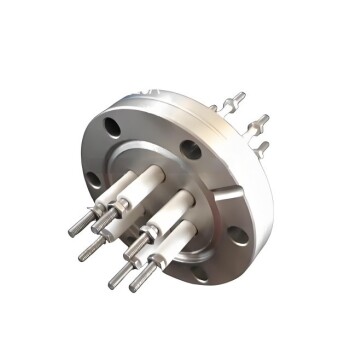
- CF KF Flange Vacuum Electrode Feedthrough Lead Sealing Assembly for Vacuum Systems
- Vacuum Hot Press Furnace Machine Heated Vacuum Press
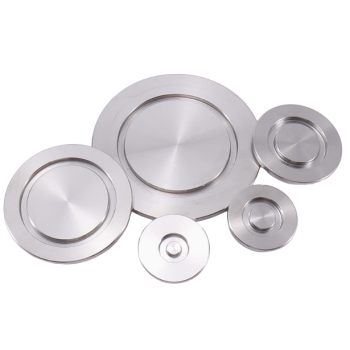
- Stainless Steel KF ISO Vacuum Flange Blind Plate for High Vacuum Systems
People Also Ask
- Why is an Ultra-High Vacuum (UHV) System Required for In2Se3? Achieving Atomic-Level Ferroelectric Clarity
- Why is an environmental laboratory chamber equipped with an optical window required for synthesizing Hafnium Carbide?
- What role does a closed pressure vessel play during the carbonation of gamma-C2S? Unlock Rapid Mineralization
- Why are desiccators containing saturated salt solutions used when evaluating the hygroscopicity of modified wood?
- How does the pressure environment affect the metallic thermal reduction for titanium? Master Precision Control