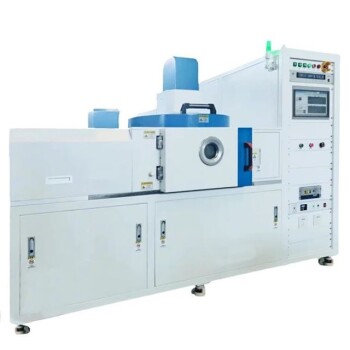
Physical property measurement systems provide a highly controlled experimental environment characterized by extreme cold and intense magnetic fields. specifically, these systems enable research at cryogenic temperatures as low as 2 K and utilize high-intensity magnetic fields up to 9 T. When combined with integrated resistivity modules and precision temperature control, these conditions allow for the high-accuracy collection of transport data necessary to study materials like TaAs2.
By stabilizing temperatures at 2 K and applying magnetic fields up to 9 T, these systems create the specific conditions required to isolate subtle quantum signals. This capability is fundamental to revealing the Fermi surface structure and carrier mobility of TaAs2.
The Critical Environmental Parameters
Cryogenic Temperature Control
To study low-temperature transport properties effectively, thermal energy must be minimized. Physical property measurement systems facilitate this by providing a temperature floor of 2 K.
This deep cryogenic environment is essential for reducing thermal scattering. It allows the intrinsic electronic properties of the material to dominate the transport behavior.
High-Intensity Magnetic Fields
Alongside low temperatures, these systems generate magnetic fields up to 9 T. This field strength is sufficient to manipulate the trajectories of charge carriers significantly.
Applying such high fields is necessary to induce magnetoresistance effects. It serves as the primary external force used to probe the electronic structure of the material.
Integrated Measurement Capabilities
Resistivity Measurement Modules
The systems feature integrated modules designed specifically for resistivity measurements. These components streamline the data collection process, ensuring consistent electrical contact and signal processing.
This integration is vital for detecting the Hall effect. It allows researchers to distinguish between different types of charge carriers within the TaAs2 lattice.
Precision Stability
Beyond simply reaching extreme conditions, the system maintains them with high precision. Advanced temperature control ensures that the experimental environment remains stable throughout the data acquisition period.
This stability is critical for high-accuracy signal collection. Even minor fluctuations in temperature can obscure delicate quantum phenomena.
Unlocking Material Properties in TaAs2
Revealing the Fermi Surface
The combination of 2 K temperatures and 9 T fields allows for the observation of quantum oscillation signals. These oscillations provide a direct map of the Fermi surface structure.
Understanding this structure is key to characterizing the electronic nature of TaAs2. It reveals how electrons behave and interact within the material's momentum space.
Determining Carrier Mobility
The precise measurement of magnetoresistance and Hall effect signals enables the calculation of carrier mobility. This metric defines how quickly charge carriers can move through the material under an electric field.
High-accuracy data collection is required to derive these values correctly. The system’s integrated modules ensure the signal fidelity needed for these calculations.
Understanding the Operational Limits
The Temperature Floor
While 2 K is sufficiently low for observing many quantum phenomena, it is distinct from the milli-Kelvin ranges offered by dilution refrigerators. Researchers must verify that the relevant quantum effects in TaAs2 are observable above the 2 K threshold.
Magnetic Field Constraints
A 9 T magnetic field is a powerful laboratory standard, but it has an upper ceiling. For experiments requiring ultra-high fields to reach the quantum limit in certain materials, specialized high-field facilities may be required.
Aligning Capabilities with Research Goals
For effective study of TaAs2, you must match the system's capabilities to your specific characterization objectives.
- If your primary focus is Mapping the Fermi Surface: Leverage the 9 T magnetic field capability to induce and resolve quantum oscillation signals.
- If your primary focus is Analyzing Charge Transport: Utilize the precision temperature control at 2 K to measure carrier mobility and the Hall effect with minimal thermal noise.
Successful characterization of TaAs2 relies on the tight integration of deep cryogenic environments and precise magnetic field control.
Summary Table:
| Parameter | Specification | Research Benefit for TaAs2 |
|---|---|---|
| Minimum Temperature | 2 K | Minimizes thermal scattering to isolate quantum signals |
| Magnetic Field Strength | Up to 9 T | Induces magnetoresistance and quantum oscillations |
| Temperature Stability | High Precision | Ensures data accuracy during delicate Hall effect trials |
| Integrated Modules | Resistivity & Hall | Streamlines carrier mobility and Fermi surface mapping |
Maximize Your Material Research Precision
Unlock the full potential of your low-temperature transport studies with KINTEK. Backed by expert R&D and manufacturing, we offer high-performance Muffle, Tube, Rotary, Vacuum, and CVD systems, along with customizable lab high-temp furnaces designed to meet the rigorous demands of advanced material characterization.
Whether you are mapping the Fermi surface or analyzing charge transport in topological insulators like TaAs2, our solutions provide the stability and control your research deserves.
Ready to elevate your laboratory capabilities? Contact us today to discuss your unique project needs!
Visual Guide

References
- Haiyao Hu, Claudia Felser. Multipocket synergy towards high thermoelectric performance in topological semimetal TaAs2. DOI: 10.1038/s41467-024-55490-6
This article is also based on technical information from Kintek Furnace Knowledge Base .
Related Products
People Also Ask
- What is RF in PECVD? A Critical Control for Plasma Deposition
- What is the role of RF power in PECVD and how does the RF-PECVD process work? Master Thin Film Deposition Control
- What are the applications of plasma enhanced chemical vapor deposition? Key Uses in Electronics, Optics & Materials
- What are the key advantages of PECVD technology? Achieve Low-Temperature, High-Quality Thin Film Deposition
- How are deposition rates and film properties controlled in PECVD? Master Key Parameters for Optimal Thin Films