The Invisible Saboteur in Your Battery Research
You’ve spent weeks perfecting your slurry composition, carefully selecting the active materials, and coating your substrates with precision. But after the final assembly, the results are underwhelming: the capacity fades prematurely, or worse, the active material begins to delaminate from the current collector.
Often, researchers look toward the chemical formulation or the high-temperature annealing process for answers. However, the true culprit is frequently much more mundane and resides in a step many overlook: the drying stage. If your electrode membranes aren't treated correctly before they ever hit the high-temperature furnace, you aren't just drying them—you are setting them up for structural failure.
The High Cost of "Almost Dry"
In laboratory settings, the temptation is to view the drying of electrode sheets or biomass as a simple utility step. Many teams rely on standard atmospheric ovens or attempt to speed up the process by cranking up the heat.
However, these "shortcuts" often lead to several critical failures:
- Binder Degradation: High heat in the presence of oxygen can damage binders like Carboxymethyl Cellulose (CMC), weakening the bond between the active material and the current collector.
- Solvent Trapping: Without a vacuum, organic solvents like N-Methyl-2-pyrrolidone (NMP) or mixed alcohols can remain trapped deep within the microscopic pores of the material.
- Chemical Chain Reactions: Any residual moisture left behind will react with the electrolyte once the battery is assembled, causing electrolyte decomposition and detrimental side reactions that ruin cycling stability.
The business consequence is clear: wasted man-hours, expensive precursor materials thrown away, and inconsistent data that delays project timelines and product launches.
The Science of the "Boiling Point Trap"

Why is a standard oven often insufficient? The answer lies in the fundamental physics of evaporation.
At atmospheric pressure, removing trace solvents and deeply adsorbed moisture requires significant heat. This heat can be destructive. By introducing a vacuum environment, we fundamentally change the rules. In a vacuum, the boiling point of water and organic solvents drops significantly. This allows for the thorough removal of moisture at much lower, safer temperatures—typically between 80°C and 120°C.
Deep drying is not just about removing surface liquid; it’s about ensuring the "mass balance" is perfect. Whether you are prepping nickel foam substrates or dehydrating biomass for pyrolysis, removing surface and interstitial moisture prevents the generation of excessive steam in subsequent high-temperature stages. Without this pre-treatment, that steam can cause micro-explosions within the material structure, leading to the "structural damage" that haunts so many lab results.
Precision Vacuum Drying: The Bridge to Reliable Results
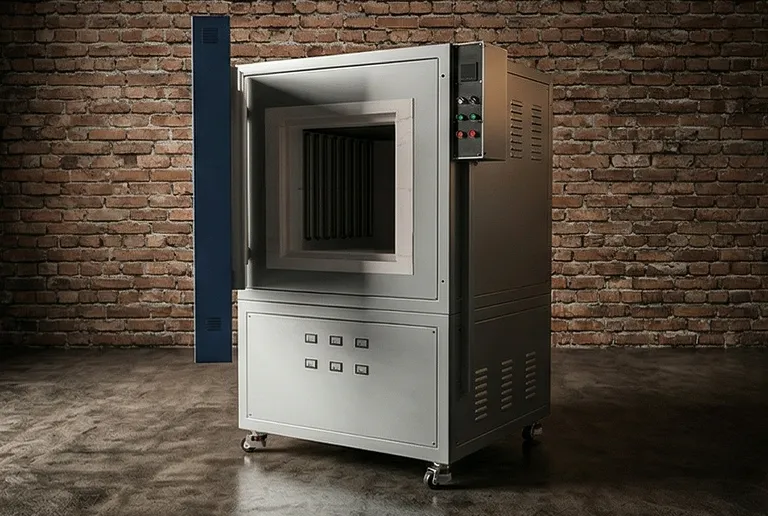
To solve this root cause, the drying tool cannot be an afterthought. It must be a precision instrument designed to balance thermal stability with deep vacuum capabilities.
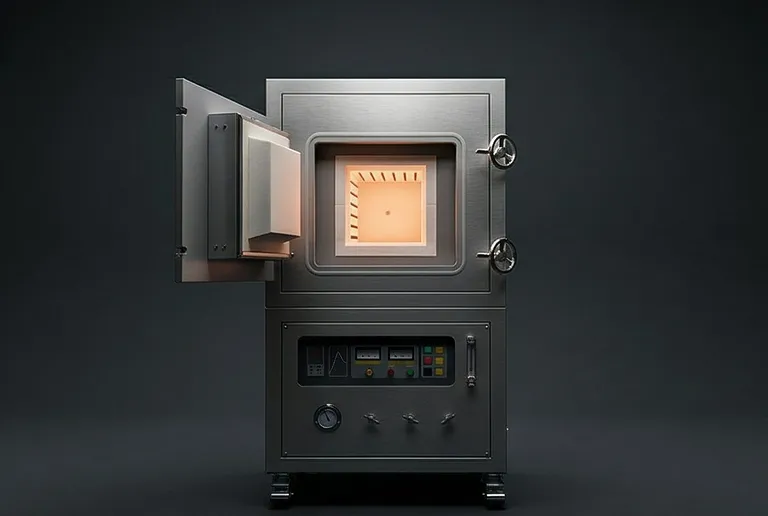
KINTEK’s laboratory vacuum drying ovens are engineered specifically to bridge this gap. Our systems don't just "apply heat"; they provide a controlled environment where:
- Vacuum Integrity ensures that even trace methanol or NMP is pulled from the deepest pores of the electrode slurry.
- Uniform Temperature Control (80°C–120°C) protects the integrity of sensitive binders, ensuring the active material adheres firmly to the current collector during electrochemical testing.
- Cross-Contamination Prevention allows for clean, repeatable processing of coated substrates, ensuring that the "dry" state is reached consistently every single time.
By positioning the vacuum oven as a critical pre-treatment stage rather than a simple storage box, you ensure that your materials are truly ready for the rigors of high-temperature annealing or pyrolysis.
Unlocking the Full Potential of Your Materials
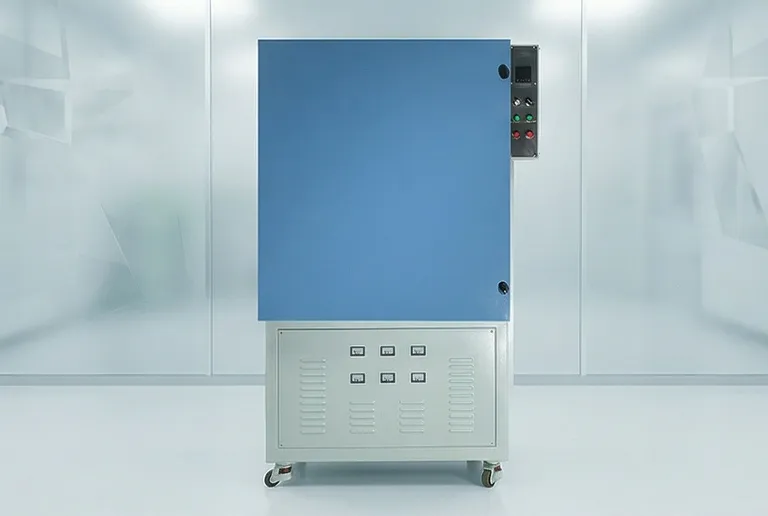
When you eliminate the variable of residual moisture, the "noise" in your data disappears. You stop fighting "flaky" results and start seeing the true potential of your chemical formulations.
With a properly pre-treated electrode, you can achieve better interface compatibility between the active material and the electrolyte. In biomass applications, it means achieving a constant weight that allows for precise sample-to-activator mass ratios, leading to higher thermal conversion efficiency and superior biochar quality.
Solving the drying problem isn't just about removing water; it’s about providing a stable, predictable foundation for the next generation of energy storage and material science.
Whether you are struggling with delamination in battery sheets or inconsistent mass balance in thermochemical reactions, our team can help you calibrate a pre-treatment protocol that works. Let’s ensure your research is built on a dry, stable, and reliable foundation. Contact Our Experts to discuss the specific vacuum and thermal requirements of your next project.
Related Products
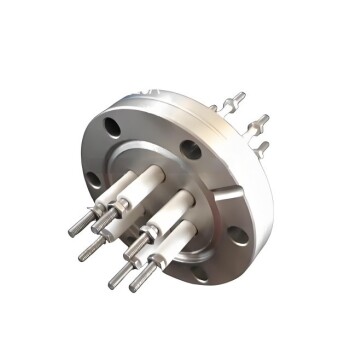
- CF KF Flange Vacuum Electrode Feedthrough Lead Sealing Assembly for Vacuum Systems
- Ultra Vacuum Electrode Feedthrough Connector Flange Power Lead for High Precision Applications
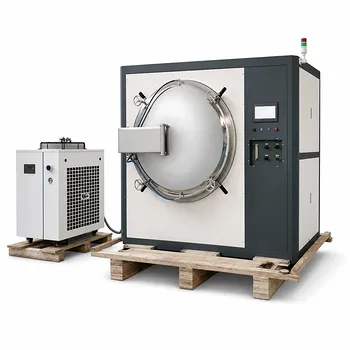
- Vacuum Heat Treat Sintering and Brazing Furnace
- Small Vacuum Heat Treat and Tungsten Wire Sintering Furnace
- Vacuum Heat Treat Sintering Furnace Molybdenum Wire Vacuum Sintering Furnace
Related Articles
- Why Your Ultra-High-Strength Steel Isn't Living Up to Its Potential—And How Vacuum Technology Fixes It
- Why Your Aluminum Thermosyphons Leak—And How Vacuum Brazing Solves the Oxidation Trap
- Why Your High-Precision Parts Warp—And How to Stop It for Good
- Why Your High-Temperature Synthesis Results Are Unreliable—And How to Fix It