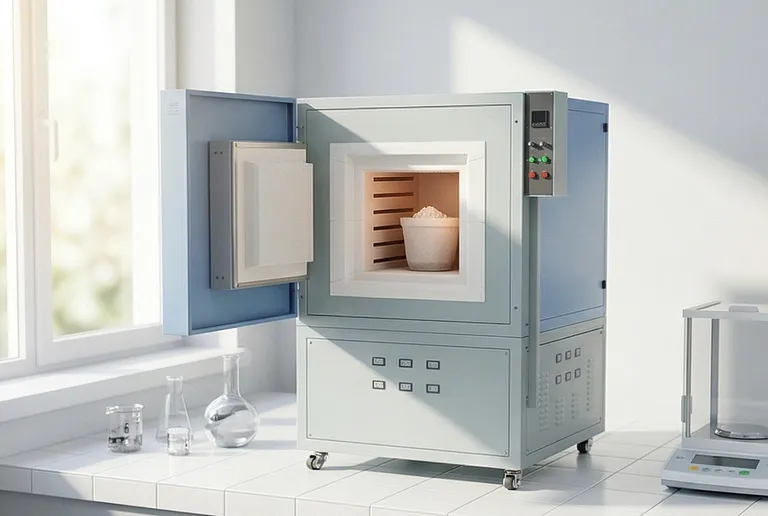
When "Perfect" Temperature and Vacuum Still Lead to Failure
You’ve spent weeks synthesizing a precise batch of nano-titanium dioxide (TiO₂). Your high-temperature furnace is calibrated to the degree, and your vacuum levels are holding steady. On paper, everything is perfect. Yet, when you test the photocatalytic activity or the crystal structure of the final product, the results are underwhelming.
The sample is "poisoned."
For many researchers and material scientists, this is a recurring nightmare. You trace the gas lines, recalibrate the sensors, and double-check the precursors, but the contamination persists. Often, the culprit isn't the environment you’ve created, but the very vessel holding your breakthrough: the crucible.
The Cost of "Good Enough" Labware
When experiments fail to replicate or materials lose their expected properties, the common reaction is to look at the "active" variables—temperature, time, and atmosphere. We often treat the crucible as a passive spectator, a simple "cup" that just needs to not melt.
However, in the world of high-performance nanomaterials and phosphors, there is no such thing as a passive container. Using a standard ceramic or a lower-grade quartz crucible can lead to:
- Ionic Leaching: At temperatures exceeding 800°C, trace elements from the crucible wall can migrate into your sample.
- Crystal Phase Distortion: Impurities can disrupt the delicate crystal lattice of materials like nano-TiO₂ or LiScO₂:Cr³⁺ phosphors.
- Wasted Resources: High-value precursors and weeks of clean-room prep are rendered useless by microscopic contamination.
The commercial consequences are just as steep. Project timelines slip, R&D budgets are drained by troubleshooting, and the path to scaling a viable product becomes a maze of inconsistent data.
The Science of "Invisible" Contamination
Why does this happen? The answer lies in the chemistry of materials under extreme conditions. At 1000°C and above, especially under a vacuum, the thermodynamic stability of your container is pushed to the limit.
Many materials that seem "inert" at room temperature become surprisingly reactive at high heat. If your crucible contains silica or other binders, these components can undergo chemical erosion. In the case of nano-titanium dioxide, even a tiny amount of impurity can alter its photocatalytic efficiency. Similarly, for advanced phosphors used in near-infrared optics, the "pure environment" is not just a preference—it is a functional requirement for crystal phase construction.
If your container reacts even slightly with your sample, it doesn't just hold your material; it changes it. This is why the "common" solutions—like cleaning the crucible more thoroughly or changing the annealing duration—fail. They address the symptoms, but not the fundamental chemical incompatibility between the sample and its container.
The Solution: Why Corundum is the Gold Standard for Purity
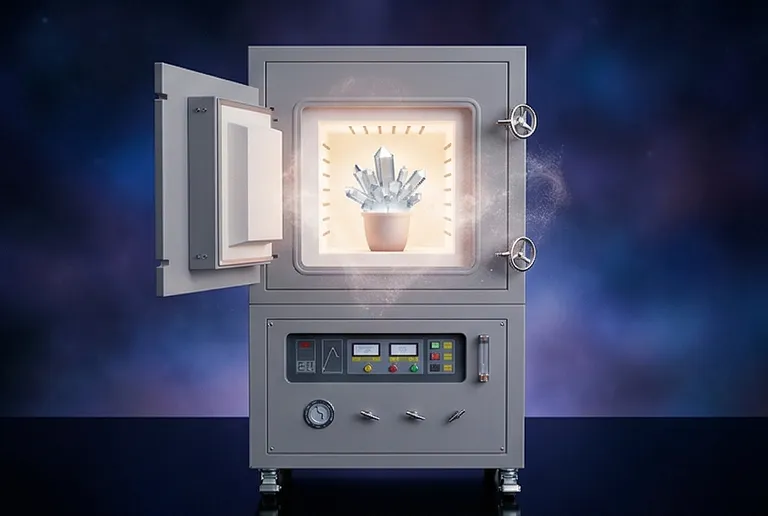
To solve the problem of sample poisoning, you need a material defined by two characteristics: extreme refractoriness and exceptional chemical inertness. This is why Corundum (High-Purity Alumina) is the specialized choice for high-temperature vacuum annealing.
At KINTEK, we design our corundum crucibles to serve as more than just containers; they are protective environments. Here is how they solve the root causes of contamination:
1. Thermal Stability up to 1200°C and Beyond
Corundum crucibles maintain their structural and chemical integrity at temperatures where other materials begin to soften or outgas. This ensures that the only thing happening inside the furnace is the reaction you intended.
2. High Refractoriness and Chemical Inertness
Unlike lower-grade ceramics, high-purity corundum does not undergo chemical reactions with nano-titanium dioxide. It resists erosion even from aggressive molten salts (such as those containing lithium), preventing container components from leaching into your sample.
3. Preservation of Optical and Catalytic Properties
By providing a truly pure environment, corundum crucibles allow materials like LiScO₂:Cr³⁺ to complete their crystal phase construction without interference. This ensures the near-infrared optical performance—and the photocatalytic "punch" of your TiO₂—remains exactly as your theory predicted.
From Troubleshooting to Breakthroughs
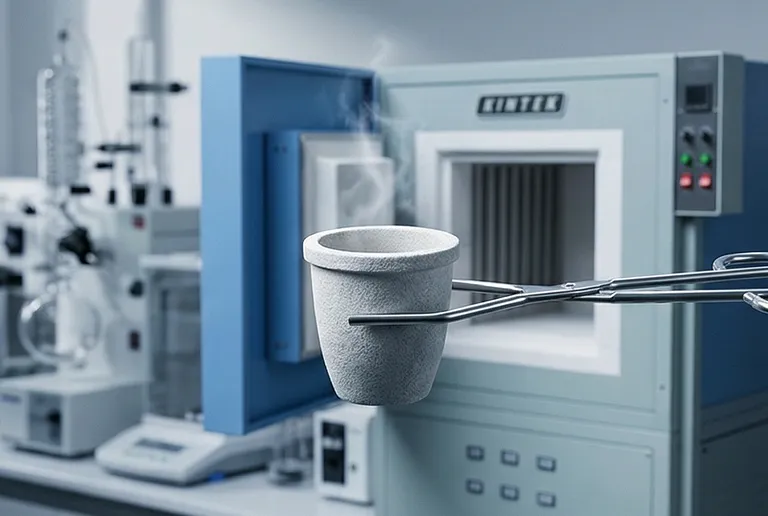
When you eliminate the "container variable," the focus shifts from fixing problems to discovering possibilities.
With the right thermal ecosystem—the combination of a precision furnace and a chemically compatible corundum crucible—the path to innovation clears. You can explore more complex dopants, achieve higher levels of crystal purity, and accelerate your time-to-market with data you can actually trust. Whether you are developing the next generation of solar-responsive catalysts or high-performance optical sensors, the solution starts with the vessel that holds your vision.
Your research is too valuable to be compromised by a "simple" container. At KINTEK, we provide the high-temperature tools and specialized consumables required to turn your most ambitious material designs into reality. Let’s ensure your next annealing process is defined by purity, not troubleshooting.
To discuss the specific thermal requirements of your project or to find the ideal crucible and furnace configuration for your nano-material synthesis, Contact Our Experts.
Related Products
Related Articles
- Mastering the Void: How Tube Furnaces Forge the Atoms of Innovation
- Why Your Crystal Growth Experiments Are Failing: The Hidden Culprit in Your Tube Furnace
- Beyond Heat: Mastering the Controlled Universe Inside a Tube Furnace
- More Than a Dial: The Psychology of Precision in Tube Furnace Control
- Mastering the Void: How Tube Furnaces Engineer Predictable Outcomes

