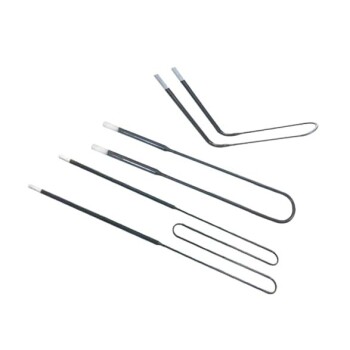
A molybdenum boat provides a stable, chemically inert environment specifically designed for the thermal evaporation of Ge-Se-Te-In alloys. By leveraging an exceptionally high melting point and superior electrical conductivity, it allows the source material to reach its sublimation temperature without the boat itself melting or reacting. This process ensures the resulting thin film maintains the exact chemical composition of the bulk glass while preventing the introduction of metallic impurities.
The primary advantage of a molybdenum boat is its ability to facilitate high-temperature resistive heating while remaining chemically unreactive with the chalcogenide melt. This ensures that the deposited Ge-Se-Te-In thin films are high-purity and stoichiometrically identical to the source material.
Superior Thermal and Electrical Performance
Withstanding Extreme Sublimation Temperatures
Molybdenum possesses one of the highest melting points among refractory metals, allowing it to function as a durable resistive heating carrier. This thermal stability is critical when heating complex chalcogenide granules like Ge-Se-Te-In, which require consistent energy to reach their sublimation points.
Efficient Resistive Heating
The excellent electrical conductivity of molybdenum allows it to generate heat through high electrical currents efficiently. This ensures a controlled and uniform evaporation rate, which is essential for achieving the desired thickness and uniformity in thin film deposition.
Maintaining Chemical and Structural Integrity
Prevention of Metallic Contamination
Because molybdenum is chemically inert, it does not react with the Ge-Se-Te-In melt even at elevated temperatures. This lack of reactivity is vital for preventing the introduction of "tramp" metallic impurities into the film, which could otherwise alter the electronic or optical properties of the chalcogenide glass.
Stoichiometric Consistency
One of the most difficult challenges in thin film deposition is ensuring the film matches the bulk glass source composition. The molybdenum boat’s stability ensures that only the intended elements—Germanium, Selenium, Tellurium, and Indium—evaporate and deposit onto the substrate, preserving the material's functional integrity.
Understanding the Trade-offs
Risk of Oxidation in Poor Vacuum
Molybdenum is highly sensitive to oxygen at elevated temperatures; if the vacuum level is insufficient, the boat can form molybdenum oxides. These oxides can become volatile and contaminate the thin film, highlighting the need for high-quality vacuum environments.
Physical Fragility After Use
Repeated heating cycles cause molybdenum to undergo recrystallization, making the boat extremely brittle once it has been used. This means that while it is effective, the boats are often considered consumable parts that must be handled with extreme care between deposition runs to avoid cracking.
How to Apply This to Your Project
When selecting a molybdenum boat for your Ge-Se-Te-In deposition, consider your primary performance requirements to ensure the best outcome.
- If your primary focus is film purity: Ensure your vacuum system maintains a high-quality environment to prevent molybdenum oxidation and subsequent film contamination.
- If your primary focus is compositional accuracy: Use a new or high-quality molybdenum boat to ensure no cross-contamination from previous deposition cycles alters the Ge-Se-Te-In ratio.
- If your primary focus is cost-efficiency: Monitor the resistive load of the boat over multiple runs, but replace it at the first sign of structural brittleness to avoid mid-process failure.
The choice of a molybdenum boat is the definitive standard for achieving high-purity, stoichiometrically accurate chalcogenide thin films.
Summary Table:
| Feature | Advantage | Impact on Thin Film |
|---|---|---|
| High Melting Point | Withstands extreme sublimation temps | Prevents boat melting; ensures stable heating |
| Chemical Inertness | No reaction with chalcogenide melt | Pure films without metallic contamination |
| Electrical Conductivity | Efficient resistive heating | Controlled evaporation and uniform thickness |
| Stoichiometric Stability | Preserves chemical ratios | Films match the exact bulk glass composition |
| Refractory Nature | Durable resistive carrier | Reliable performance for complex alloy sources |
Optimize Your Thin Film Deposition with KINTEK Solutions
Achieving stoichiometric accuracy in Ge-Se-Te-In films requires high-performance consumables and precise thermal environments. KINTEK specializes in advanced laboratory equipment and high-quality consumables designed for extreme research conditions.
Whether you need reliable molybdenum boats for thermal evaporation or a custom-designed high-temperature furnace (including muffle, tube, vacuum, CVD, and induction melting), our products are engineered to deliver the purity and control your projects demand. We offer a comprehensive range of customizable solutions for dental, atmospheric, and rotary applications to meet your unique laboratory needs.
Ready to enhance your lab's efficiency and material purity? Contact KINTEK today for a consultation and quote!
References
- Pravin Kumar Singh, D. K. Dwivedi. Effect of thermal annealing on structural and optical properties of In doped Ge-Se-Te chalcogenide thin films. DOI: 10.2478/msp-2019-0061
This article is also based on technical information from Kintek Furnace Knowledge Base .
Related Products
- Molybdenum Vacuum Heat Treat Furnace
- Vacuum Heat Treat Sintering Furnace Molybdenum Wire Vacuum Sintering Furnace
- Molybdenum Disilicide MoSi2 Thermal Heating Elements for Electric Furnace
People Also Ask
- What is the primary application of vacuum heat treating furnaces in aerospace? Enhance Component Performance with Precision
- How does vacuum heat treating work in terms of temperature and time control? Master Precise Material Transformations
- Why are vacuum heat treating furnaces essential for aerospace? Ensure Superior Material Integrity for High-Stakes Applications
- What is the process of vacuum heat treating? Achieve Superior Metallurgical Properties
- How does a vacuum heat treating furnace improve the condition of metal alloys? Achieve Superior Metal Performance