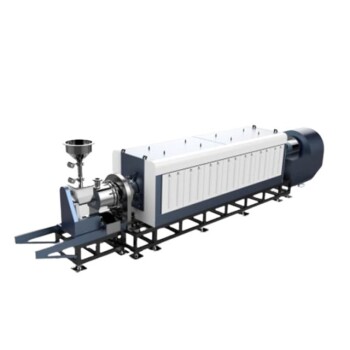
The muffle furnace is the central instrument for biomass ash determination, providing the controlled, high-temperature environment necessary for complete oxidation. It functions by heating samples—typically to temperatures between 550°C and 600°C—to incinerate all organic matter, leaving behind only stable inorganic mineral residues. This process allows researchers and industrial operators to quantify non-combustible material, which is critical for evaluating fuel quality and predicting potential equipment damage.
A muffle furnace isolates inorganic ash from biomass by facilitating the complete oxidative decomposition of organic components under precise thermal conditions. This measurement is essential for predicting industrial performance, such as slagging risks, fouling, and overall combustion efficiency.
The Mechanism of Thermal Decomposition
Complete Oxidative Decomposition
The primary role of the muffle furnace is to provide a stable, high-temperature environment under atmospheric pressure. This heat facilitates the total oxidation of carbonaceous materials, causing organic components to decompose and be released as gases.
The Two-Stage Heating Process
Effective ashing often involves an initial low-temperature carbonization followed by extended high-temperature incineration. This phased approach prevents the rapid ignition of volatile matter, ensuring that only the inorganic mineral residue remains at the end of the cycle.
Achieving Constant Weight
To ensure accuracy, the muffle furnace maintains a uniform thermal field for an extended duration, often ranging from 5.5 to 8 hours. The process continues until the sample reaches a constant weight, signaling that all combustible materials have been fully removed.
Why Precise Ash Determination Matters
Predicting Slagging and Fouling
In industrial boiler systems, ash content is a leading indicator of slagging and fouling. By quantifying the inorganic residue, operators can predict how much mineral matter will deposit on heat transfer surfaces, which can lead to equipment failure or reduced efficiency.
Evaluating Biofuel Quality and Purity
For those developing activated carbon or specialized biofuels, the muffle furnace evaluates the effectiveness of deashing treatments. Low ash content generally indicates a higher purity of the biomass and a lower residue disposal burden after combustion.
Assessing Mineral Nutrient Potential
In the context of biochar, the muffle furnace helps determine the mineral nutrient potential. The remaining ash represents the inorganic salts that can provide a buffering effect on soil pH and contribute essential minerals to agricultural land.
Understanding the Trade-offs and Pitfalls
Volatilization of Inorganic Elements
While high temperatures are necessary for oxidation, exceeding 600°C can lead to the unintended volatilization of certain inorganic elements like potassium or chlorine. This can result in an underestimation of the true ash content and a misunderstanding of the sample's chemical profile.
The Risk of Incomplete Combustion
If the muffle furnace fails to maintain a uniform thermal field or if the duration is too short, the core of the sample may not fully oxidize. This leaves residual carbon in the ash, leading to artificially high weight measurements and incorrect fuel quality assessments.
Sample Contamination and Handling
The precision of the results is highly dependent on the crucible material and the environment within the furnace. Any interaction between the biomass minerals and the crucible at high temperatures can contaminate the sample, skewing the final analytical data.
Applying These Insights to Your Project
Recommendations Based on Your Objectives
The application of muffle furnace testing should be tailored to the specific requirements of your biomass utilization strategy.
- If your primary focus is Industrial Boiler Efficiency: Prioritize extended incineration times at 550°C to accurately model long-term slagging risks and ash accumulation patterns.
- If your primary focus is Biochar Soil Science: Use precise temperature control to ensure that volatile minerals are preserved, allowing for an accurate assessment of the biochar’s nutrient buffering capacity.
- If your primary focus is Activated Carbon Production: Focus on achieving a constant weight to verify the removal of all organic precursors, ensuring the highest possible surface area and purity.
By mastering the controlled oxidation environment of the muffle furnace, you can transform raw biomass data into a definitive roadmap for material performance and equipment longevity.
Summary Table:
| Process Stage | Key Parameters | Primary Objective |
|---|---|---|
| Carbonization | Low-temperature heating | Prevents rapid volatile ignition |
| Incineration | 550°C - 600°C | Complete oxidation of organic matter |
| Stabilization | 5.5 - 8 Hours | Achieving constant weight for accuracy |
| Evaluation | Inorganic Residue | Predicting slagging, fouling, and purity |
Optimize Your Biomass Analysis with KINTEK Precision
Accuracy in ash determination is critical for predicting fuel performance and preventing equipment failure. KINTEK specializes in high-performance laboratory equipment designed to provide the stable thermal environments necessary for rigorous material testing.
We offer a comprehensive range of customizable high-temperature furnaces, including:
- Muffle & Tube Furnaces for precise oxidative decomposition.
- Rotary & Vacuum Furnaces for specialized material processing.
- CVD & Atmosphere Furnaces for advanced chemical research.
- Dental & Induction Melting Furnaces for high-purity applications.
Whether you are evaluating industrial boiler efficiency or developing high-purity biochar, KINTEK’s equipment ensures uniform heating and long-term durability tailored to your unique laboratory needs.
Ready to enhance your lab's analytical precision? Contact KINTEK today for a customized solution!
References
- Mohd Muhyiddin Bin Mustafa, Ab Jalil M. H.. Oil Palm Empty Fruit Bunch (EFB) Pellet and Rice Husk Pellet Biomass Fuel in Malaysia: A Comparative Investigation of Moisture, Dry Ash, and Oil Content. DOI: 10.6007/ijarbss/v13-i11/19433
This article is also based on technical information from Kintek Furnace Knowledge Base .
Related Products
- High Temperature Muffle Oven Furnace for Laboratory Debinding and Pre Sintering
- 1200℃ Muffle Oven Furnace for Laboratory
- 1400℃ Muffle Oven Furnace for Laboratory
- Laboratory Muffle Oven Furnace with Bottom Lifting
- 1800℃ High Temperature Muffle Oven Furnace for Laboratory
People Also Ask
- What thermal phenomena occur during polymer binder burnout in ceramic green bodies? Lab Furnace Guide
- What role does a high-temperature muffle furnace play in STFO synthesis? Achieve Pure Perovskite Results
- Why is controlled heat treatment in a muffle furnace necessary for calcined clay? Achieve Optimal Pozzolanic Activity
- How does a high-temperature muffle furnace facilitate the formation of LaNbxAl1−xO3+δ perovskite structures? Key Roles
- What role does a high-temperature muffle furnace play in the multi-stage synthesis of Li0.5MnFe1.5O4? Key to Pure Spinel