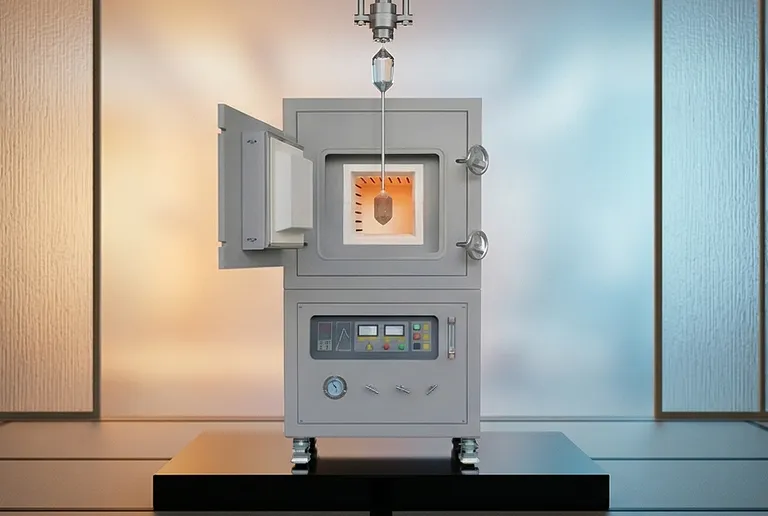
The Heartbreak of the Imperfect Crystal
Imagine spending hundreds of hours and thousands of dollars on a single crystal growth cycle. You’ve calculated the melt chemistry perfectly, the vacuum is holding, and the temperature is exactly where it needs to be. But when the cycle ends and you inspect the result, the crystal is riddled with microscopic cracks, internal stress, or—worse—it fails to exhibit the superconducting properties your research depends on.
In the world of advanced materials, a "successful" melt that results in a "failed" crystal is a common and costly frustration. Often, the culprit isn't the heat itself, but how the material leaves the heat.
The Common Struggle: The Temptation of "Fast Enough"
When a project is behind schedule or laboratory throughput needs to increase, the natural instinct is to optimize for speed. Many researchers and engineers attempt to shave time off the growth process by increasing the withdrawal speed of the crucible. After all, if the furnace is hot and the gradient is set, does it really matter if the mechanical drive moves at 5 mm/h instead of 1.8 mm/h?
Unfortunately, this "optimization" usually backfires. Attempting to speed up the Bridgman process often leads to:
- High Dislocation Density: Microscopic "mistakes" in the atomic lattice that ruin electrical and thermal performance.
- Internal Structural Stress: Crystals that are physically fragile and prone to shattering during post-processing.
- Project Delays: Ironically, trying to save two days on a growth cycle can result in losing two weeks of work when the resulting material is unusable for testing.
The Root Cause: Why 1.8 mm/h Is More Than Just a Number
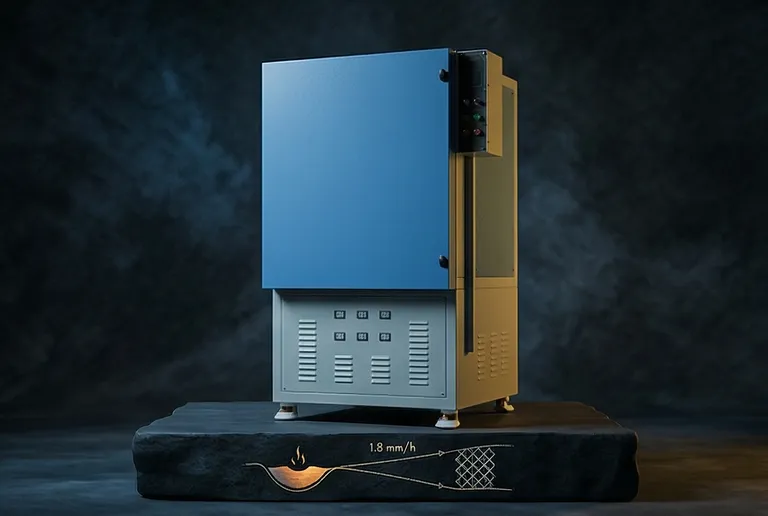
To understand why a speed as slow as 1.8 mm/h (roughly the speed at which a fingernail grows) is necessary, we have to look at the solid-liquid interface.
In the Bridgman process, as the crucible moves from the heating zone to the cooling zone, it crosses a temperature gradient. For a crystal to grow with a perfect, ordered lattice, the atoms in the liquid melt need time to find their exact "home" in the solid structure.
If the lowering speed is too fast, two things happen:
- Latent Heat Trapping: As liquid turns to solid, it releases heat. If the movement is too rapid, this heat cannot dissipate fast enough, causing the temperature gradient to fluctuate and "confusing" the crystallization front.
- Ordered Chaos: The atoms are essentially "frozen" into place before they can align correctly. This creates high dislocation density—atomic-level gaps or overlaps that act like roadblocks to electrons, destroying the performance of superconductors.
The 1.8 mm/h benchmark represents the "sweet spot" of directional solidification. It ensures that the transition from liquid to solid happens atom-by-atom, minimizing internal stress and creating the highly ordered lattice structure required for high-end applications.
The Solution: Precision Engineering Meets Thermal Control
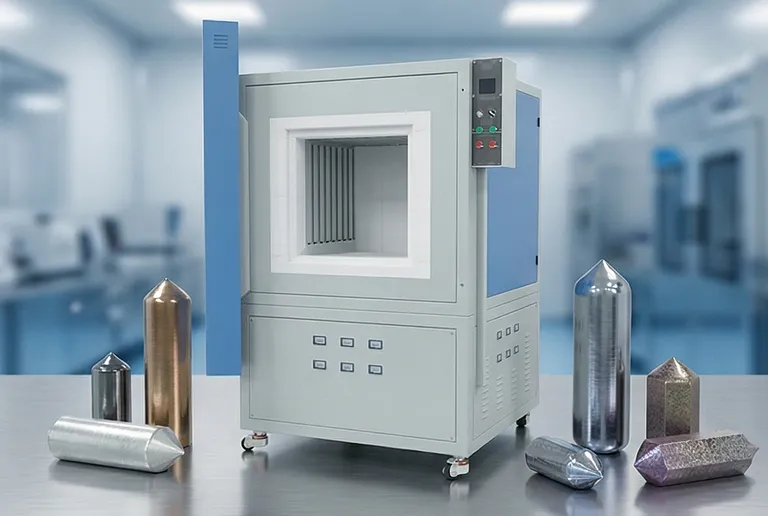
Achieving a consistent, vibration-free movement of 1.8 mm/h isn't a task for standard lab equipment. It requires a mechanical drive system that can operate at "glacial" speeds without "stuttering." Even a microscopic jerk in the drive system can create a fault line in the crystal.
At KINTEK, we design our high-temperature Bridgman and Tube furnaces not just as heating elements, but as integrated precision instruments. Our systems address the root causes of crystal failure through:
- Ultra-Stable Mechanical Drives: Engineered to maintain precise lowering speeds (down to 1 mm/h and below) with zero-vibration profiles to protect the delicate solid-liquid interface.
- Customizable Temperature Gradients: Our furnaces allow for the sharp, controlled gradients necessary to guide directional solidification effectively.
- Atmosphere Integrity: Whether you are working in a vacuum or a specific gas environment, our systems prevent contamination that could disrupt lattice formation.
By focusing on the mechanical precision of the "exit" as much as the thermal precision of the "melt," our equipment provides the stability required to grow crystals that meet the most demanding superconducting standards.
Beyond the Fix: Unlocking New Material Potential
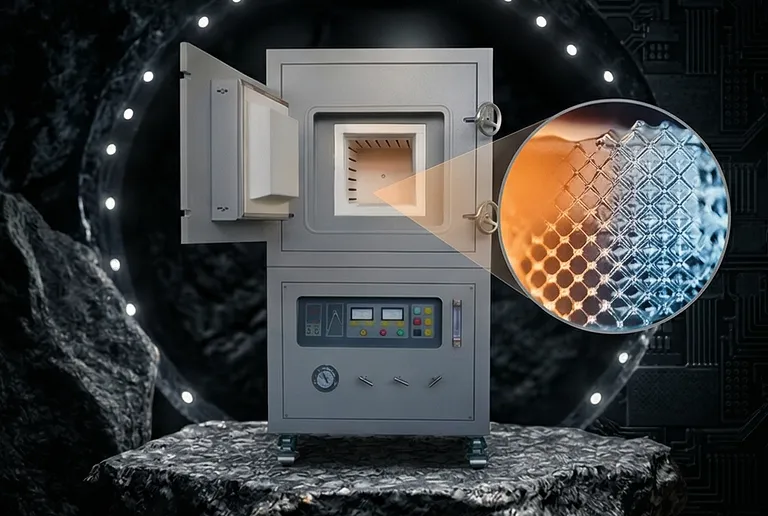
When you master the art of the slow withdrawal, the focus shifts from "will this crystal work?" to "how far can we push this material?"
Eliminating internal stress and dislocation density doesn't just fix a broken process; it opens the door to creating larger, more complex crystals, exploring new superconducting alloys, and accelerating the transition from lab-scale discovery to industrial application. With the right tools, the "slow" process of 1.8 mm/h becomes the fastest path to your next breakthrough.
Ready to elevate your crystal growth precision? Every laboratory faces unique challenges, from specific material chemistries to complex thermal profiles. Our team of experts specializes in customizing high-temperature solutions that solve the fundamental physics of your process. Contact us today to discuss how we can help you achieve the perfect lattice for your next project. [Contact Our Experts](#ContactForm)
Related Products
Related Articles
- Cracked Zirconia, Inconsistent Shades: The Real Reason Your Sintering Furnace Is Failing You
- Beyond the Program: Why Your Sintering Fails and How to Guarantee Uniformity
- Beyond Maintenance: The Real Reason Your Dental Furnace Delivers Inconsistent Results
- How Vacuum Pressure Sintering Furnaces Elevate Material Performance Across Industries
- Why Your Stainless Steel Parts Fail Pressure Tests—and How Vacuum Sintering Fixes the Density Gap
