The primary function of borosilicate or aluminophosphate glass matrices is to act as a solidification carrier for high-level radioactive waste (HLW). These matrices utilize an amorphous network structure to encapsulate radionuclides, locking them within a chemically stable solid body. This transformation is critical for preventing the release of radioactive materials into the environment.
The core purpose of these matrices is to lower biological toxicity by trapping volatile radioactive elements within a durable, disordered atomic framework. This ensures the waste remains isolated and stable during long-term deep geological disposal.
The Mechanics of Immobilization
Function as a Solidification Carrier
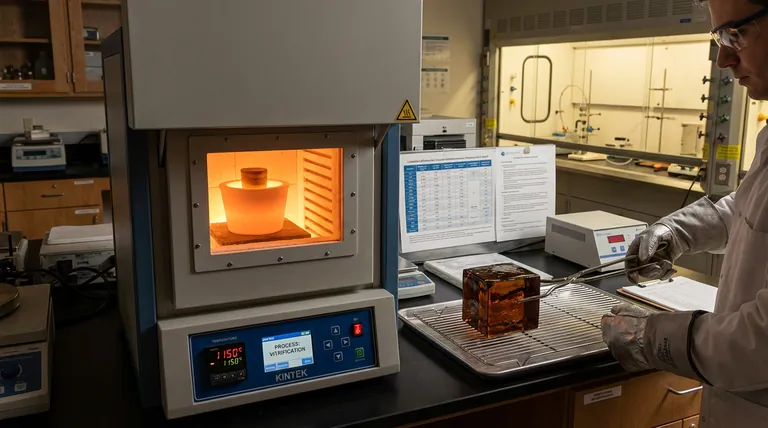
In the vitrification process, the glass matrix serves as the host medium. It physically and chemically incorporates the radioactive waste components into a unified solid form.
The Role of Amorphous Network Structure
Unlike crystalline materials, these glasses possess a disordered, amorphous network structure. This structural flexibility allows the matrix to accommodate a wide variety of radionuclides within its atomic framework.
Encapsulation of Radionuclides
The process does not merely surround the waste; it locks radionuclides into the glass structure. This ensures that radioactive elements are an integral part of the final product, rather than loose inclusions.
Strategic Objectives of Vitrification
Ensuring Chemical Stability
The glass matrix is engineered to be chemically stable. This durability is essential to resist corrosion and degradation over the vast timeframes required for radioactive decay.
Lowering Biological Toxicity
By converting liquid or sludge waste into a stable solid, the matrix significantly reduces the immediate biological hazard. This makes the waste safer to handle, transport, and store.
Facilitating Deep Geological Disposal
The ultimate destination for HLW is deep geological repositories. The vitrified glass form is specifically designed to withstand these subterranean environments without releasing its radioactive payload.
Critical Requirements for Success
Stability Over Time
The effectiveness of the matrix relies entirely on its long-term resistance to environmental factors. If the glass matrix degrades prematurely, the encapsulated radionuclides could migrate into the surrounding geology.
Material Integrity
The "locking" mechanism must be absolute. Any failure in the amorphous network to fully integrate the radionuclides compromises the safety of the entire disposal strategy.
Evaluating the Vitrification Approach
To determine the effectiveness of a waste management strategy, consider the following objectives:
- If your primary focus is environmental protection: Ensure the glass matrix chosen offers maximum chemical stability to prevent leaching during deep geological storage.
- If your primary focus is waste processing: Value the amorphous structure of the matrix for its ability to accept and solidify diverse radionuclide streams.
The glass matrix serves as the fundamental barrier that secures high-level waste against environmental release.
Summary Table:
| Feature | Function in Vitrification | Impact on Safety |
|---|---|---|
| Amorphous Network | Flexible structural framework | Accommodates diverse radionuclides |
| Chemical Stability | Resists corrosion and leaching | Prevents environmental contamination |
| Solidification | Converts liquid/sludge to solid | Reduces biological toxicity and hazard |
| Physical Integrity | Locks elements in a unified body | Ensures stability for geological disposal |
Secure Your Lab’s High-Temperature Processing with KINTEK
Precise control and material integrity are vital when handling advanced materials and waste management research. Backed by expert R&D and manufacturing, KINTEK offers high-performance Muffle, Tube, Rotary, Vacuum, and CVD systems—all customizable to meet your unique thermal processing needs.
Whether you are developing glass matrices for vitrification or performing critical material analysis, our lab high-temp furnaces provide the durability and stability you require.
Contact KINTEK today to find your custom solution!
References
- S. V. Yudintsev, V. I. Malkovsky. Thermal Effects and Glass Crystallization in Composite Matrices for Immobilization of the Rare-Earth Element–Minor Actinide Fraction of High-Level Radioactive Waste. DOI: 10.3390/jcs8020070
This article is also based on technical information from Kintek Furnace Knowledge Base .
Related Products
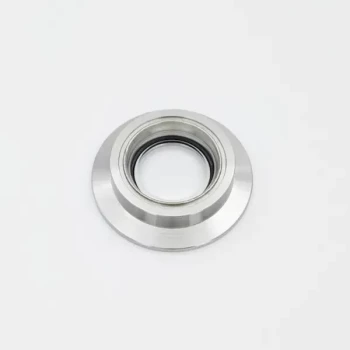
- Ultra High Vacuum Observation Window KF Flange 304 Stainless Steel High Borosilicate Glass Sight Glass
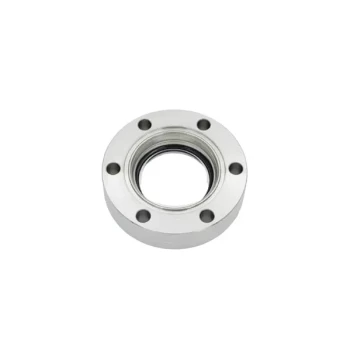
- Ultra High Vacuum CF Observation Window Flange with High Borosilicate Glass Sight Glass
People Also Ask
- Why is an environmental laboratory chamber equipped with an optical window required for synthesizing Hafnium Carbide?
- What are the structural functions of the dual-chamber quartz glass container? Optimize Magnesium Alloy Vapor Analysis
- What role do vacuum-sealed high-purity silica ampoules play in phase equilibrium experiments? Enhance Sample Integrity
- What is the purpose of utilizing a glassy carbon crucible and HCl gas treatment? Ensure Pure Molten Salt Systems
- Why is rapid quenching required during the preparation of amorphous glass fertilizers? Boost Nutrient Solubility