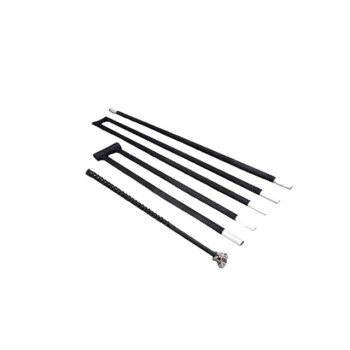
In the fabrication of degradable zinc-based alloys, the silicon carbide (SiC) crucible and muffle furnace form a critical system for material integrity and chemical precision. The SiC crucible serves as a high-refractory, non-reactive vessel that prevents contamination of the melt, while the muffle furnace provides the stable thermal environment required for complete melting and the subsequent homogenization of alloying elements like magnesium and manganese.
The synergy between the silicon carbide crucible and the muffle furnace ensures that zinc-based alloys achieve both the high purity and the precise chemical uniformity necessary for predictable degradation profiles in medical or industrial applications.
The Role of the Silicon Carbide Crucible
Resistance to Chemical Erosion
A silicon carbide (SiC) crucible is chosen for its high-refractory properties, allowing it to withstand the aggressive nature of molten metals.
In zinc alloy preparation, the crucible effectively resists chemical erosion, which is vital for maintaining the purity of the molten pool.
Because degradable alloys are sensitive to trace impurities, using a non-reactive SiC vessel prevents the leaching of crucible materials into the alloy.
Thermal Conductivity and Shock Resistance
SiC is known for its excellent thermal conductivity, which ensures efficient heat transfer from the furnace elements to the zinc ingots.
The material is also highly resistant to thermal shock, allowing it to endure the temperature fluctuations associated with adding alloying elements at room temperature to a molten bath.
This durability makes it a reliable choice for laboratory and industrial processes where material longevity and melt stability are paramount.
The Function of the Muffle Furnace
Precise Thermodynamic Control
The muffle furnace provides a highly stable high-temperature environment, typically maintained at approximately 600 °C for zinc-based work.
This precise control ensures the complete melting of high-purity zinc, creating a consistent liquid phase before the introduction of secondary elements.
By isolating the heating chamber, the furnace provides a controlled thermodynamic field that is essential for the predictable behavior of the melt.
Facilitating Chemical Homogeneity
Beyond simple melting, the furnace facilitates the addition of alloying elements such as magnesium (Mg) and manganese (Mn) under stable conditions.
It maintains the temperature necessary for mechanical homogenization, ensuring that these elements are distributed uniformly throughout the zinc matrix.
This uniformity is critical because any segregation of elements would lead to inconsistent degradation rates and compromised mechanical properties in the final alloy.
Understanding the Trade-offs
Refractory Limits and Oxidation
While SiC crucibles are highly durable, they are susceptible to gradual oxidation when exposed to air at extremely high temperatures over long periods.
In a muffle furnace environment, this can eventually lead to a decrease in thermal conductivity and structural integrity of the crucible.
Users must balance the longevity of the crucible with the need for high-temperature processing to ensure cost-effectiveness.
Thermal Inertia in Muffle Furnaces
Muffle furnaces are designed for stability rather than rapid temperature cycling, meaning they have significant thermal inertia.
While this stability is excellent for uniform melting, it can result in slow cooling rates unless the furnace is specifically equipped with advanced venting or cooling systems.
This may affect the microstructure of the alloy during the initial stages of solidification if the sample is left inside the furnace to cool.
Making the Right Choice for Your Goal
How to Apply This to Your Project
To optimize the preparation of your zinc-based alloys, consider the following recommendations based on your specific requirements:
- If your primary focus is maximum alloy purity: Ensure your SiC crucible is pre-cleaned and dedicated only to zinc-based materials to prevent cross-contamination from previous melts.
- If your primary focus is chemical uniformity: Prioritize the duration of the mechanical stirring phase within the muffle furnace to allow for complete diffusion of magnesium and manganese.
- If your primary focus is material longevity: Regularly inspect the SiC crucible for signs of surface oxidation or pitting to prevent unexpected vessel failure during high-temperature cycles.
By mastering the interaction between the refractory crucible and the controlled furnace environment, you can produce high-quality degradable alloys with consistent and reliable performance characteristics.
Summary Table:
| Component | Key Functions | Primary Benefits for Zinc Alloys |
|---|---|---|
| SiC Crucible | Erosion resistance & high thermal conductivity | Prevents melt contamination; handles thermal shock |
| Muffle Furnace | Stable thermodynamic control (~600°C) | Ensures complete melting & uniform element distribution |
| Combined System | Controlled heating & refractory isolation | Produces predictable degradation profiles & high purity |
Elevate Your Material Research with KINTEK Precision
Achieving the perfect chemical homogeneity in degradable zinc-based alloys requires equipment that offers both stability and purity. KINTEK specializes in high-performance laboratory equipment, providing a comprehensive range of muffle, tube, vacuum, and atmosphere furnaces—all fully customizable to meet your specific research or industrial requirements.
Whether you are refining medical-grade alloys or developing new industrial materials, our high-temperature solutions ensure consistent, reliable results. Contact KINTEK today to discuss your custom furnace needs and see how our expertise can optimize your laboratory’s efficiency and output.
References
- Talita A. Vida, Amauri Garcia. Biodegradable Zn−1wt.%Mg(−0.5wt.%Mn) Alloys: Influence of Solidification Microstructure on Their Corrosion Behavior. DOI: 10.3390/surfaces6030019
This article is also based on technical information from Kintek Furnace Knowledge Base .
Related Products
People Also Ask
- How do the different types of silicon carbide heating elements compare in terms of applications? Find the Best Fit for Your High-Temp Needs
- What are the temperature capabilities and mounting options for silicon carbide heating elements? Unlock High-Temp Flexibility and Durability
- What are the advantages of using silicon carbide heating elements in industrial furnaces? Boost Efficiency and Durability
- How do silicon carbide heating elements enhance the heat treatment of alloys? Achieve Superior Temperature Control
- What are the unique properties of silicon carbide heating elements? Key Benefits for High-Temp Performance