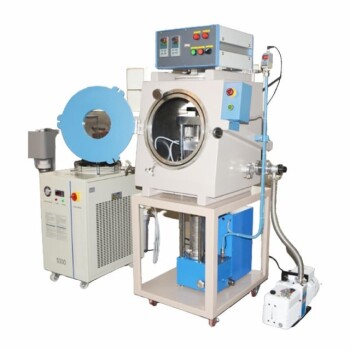
Here’s what you need to know immediately: Hot-pressing hexagonal boron nitride forces its platy, sheet‑like grains to rotate and stack with their basal planes oriented perpendicular to the direction of applied pressure. This deliberate grain alignment creates a mechanically anisotropic component: hardness becomes markedly higher on surfaces that are parallel to the pressing axis, while flexural strength peaks in the direction perpendicular to that axis—all because the strong covalent bonds within the basal planes now resist deformation and fracture in a highly directional manner.
The central insight: Hot‑pressing is not just a densification step; it is a microstructural design tool. By controlling the direction of uniaxial pressure at high temperature, you can align h‑BN’s basal planes to engineer higher strength and hardness along specific loading axes. However, this same alignment introduces significant property anisotropy that must be accounted for—otherwise a component that is strong in one direction may fail prematurely in another.
Why Hot‑Pressing Reorients the h‑BN Grains
Hexagonal boron nitride flakes are intrinsically platy—like a stack of microscopic cards. When loose powder is loaded into a hot‑press die and subjected to simultaneous high temperature (often ~1900 °C) and uniaxial pressure (e.g. 30 MPa in vacuum), the flakes have enough thermal energy to slide and rotate.
The Mechanism of Alignment
Under the applied force, each flake preferentially orients its basal planes (the flat, wide faces) perpendicular to the pressing direction. This is the mechanically stable configuration—just as a deck of cards will lie flat if you press straight down on it. The result is a near‑textured ceramic where the crystallographic c‑axes of the grains are roughly parallel to the hot‑press axis.
Why This Matters for Mechanical Properties
The strong sp² covalent bonds are confined within each basal plane. Bonding between planes (along the c‑axis) is weak van der Waals interaction. Therefore, when the basal planes are all aligned:
- Tensile stress applied along the planes encounters the covalent backbone → high strength.
- Stress applied perpendicular to the planes easily shears the weakly bonded layers → lower strength.
This structural asymmetry is the direct origin of the anisotropic mechanical response that hot‑pressing produces.
How Grain Alignment Translates into Direction‑Dependent Strength
Once the grains are aligned, the loading direction relative to the basal planes becomes the dominant factor for strength and hardness.
Flexural Strength: Stronger When Bending Pulls Along the Basal Planes
A flexural test subjects one side of a beam specimen to tension. If the specimen is cut so that its long axis is perpendicular to the pressing direction, the tensile stress acts parallel to the aligned basal planes. The strong in‑plane bonds resist crack opening, leading to higher flexural strength—typically around 0.17 GPa.
When the beam is cut parallel to the pressing direction, the tensile stress pulls across the weakly bonded interlayers, and failure occurs at a lower stress—only about 0.14 GPa. The difference is modest in absolute terms but represents a ~20 % change in load‑bearing capability, which can be decisive in structural applications.
Vickers Hardness: The Anomaly of Indentation Direction
Hardness appears to follow a different rule. Measurements on surfaces parallel to the pressing direction (the lateral surfaces of a hot‑pressed billet) yield higher values, typically 0.20–0.25 GPa. Here the indenter tip pushes against the edges of the stacked basal planes. The rigid covalent sheets resist penetration effectively, behaving like a deck of cards stood on end.
On surfaces perpendicular to the pressing direction (the top and bottom faces), the indenter presses directly onto the flat basal planes, where interlayer slip can easily accommodate the deformation. Hardware is therefore significantly lower on these faces. This contrast is critical when specifying wear‑prone surfaces in a finished component.
Fracture Toughness: Relatively Insensitive to Orientation
Unlike strength and hardness, fracture toughness (KIC) remains nearly isotropic in hot‑pressed h‑BN. The material fails in a brittle mode with straight crack propagation, regardless of orientation. The weak interlayer bonding makes it difficult to deflect cracks along a tortuous path, so the energy required to advance a crack does not vary significantly with direction.
Understanding the Trade‑offs When Relying on Hot‑Pressed h‑BN
Designing with an anisotropic material introduces challenges as well as opportunities. A clear‑eyed view of the limitations is essential.
The Risk of Unintended Weak Directions
Because strength is direction‑dependent, a part that is perfectly adequate when loaded along its strong axis may fail dramatically when a service load shifts into a weaker orientation. If the hot‑pressing axis is not aligned with the primary stress direction in the final component, the material’s full potential is wasted—and catastrophic failure becomes more likely.
Brittleness and Notch Sensitivity
Hot‑pressed h‑BN retains a brittle fracture character irrespective of grain alignment. This means it cannot redistribute stress plastically and is sensitive to surface flaws and sharp corners. The directional strength advantage comes with no improvement in ductility or impact resistance; fracture toughness remains low and non‑benefiting from texture.
Processing Constraints on Component Shape
Uniaxial hot‑pressing inherently produces simple shapes (discs, plates, cylinders) with a well‑defined pressing axis. Complex geometries are difficult to achieve because the pressure is applied along only one dimension. Post‑sintering machining may cut across the aligned texture, inadvertently exposing weak surfaces in high‑load areas.
Mitigation through Compositional Control
Supplementary references highlight that adding secondary phases such as titanium diboride (TiB₂) can reduce the degree of anisotropy. These hard, isotropic particles interrupt the continuous alignment of h‑BN flakes and raise the thermal expansion coefficient, which can also help manage thermal stresses. However, this comes with a trade‑off in purity and, often, dielectric properties.
Making the Right Choice for Your Goal
The anisotropic behavior of hot‑pressed h‑BN is not a defect—it is a design feature that you can leverage. The key is to define the primary mechanical demand of your component and orient the material’s texture accordingly during processing.
If your primary focus is maximizing bending strength: Orient the component so that the maximum tensile stress in service acts perpendicular to the hot‑pressing axis. Cut flexural beams and plates with their long axis in this direction to exploit the high in‑plane covalent bonding of the aligned basal planes.
If your primary focus is wear resistance or surface hardness: Arrange the part such that the loaded surface is parallel to the pressing direction. This ensures that contacting forces push against the edges of the basal planes, achieving the higher Vickers hardness range of roughly 0.20–0.25 GPa.
If your application demands isotropic toughness: Recognize that hot‑pressed h‑BN, whether textured or not, will behave in a brittle manner. If crack deflection or damage tolerance is critical, consider incorporating a secondary phase like TiB₂ to disrupt the grain texture and increase overall fracture resistance, even if some anisotropy remains.
If your manufacturing process allows post‑sintering shaping: Always map the original pressing axis onto your finished part. Identify which surfaces will be machined and anticipate loss of strength in any direction that cuts through the aligned texture. When possible, preserve the load‑bearing axis in the orientation that best matches the processing‑induced anisotropy.
Hot‑pressed hexagonal boron nitride gives you the power to dictate strength direction—but only if you treat the pressing axis as a deliberate design choice, not just a manufacturing detail.
Summary Table:
| Material Property / Aspect | Direction Perpendicular to Pressing Axis | Direction Parallel to Pressing Axis | Underlying Mechanism |
|---|---|---|---|
| Grain / Basal Alignment | Basal planes align perpendicular to pressure | c-axis aligns roughly parallel to pressure axis | Thermal energy & uniaxial force induce flake rotation |
| Flexural Strength | Higher (~0.17 GPa) | Lower (~0.14 GPa) | Strong sp² covalent bonds resist tensile load in-plane |
| Vickers Hardness | Lower (indents onto flat basal planes) | Higher (0.20–0.25 GPa) | Rigid sheet edges resist penetration when loaded on end |
| Fracture Toughness (KIC) | Isotropic / Low | Isotropic / Low | Brittle mode fracture with straight crack propagation |
Master Advanced Ceramic Sintering with KINTEK
Precise control over temperature, pressure, and atmosphere is critical when engineering anisotropic ceramics like hot-pressed hexagonal boron nitride. KINTEK specializes in comprehensive laboratory equipment and advanced high-temperature furnaces—including vacuum, atmosphere, CVD, tube, muffle, and induction melting systems—all customizable to fit your exact material processing demands.
Whether you are conducting cutting-edge research or scaling specialized component manufacturing, KINTEK provides the thermal processing reliability you need to achieve superior mechanical properties.
Contact KINTEK today to consult with our high-temp equipment experts
Related Products
People Also Ask
- What are the primary components of a vacuum hot press furnace? Master the Core Systems for Precise Material Processing
- What are the benefits of the vacuum environment system in a vacuum hot press furnace? Unlock High-Density Sintering
- What safety features are incorporated in vacuum hot press furnaces? Ensure Operator and Equipment Protection
- What industries benefit from the use of vacuum hot press furnaces? Unlock High-Performance Materials for Your Industry
- What considerations guide the selection of heating elements and pressurization methods for a vacuum hot press furnace?