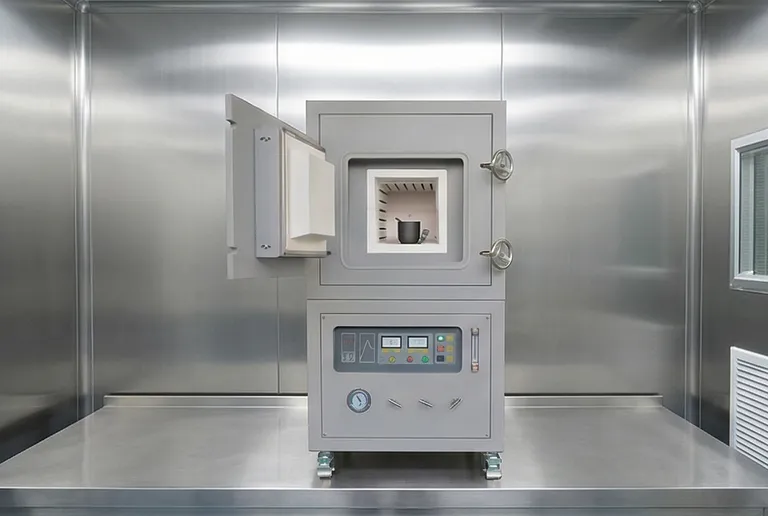
The Frustration of "Hit-or-Miss" Brazing Filler Production
Imagine you are in the final stages of preparing a Ti–Cu–Ni (Titanium-Copper-Nickel) brazing filler wire. This material is critical for high-strength joints in aerospace or electronics. However, when you inspect the initial 50 mm alloy rods, you find they are inconsistent. Some sections are brittle, others lack the correct metallic ratio, and the entire batch is unusable for the subsequent wire-drawing process.
You’ve wasted expensive raw materials, lost days of production time, and your project deadline is looming. If your alloy data feels like a "hit-or-miss" game, you aren't alone—but the problem likely isn't your recipe; it’s your environment.
Why Simply "Turning Up the Heat" Won't Save Your Melt
When faced with non-uniform alloy rods, many technicians instinctively try to solve the problem by increasing the furnace temperature or extending the dwell time. The logic seems sound: "If I heat it more, it will mix better."
In reality, these "common fixes" often lead to worse outcomes:
- Contamination: Excessive heat can cause standard ceramic crucibles to leach impurities into the melt.
- Thermal Shock: Rapid temperature changes can crack inferior containers, ruining the entire batch.
- Business Fallout: These failures aren't just technical; they are financial. Repeated failed melts lead to soaring energy costs, wasted high-purity Copper and Nickel, and a significant delay in getting your product to market.
The Science of Stability: Why Graphite is Non-Negotiable
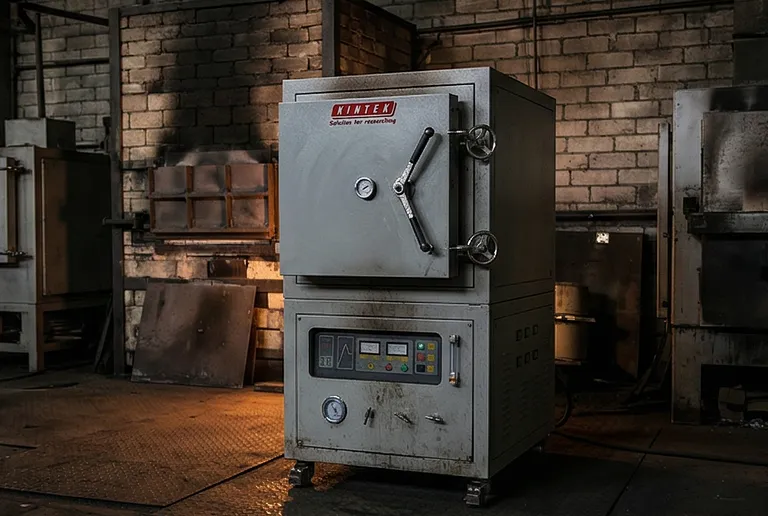
The root cause of inconsistent Ti–Cu–Ni rods is usually thermal gradients and material incompatibility. To create a perfect 50 mm alloy rod, the Copper and Nickel components must reach a state of total liquid homogeneity before casting. If one part of the melt is cooler than the other, the composition will segregate.
This is where the material science of the container—the crucible—becomes the deciding factor. Standard materials often fail because they lack the necessary thermal conductivity to distribute heat evenly.
Graphite is the "Expert’s Choice" for three scientific reasons:
- Superior Thermal Conductivity: Graphite acts as a heat-leveler. It absorbs energy from the furnace and distributes it instantly across the entire surface of the melt, eliminating the "cold spots" that cause alloy segregation.
- High-Temperature Resilience: Copper and Nickel require intense heat to liquefy. Graphite maintains its structural integrity at these extremes without deforming or reacting with the metals.
- Uniform Solidification: During the transition from liquid to a solid 50 mm rod, graphite’s thermal properties ensure the cooling process is controlled, resulting in a uniform grain structure from the core to the surface.
Precision Engineered: KINTEK Furnaces and the Graphite Advantage
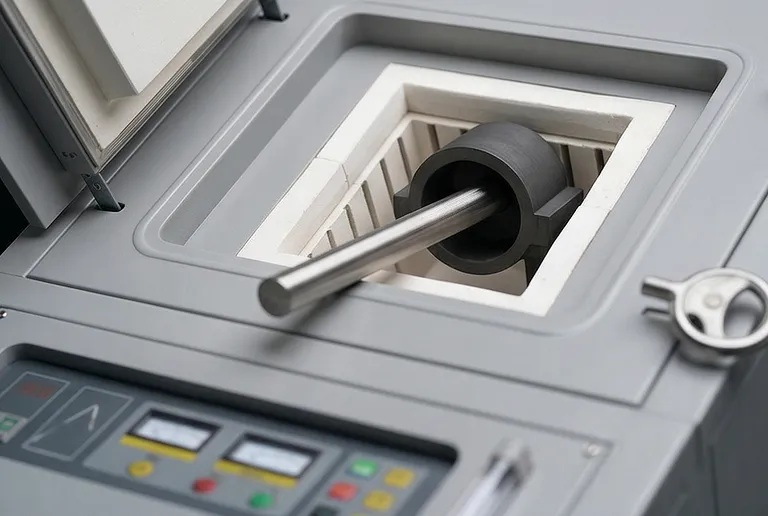
Understanding the science is one thing; implementing it is another. A high-quality graphite crucible is only as effective as the furnace that powers it.
At KINTEK, we don’t just provide "ovens"—we provide controlled thermal environments. Our range of high-temperature induction melting and vacuum furnaces is designed specifically to work in harmony with graphite components.
Our systems are engineered to address the root causes of alloy failure:
- Targeted Heat Delivery: Whether you are using our induction melting furnaces or atmosphere-controlled models, the heat is delivered precisely to the graphite crucible, ensuring the Ti–Cu–Ni components reach a perfect, uniform state.
- Customizable Parameters: Every alloy has a unique "sweet spot." KINTEK equipment allows for granular control over temperature ramps and cooling cycles, ensuring that your 50 mm rods are cast perfectly every time.
- Durability by Design: By matching the right furnace technology with high-grade graphite, we reduce the risk of crucible failure, extending the life of your consumables and lowering your cost-per-run.
From Raw Rods to High-Performance Brazing Wire
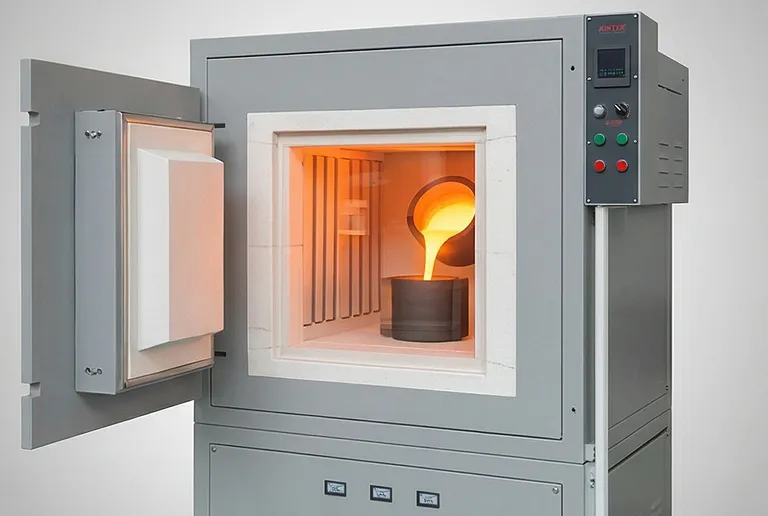
When the "problem of the melt" is solved, your entire production line changes. By utilizing the superior thermal properties of graphite crucibles within a KINTEK high-temperature furnace, you move past the struggle of inconsistent data.
What does this new reliability unlock for your business?
- Zero-Waste Production: Your first melt is your final melt. No more discarded 50 mm rods.
- Downstream Efficiency: Uniform rods draw into filler wire more easily, reducing breakage during the wire-drawing process.
- Market Leadership: With a stable process, you can confidently take on more complex projects, from specialized vacuum brazing to high-performance industrial joining.
Solving the technical challenge of alloy uniformity is the first step toward scaling your operation and outperforming the competition. Our team of experts is ready to help you configure the ideal furnace and crucible setup tailored to your specific material requirements. Whether you are refining Ti-Cu-Ni fillers or exploring new high-temp frontiers, we provide the tools to ensure your results are consistent, repeatable, and profitable. Contact Our Experts.
Related Products
Related Articles
- Why Your Ti-6Al-4V Parts Crack Under Pressure—The Hidden Science of Vacuum Heat Treatment
- Why Your High-Strength Titanium Biomaterials Are Brittle—and How Vacuum Heat Treatment Fixes It
- The Unseen Failure Point: Why Your Vacuum Furnace's Graphite Is Costing You More Than You Think
- Why Your 3D-Printed Maraging Steel Parts Aren't Performing—And How to Fix the Structural Weakness
- The Art of Absence: How Vacuum Furnaces Forge Material Perfection
