A critical production line is down. Again. A valve has seized, a pipe has started weeping a corrosive fluid, or worse, a multi-million dollar batch of product is now worthless due to contamination. You’ve been through this before. You review the maintenance logs, examine the failed component, and start the painful process of sourcing a replacement, all while the cost of downtime skyrockets.
Does this scenario feel frustratingly familiar? If you manage fluid systems in the semiconductor, pharmaceutical, or chemical processing industries, you're likely caught in a costly and demoralizing cycle.
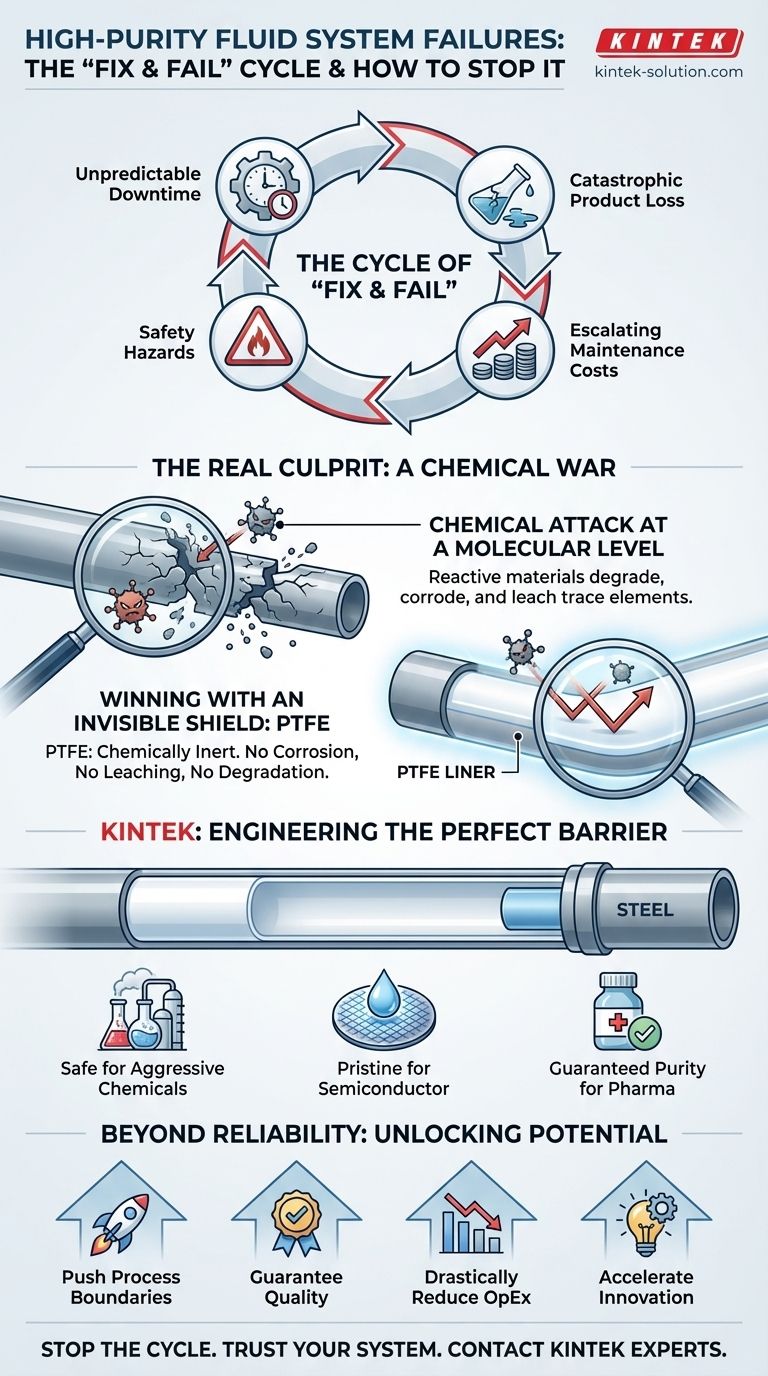
The Cycle of "Fix and Fail": Upgrading Materials Without Upgrading Your Thinking
When a component fails, the typical response is to seek a "stronger" replacement. If a standard stainless steel pipe corroded, perhaps a higher-grade alloy is the answer. If a plastic tube leached contaminants, maybe another type of polymer will work.
These are logical steps, but they are often just temporary fixes. You might get a few more months of service life, but eventually, the same problem reappears. This is the "Fix and Fail" cycle, and its business consequences are severe:
- Unpredictable Downtime: Production halts unexpectedly, derailing schedules and forcing teams into reactive, high-stress firefighting.
- Catastrophic Product Loss: In industries where purity is paramount, a single contamination event can force the disposal of an entire production run, erasing profits instantly.
- Escalating Maintenance Costs: Constantly replacing parts turns your maintenance budget into a black hole and ties up your most skilled engineers in repetitive, low-value work.
- Safety Hazards: A leak of a substance like sulfuric or hydrochloric acid isn't just a maintenance issue; it's a critical safety incident waiting to happen.
This cycle persists because it's based on a fundamental misunderstanding of the problem. You're trying to solve the wrong puzzle.
The Real Culprit Isn't Wear and Tear—It's a Chemical War
The recurring failures in your high-purity or highly corrosive fluid systems are not typically due to mechanical stress. The pipe didn't burst because of pressure, and the valve didn't break from overuse.
The root cause is a relentless chemical attack happening at a molecular level.
Most materials, including robust metals and standard polymers, are chemically reactive. When they come into contact with aggressive fluids—be it concentrated acids, powerful solvents, or even ultra-pure water—a slow but inevitable reaction begins. The material itself begins to degrade, corrode, or leach trace elements into the fluid it's meant to protect.
Why "Stronger" Doesn't Mean "Better"
This is why simply upgrading to a "stronger" material often fails. A more expensive steel alloy might resist the chemical attack for longer, but it is still fundamentally reactive. It’s like building a thicker wooden wall to stop a fire; it may take longer to burn through, but it will eventually burn. You aren't stopping the reaction; you're just delaying the inevitable failure.
You're fighting a chemical war, and to win, you don't need a stronger soldier. You need one the enemy can't even see.
Winning the War with an Invisible Shield: The Power of Inertness
The only way to truly stop this cycle is to use a material that does not participate in the chemical war at all—a material that is chemically inert.
This is the principle behind Polytetrafluoroethylene (PTFE). PTFE is one of the most non-reactive substances known to science. It doesn't corrode when exposed to harsh acids. It doesn't break down at high temperatures. And, crucially, it doesn't leach or shed particles into the high-purity fluids it carries.
Instead of fighting corrosion, a PTFE surface simply prevents the chemical attack from ever starting. It creates an invisible, impenetrable shield between your valuable product and the structural pipe housing it.
KINTEK: Engineering the Perfect Barrier
This is where intelligent engineering transforms a material property into a reliable industrial solution. At KINTEK, we don't just sell PTFE; we specialize in fabricating precision PTFE components designed to solve this exact problem.
Our PTFE liners, seals, and custom parts are engineered to create a perfect, seamless barrier inside your fluid systems. By lining a strong steel pipe with our precision-fit PTFE, you get the best of both worlds: the mechanical strength to handle pressure and the absolute chemical inertness to guarantee purity and prevent corrosion.
- For Chemical Processing: Our liners mean you can safely handle the most aggressive chemicals without fear of system degradation.
- For Semiconductor Fabs: Our components ensure that the ultra-pure water and chemicals critical to your process remain pristine, preventing wafer defects.
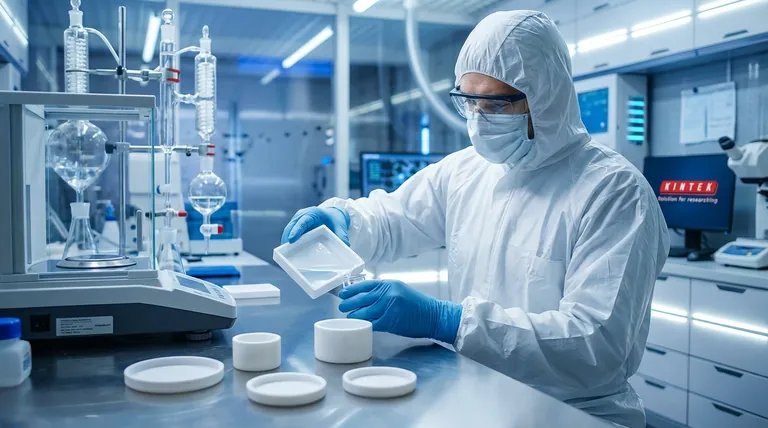
- For Pharmaceutical Labs: Our non-contaminating surfaces guarantee product purity, helping you meet the strictest regulatory standards.
We solve the root problem by deploying the right defense: a perfectly engineered, chemically inert barrier.
Beyond Reliability: What's Possible When Your System Finally Just Works?
When you break free from the "Fix and Fail" cycle, something remarkable happens. You stop spending your time, budget, and energy on just keeping things running. You can start innovating.
With a truly reliable, chemically inert fluid system, you unlock new potential:
- Push Process Boundaries: Experiment with more aggressive reagents or higher process temperatures to improve yields and efficiency without risking your equipment.
- Guarantee Quality: Confidently promise your customers a level of product purity that your competitors, still stuck in the cycle of failure, cannot match.
- Drastically Reduce OpEx: Shift from a schedule of frequent, costly component replacements to one of long-term, predictable reliability, freeing up capital and personnel for growth.
- Accelerate Innovation: Your engineers can finally focus on designing the next generation of products instead of fixing the last generation of problems.
Stopping the cycle of failure isn't just about saving money on maintenance; it's about creating the operational stability required for true, forward-looking progress.
Your processes are too critical, and your products too valuable, to be compromised by a problem that has already been solved. If you're ready to stop fighting a losing battle against chemical corrosion and contamination, our team of specialists is here to help design a solution that lasts. Let's discuss the specific challenges in your application and build a system you can finally trust. Contact Our Experts.
Visual Guide
Related Products
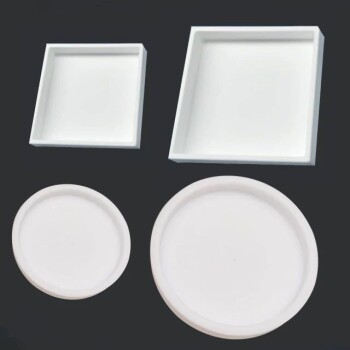
- Custom PTFE Parts Manufacturer for Teflon Containers and Components
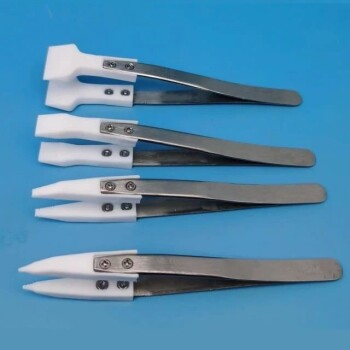
- Custom PTFE Parts Manufacturer for Teflon Parts and PTFE Tweezers
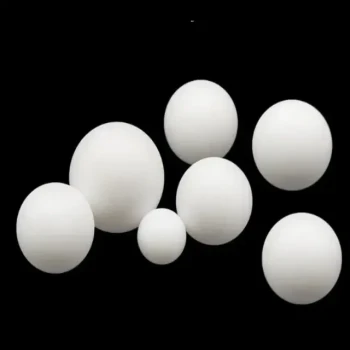
- Custom PTFE Teflon Balls for Advanced Industrial Applications
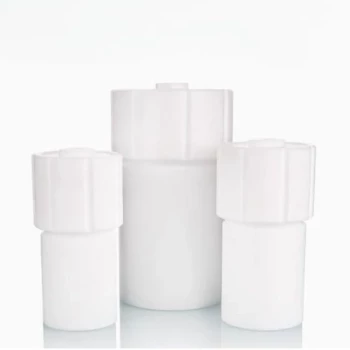
- Custom PTFE Microwave Digestion Vessels for Demanding Applications
- Custom PTFE Teflon Parts Manufacturer Adjustable Height Flower Basket
Related Articles
- Why Your High-Performance PTFE Parts Fail—And Why It's Not the Material's Fault
- When 'Chemically Inert' Isn't Enough: Why Your PTFE Components Fail and How to Prevent It
- How PTFE Solves Critical Industrial Challenges Through Material Superiority
- The Unseen Component: How PTFE Became the Bedrock of Medical Device Reliability
- The Physics of a Perfect Fit: How PTFE Eliminates an Athlete's Hidden Distractions