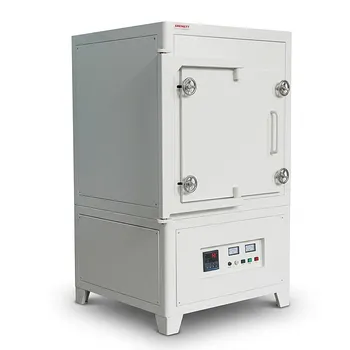
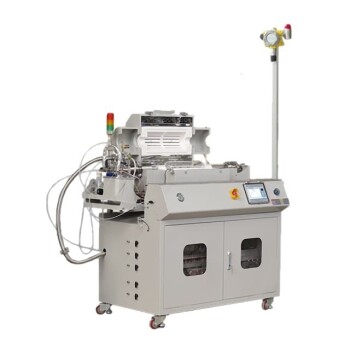
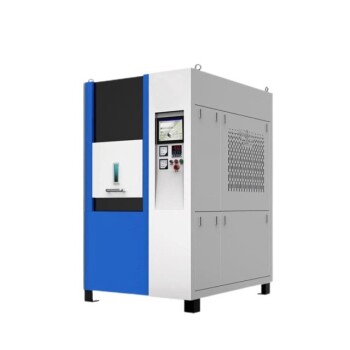
The box-type resistance furnace is the preferred choice for austenitizing Austempered Ductile Iron (ADI) because it provides the precise thermal stability and uniformity required for a complete phase transformation. In the ADI process, the casting must be heated—typically to around 900°C—and held for a specific duration to ensure the matrix becomes entirely austenitic. This furnace design prevents localized temperature variations that could compromise the integrity of the material during its subsequent isothermal transformation.
Core Takeaway: A box-type furnace ensures structural homogeneity by providing a high-precision, stable thermal environment. This stage is critical because the quality of the austenite phase directly determines the success of the final phase transformation, which gives ADI its superior mechanical properties.
The Role of Thermal Stability in Phase Transformation
Achieving Complete Austenitization
For ADI to reach its full potential, the initial matrix must undergo a total solid-state reaction to become austenite. The box-type resistance furnace provides a constant high-temperature environment, often held for durations like 120 minutes, to ensure this transformation is deep and thorough. Without this complete "soak," the subsequent cooling stages will fail to produce the desired high-strength microstructure.
Maintaining Uniform Thermal Fields
The primary advantage of the muffle or box design is its ability to distribute heat evenly across its internal volume. This uniform thermal field distribution prevents "hot spots" that could cause localized overheating or "cold spots" that result in insufficient heating. Such consistency guarantees that the matrix structure is homogeneous before it enters the next stage of treatment.
Providing Thermodynamic Foundations
By controlling specific heating rates and holding temperatures, the furnace creates the necessary thermodynamic conditions for alloying elements to dissolve. In industrial applications, this ensures that elements are fully integrated into the austenite matrix. This step eliminates composition segregation, providing a uniform base for the subsequent formation of bainite or martensite.
Versatility and Geometric Flexibility
Accommodating Diverse Casting Geometries
Box furnaces are characterized by relatively large and regularly shaped internal spaces. This allows for the flexible arrangement of diverse workpieces, ranging from small precision components to large, bulky castings. This adaptability is essential for ADI production, where part sizes can vary significantly within a single batch.
Precision Control over Heating Cycles
Modern industrial-grade furnaces allow for controlled temperature ramps, which are vital for preventing thermal shock. By gradually increasing the temperature, the furnace ensures that internal stresses do not lead to micro-cracks or distortion. This precision is equally useful in related processes, such as the controlled debinding of materials or the annealing of steel specimens.
Understanding the Trade-offs
Batch Processing Constraints
Box-type furnaces are primarily batch-processing tools, which can limit throughput in high-volume production environments compared to continuous furnaces. Each cycle requires loading, heating, holding, and unloading, which introduces downtime between batches.
Atmosphere and Oxidation Risks
Unless specifically equipped with gas-tight muffles or vacuum systems, standard box furnaces may expose parts to atmospheric oxygen. At 900°C, this can lead to surface decarburization or scale formation on the ductile iron. Users must often implement protective atmospheres or coatings to maintain the surface integrity of the casting.
How to Apply This to Your Heat Treatment Protocol
When selecting or operating a box-type furnace for ADI austenitizing, consider your primary metallurgical goals:
- If your primary focus is microstructural uniformity: Ensure the furnace is calibrated to maintain a temperature deviation of less than ±5°C across the entire hearth to prevent phase inconsistencies.
- If your primary focus is processing large or complex components: Arrange the workpieces to allow for maximum airflow and radiant heat exposure, ensuring the core of the part reaches the target temperature simultaneously with the surface.
- If your primary focus is preventing surface defects: Use a muffle furnace configuration that allows for the introduction of inert gases to protect the ductile iron from oxidation at high temperatures.
Achieving the perfect austenite matrix is the indispensable foundation for every high-performance ADI component.
Summary Table:
| Key Feature | Benefit for ADI Austenitizing | Resulting Material Quality |
|---|---|---|
| Uniform Thermal Field | Prevents hot/cold spots during soaking | Homogeneous matrix structure |
| Precise Temp Control | Maintains stable 900°C environment | Complete phase transformation |
| Flexible Geometry | Accommodates diverse casting shapes | Versatile batch processing |
| Controlled Ramping | Minimizes internal thermal stress | Reduced risk of micro-cracks |
| Atmosphere Support | Protects against surface oxidation | High-integrity surface finish |
Elevate Your ADI Heat Treatment Precision with KINTEK
Achieving the perfect austenite matrix requires equipment that delivers unwavering thermal stability. KINTEK specializes in high-performance laboratory equipment, offering a comprehensive range of high-temperature furnaces—including muffle, tube, vacuum, CVD, and atmosphere furnaces—all fully customizable to meet your specific metallurgical needs.
Whether you are processing complex ductile iron castings or conducting advanced material research, our furnaces provide the precision control necessary for superior mechanical properties.
Ready to optimize your heat treatment protocol? Contact our experts today to find the ideal furnace solution for your laboratory!
References
- Adam Bitka, D. Wilk-Kołodziejczyk. Analysis of the possibility of using exploration and learning algorithms in the production of castings. DOI: 10.1007/s43452-024-01089-z
This article is also based on technical information from Kintek Furnace Knowledge Base .
Related Products
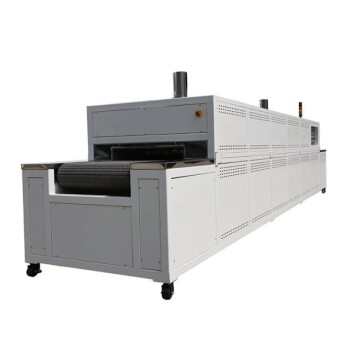
- Mesh Belt Controlled Atmosphere Furnace Inert Nitrogen Atmosphere Furnace
- Vertical Laboratory Quartz Tube Furnace Tubular Furnace
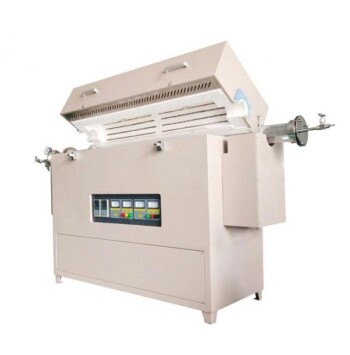
- Multi Zone Laboratory Quartz Tube Furnace Tubular Furnace
- High Pressure Laboratory Vacuum Tube Furnace
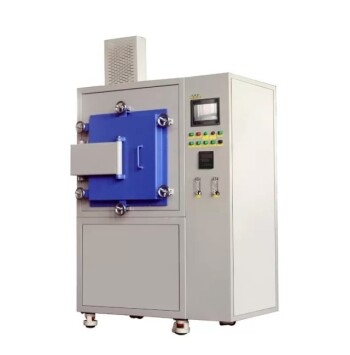
- 1200℃ Controlled Inert Nitrogen Atmosphere Furnace
People Also Ask
- How is a controlled atmosphere furnace used in material research? Achieve Precise Material Synthesis and Heat Treatment
- What are the two main purposes of controlled atmosphere conditions in furnaces? Protect or Transform Materials for Peak Performance
- What types of furnaces have controlled atmosphere furnaces largely replaced? Boost Metallurgical Precision & Safety
- How does a controlled atmosphere furnace improve product quality and consistency? Master Precise Heat Treatment for Superior Results
- What types of gases can a controlled atmosphere furnace handle? Master Inert and Reactive Gases for Your Lab